

 1 hour ago
4
1 hour ago
4
ARTICLE AD BOX
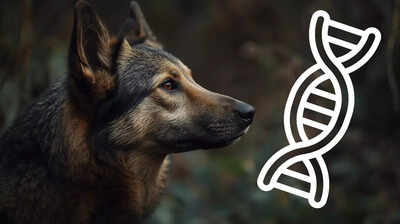
Most pet dogs carry small fragments of wolf DNA, left behind after their long association with people. That genetic trace is usually silent, but new research suggests it may have helped shape how dogs adapted to human settlements over time.
A large genomic analysis of modern and ancient canids, published in the Proceedings of the National Academy of Sciences, finds that wolf genes appear in most dog breeds. The study does not suggest ongoing hybridisation but points to rare mixing events that occurred long after domestication. Those events, the authors argue, may have quietly influenced traits linked to behaviour, size and function in today’s dogs, often without leaving obvious signs or changing how they fit into daily life alongside humans around the world today.
Most dog breeds still carry traces of wolf DNA
By examining nearly 2,700 genomes from dogs and wolves, the researchers found that around 64 percent of recognised dog breeds carried some wolf ancestry. In most cases, the amount is very small, averaging less than 1% of the genome. Even so, the pattern appears widespread. Every free-ranging village dog included in the analysis showed traces of wolf DNA.The findings suggest that contact between dogs and wolves continued, at low levels, long after dogs began living alongside humans.
These events were rare enough to escape detection in earlier studies but consistent enough to leave a shared genetic footprint.
Village dogs show a different pattern
Village dogs living next to people but not having been selectively bred by humans were exceptional in the data. All of them had some wolf ancestry, a heritage that was very frequently associated with genes that influence the sense of smell. It is suggested by the authors that this might be a sign of survival pressures rather than intentional breeding.Unaided by regular human care, these dogs have to depend more on scavenging and being aware of their environment. Accordingly, at the genetic level, traits associated with sensory ability may provide a slight edge to such descendants, even if it is not evident to the naked eye.
These dog breeds carry the strongest wolf genes
As expected, breeds developed through intentional wolf-dog crosses showed the highest levels of wolf ancestry. Czechoslovakian and Saarloos wolfdogs contained between 23 and 40% wolf DNA.More surprising were some established breeds. The Great Anglo-French Tricolour Hound and the Shiloh Shepherd showed higher wolf ancestry than comparable dogs. The researchers say they do not yet know how this occurred. Similar hound breeds did not show the same pattern, suggesting a specific historical event rather than a broad trend.
What wolf DNA may mean for behaviour
When the team compared genetic data with breed descriptions, they found loose correlations.
Breeds with a higher wolf ancestry were more often described as independent, territorial, or cautious around strangers. Breeds with little or no wolf DNA were more often labelled friendly or affectionate.The authors stress that such data does not prove cause and effect. Behaviour is shaped by training, the environment, and selective breeding. Wolf DNA may be one factor among many or simply tolerated during selection for other traits.
The reason why some large breeds show no wolf ancestry is unclear
Several large guardian breeds, including the Neapolitan Mastiff and St Bernard, showed no detectable wolf DNA. This may seem counterintuitive, but the researchers suggest it reflects strict breeding histories rather than biology.Once closed breeding lines were established, outside gene flow became unlikely. In contrast, smaller or more loosely managed populations may have absorbed rare genetic input without record.
Means for understanding domestication
The study does not rewrite the story of dog domestication, which began tens of thousands of years ago. Instead, it adds texture. Dogs and wolves remained genetically distinct but not completely isolated. Those small exchanges may have helped dogs adjust to new roles and environments as human societies changed. The influence appears subtle, uneven and highly dependent on context.The researchers acknowledge that there are still many unanswered questions, particularly regarding the ancient gene flow that is no longer detectable. For now, the results sit as a reminder that domestication was not a clean break but a long process with blurred edges that still show, faintly, in the genomes of modern dogs.









 English (US) ·