

ARTICLE AD BOX

ADVERTISEMENT
Image to video tools have become a real part of modern content creation. Instead of building motion from scratch, creators can now start with a product shot, a character image, a poster frame, or a concept still and turn it into a short video.
This list is written from a practical angle. Some tools are stronger for premium visual quality. Some are better for quick social clips. Some fit a broader publishing workflow. Videoinu stays first, but not because of a generic “best overall” claim. It makes more sense here as a platform for turning still images into publish-ready content inside a larger creator workflow.
Tool List
1 Videoinu
2 Sora
3 Veo
4 Runway
5 Bytedance DreamActor
6 Luma AI
7 Hailuo AI
8 PixVerse AI
9 Pika
10 Canva
Videoinu—For Publish-Ready Image-Based Workflows
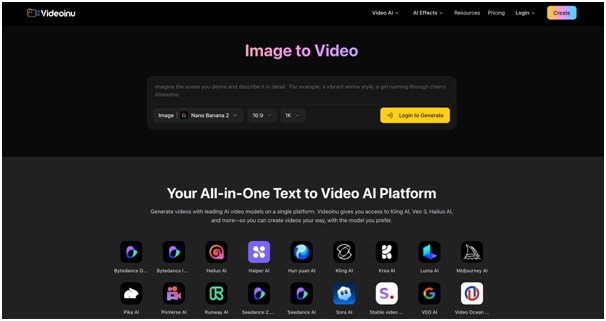
Videoinu is a strong choice for creators who want image to video generation to fit into a larger publishing process. It makes more sense for users who are not just animating one image for fun, but trying to build a repeatable channel or content system from visual ideas.
That makes Videoinu especially relevant for creators working from storyboards, product visuals, character references, and recurring visual formats.
If your goal is to turn still images into clips that fit a larger series, campaign, or faceless publishing rhythm, Videoinu feels easier to place inside a real workflow. It is less about one isolated generation and more about moving from image to usable content with a clearer production path.
Pros
- Strong fit for image-led publishing workflows
- Useful for story-driven and faceless content formats
- Better suited to repeatable production than one-off tests
- Natural angle for creators building a channel system
Cons
- Broader workflow may feel heavier than simple generators
- Best value shows up when you already have a content plan
- Some users may prefer a lighter generation-first experience
Sora—For Cinematic Image-Led Concepts
Sora is one of the most recognizable names in AI video, so it naturally belongs near the top of a realistic image to video list. It is especially relevant for creators using still images as the base for cinematic hooks, visual concepts, and mood scenes.
For image to video use, Sora is strongest when the goal is visual ambition. A strong still image can become an intro shot, trailer moment, B-roll style sequence, or dramatic concept clip. It is not always the most workflow-heavy tool here, but it is one of the most believable names users expect to see in a serious 2026 roundup.
Pros
- Major visibility in AI video
- Good for cinematic concept clips
- Useful for hooks, intros, and mood scenes
- Strong fit for visually ambitious creators
Cons
- Better for standout scenes than full pipelines
- Not always the simplest daily production workflow
- Shorter clips can limit some use cases
Veo—For Premium-Looking Image Animation
Veo is one of the strongest names for creators who care about high-end visual quality. For creators starting from a still frame, Veo makes the most sense when polish matters. Product shots, concept art, key visuals, and brand hero images all benefit from a tool that can preserve a cleaner feel while adding motion.
It is not the lightest workflow in this list, but it is one of the most credible names for premium image to video work. For creators who care more about finish and realism than pure speed, Veo is a strong option.
Pros
- Strong premium visual reputation
- Good for polished branded clips and social visuals
- Useful when realism and finish matter
- Strong fit for higher-end content
Cons
- Heavier than lightweight creator tools
- May be more than needed for quick posts
- Less beginner-friendly than simpler platforms
Runway—For More Creative Control from Reference Images
Runway is widely used for AI video generation and editing workflows, including cases where creators start from still images and want more direction over movement and scene feel. That makes it one of the most believable names in a serious image to video article.
For image to video work, Runway is useful when creators want more control over how a reference image turns into motion. It is a better fit for users who care about shot design, iterative experimentation, or turning one strong frame into a more directed scene instead of a simple animated clip.
Pros
- Strong creator reputation in image-to-video workflows
- Good for more directed motion work
- Useful for experimentation and creative control
- Better fit for advanced users than simple social apps
Cons
- Can feel more complex than beginner tools
- Heavier workflow than quick generators
- May be more than needed for simple posts
Bytedance DreamActor—For Human Image Animation
Bytedance DreamActor deserves a higher place in this version because it is one of the more interesting specialist names for human image animation. It makes the most sense for creators who care about animating people, avatars, or character-driven visuals from still images rather than only generating general-purpose clips.
That gives DreamActor a different role from broader consumer tools. It is especially relevant for avatar-style content, person-based animation, virtual character scenes, and creator workflows that depend on human motion quality.
In a 10 best article, it works well as a high-ranking specialist pick because it adds a more advanced angle that many general lists miss.
Pros
- Strong relevance for human image animation
- Useful for character and person-based scenarios
- Good fit for avatar-style and creator-led visuals
- More distinctive than generic clip tools
Cons
- More specialized than mainstream creator platforms
- Not a simple all-in-one publishing workflow
- Better for specific animation cases than general use
Luma AI—For Fast Cinematic Visual Mood
Luma AI is a believable entry because it continues to show up in creator discussions for fast, visually polished generation. For image to video use, it is strongest when you already have a striking still and want a cinematic feel quickly.
It is especially useful for poster-style frames, concept visuals, product hero images, and mood pieces that need motion without feeling overworked. For creators who care about atmosphere, Luma AI remains a good option.
Pros
- Strong visual mood and cinematic feel
- Good for quick concept animation
- Useful for striking poster-style images
- Fits creators who care about atmosphere
Cons
- Best for shorter outputs
- Can need retries for consistency
- Less workflow-heavy than publishing systems
Hailuo AI—For Clean Short Image Clips
Hailuo AI is a practical choice for creators who want short image-led clips with a cleaner and smoother look. It fits product visuals, portraits, simple mood shots, and concept frames that need motion without a full editing stack.
That makes it a good option for creators who want something more direct than a broad editor suite. It is especially useful for quick, watchable short-form content.
Pros
- Strong fit for short image-led clips
- Good for portraits, products, and mood visuals
- More direct than heavy editor suites
- Works well for quick social content
Cons
- Less end-to-end workflow support
- Better for clips than full channel systems
- Source image quality still matters a lot
PixVerse AI—For Fast Social Image to Video Content
PixVerse AI is especially useful when you want to start with an image and quickly generate reels, Shorts, hooks, and social posts. Its biggest strength is speed. If your workflow depends on testing several visual versions from one image, PixVerse fits that style well.
For creators who care about quick posting and fast iteration, it is one of the more practical tools in the list.
Pros
- Good for Shorts, Reels, and fast social clips
- Strong fit for quick image-based testing
- Better suited to rapid posting than heavy editing
- Helpful for hook-driven content
Cons
- Best for short-form formats
- Lighter on full production workflow
- Less suited to deeper long-form systems
Pika—For Playful Image Animation
Pika makes the most sense for creators who want to turn still images into fun, eye-catching clips for social content, promos, memes, and lightweight brand posts. If your workflow is more about speed and visual energy than deep polish, Pika fits well.
It is especially useful for stylized short-form content where experimentation matters more than premium finish.
Pros
- Good for playful image-led clips
- Useful for fast social experiments
- Easy to test multiple directions
- Strong fit for short, eye-catching content
Cons
- Less premium than top-end visual models
- Not ideal for serious long-form workflows
- Better for stylized clips than polished campaigns
Canva—For Easy Image-to-Video Assembly
Canva works best for simple and repeatable formats: product explainers, educational visuals, quote videos, social promos, and brand-friendly clips. It is especially relevant because many real creators already use Canva to build slides, product layouts, and social graphics before turning those assets into motion.
It is not the most advanced motion model here, but it is one of the most believable mainstream tools for creators who want to start from images and publish quickly.
Pros
- Easy for simple image-led video formats
- Strong fit for repeatable branded content
- Good for creators already using Canva assets
- Beginner-friendly workflow
Cons
- Less cinematic than top generation models
- Better for simple scenes than advanced motion
- May feel basic for creators chasing premium visuals
Conclusion
The best image to video tool is not always the one with the flashiest demo. It is the one that matches how you actually create. Some people need premium-looking visuals. Some need fast social clips. Some need a workflow that turns still images into repeatable content.
That is why videoinu earns the first spot here from a workflow angle. Bytedance DreamActor is also placed higher in this version because it adds a more distinctive specialist strength, especially for human image animation and character-based visuals, rather than feeling like a throw-in near the bottom.
FAQS
What is an image to video AI tool?
An image to video AI tool turns a still image into a moving video clip, often by adding camera motion, scene movement, or stylized animation.
Which tool is good for premium-looking image clips?
Veo, Sora, and Runway are strong options when visual finish and more advanced motion matter most.
Which tool is good for short social image clips?
PixVerse AI, Pika, and Hailuo AI are good fits for short-form social content because they are lighter and faster to test.
Why is Canva on an image to video list?
Because many real creators already build image assets in Canva, and Canva is practical for simple image-led videos and branded social content.
Why is Bytedance DreamActor placed higher here?
Because it brings a more specialized strength in human image animation, which makes it stand out more clearly than a generic lower-ranked entry.

ADVERTISEMENT

ADVERTISEMENT

ADVERTISEMENT

ADVERTISEMENT

ADVERTISEMENT

ADVERTISEMENT







 English (US) ·