
.png)


.png)
.png)
.png)
.png)
















 15 hours ago
3
15 hours ago
3
ARTICLE AD BOX

10 activities that enhance attention span and focus in preschool-aged children
In the early years, children are full of energy and curiosity. Their minds are like little butterflies, moving from one idea to another. This is natural for their age but we can help them slowly develop the ability to focus for longer periods.
Building attention span is not about making a child sit still for a long time; it is about finding activities that truly engage their minds and hearts.A research from the University of Eastern Finland claimed that short bursts of physical activity could influence a child’s ability to focus. The researchers asked 7- to 13-year-olds to complete a simple nine-minute workout before sitting down to cognitive tests. The results established that kids who exercised performed better on tasks that required sustained attention and working memory compared to those who stayed seated.A 2023 study published in Springer Nature examined the impact of the Mindfulness-Based Kindness Curriculum (MBKC) on social-emotional, executive function and academic skills of pre-schoolers. Implemented across diverse classrooms, the MBKC — combining mindfulness with kindness practice — significantly boosted social-emotional behaviour, executive function and academic readiness in pre-schoolers.
Parents also rated improved cognitive empathy in these children.
In short, the study revealed that children in the MBKC condition were rated higher by teachers on “social‑emotional skills, executive functioning and academic skills."

Brain breaks refresh the mind and improves concentration in pre-schoolers (Image: TOI)
In an interview with TOI, Dr Anita Madan, Head of Curriculum Development at EuroKids, suggested some proven activities to improve the attention span in pre-schoolers -
Engage in story time adventures
The first activity is story reading. When we read aloud to children with expression and joy, it captures their imagination.
Asking them questions about the characters or inviting them to guess what will happen next makes them active listeners. This simple habit can gradually increase their focus.
Channel the puzzle power
The second activity is puzzle solving. Whether it is matching shapes or completing a simple jigsaw, puzzles encourage children to slow down, look closely, and think before they act. The sense of achievement when the puzzle is complete motivates them to stay with the task.
Listen and play games
The third activity is playing listening games such as Simon Says. These games are full of fun but also help children practise self-control and concentration. They learn to listen carefully to instructions and act accordingly.
Make creative corners
The fourth activity is arts and crafts. Activities like colouring, painting, or making a simple collage invite children to stay with one creative task for a while. Working with colours and materials keeps them absorbed and allows them to express themselves at the same time.
Adopt the role of nature detectives
The fifth activity is going on nature walks. A short walk in a garden or park can be turned into a game of observation. Asking children to count the number of birds they see, notice the different shapes of leaves, or look for flowers of a particular colour helps them be present and attentive.We must remember that focus grows when children are interested and emotionally connected to what they are doing. Encouragement, patience, and praise go a long way.
Each child will develop at their own pace, and the best thing we can do as parents and educators is to make learning experiences joyful. When a child is truly engaged, their attention span grows naturally.Attention is the brain’s ability to focus on specific information while filtering out distractions. It works through a network of brain regions, especially the prefrontal cortex, which manages decision-making and focus and the parietal lobe, which helps direct mental resources.
Neurotransmitters like dopamine and norepinephrine play key roles in sustaining attention, while factors such as adequate sleep, nutrition and emotional security enable children to stay engaged.
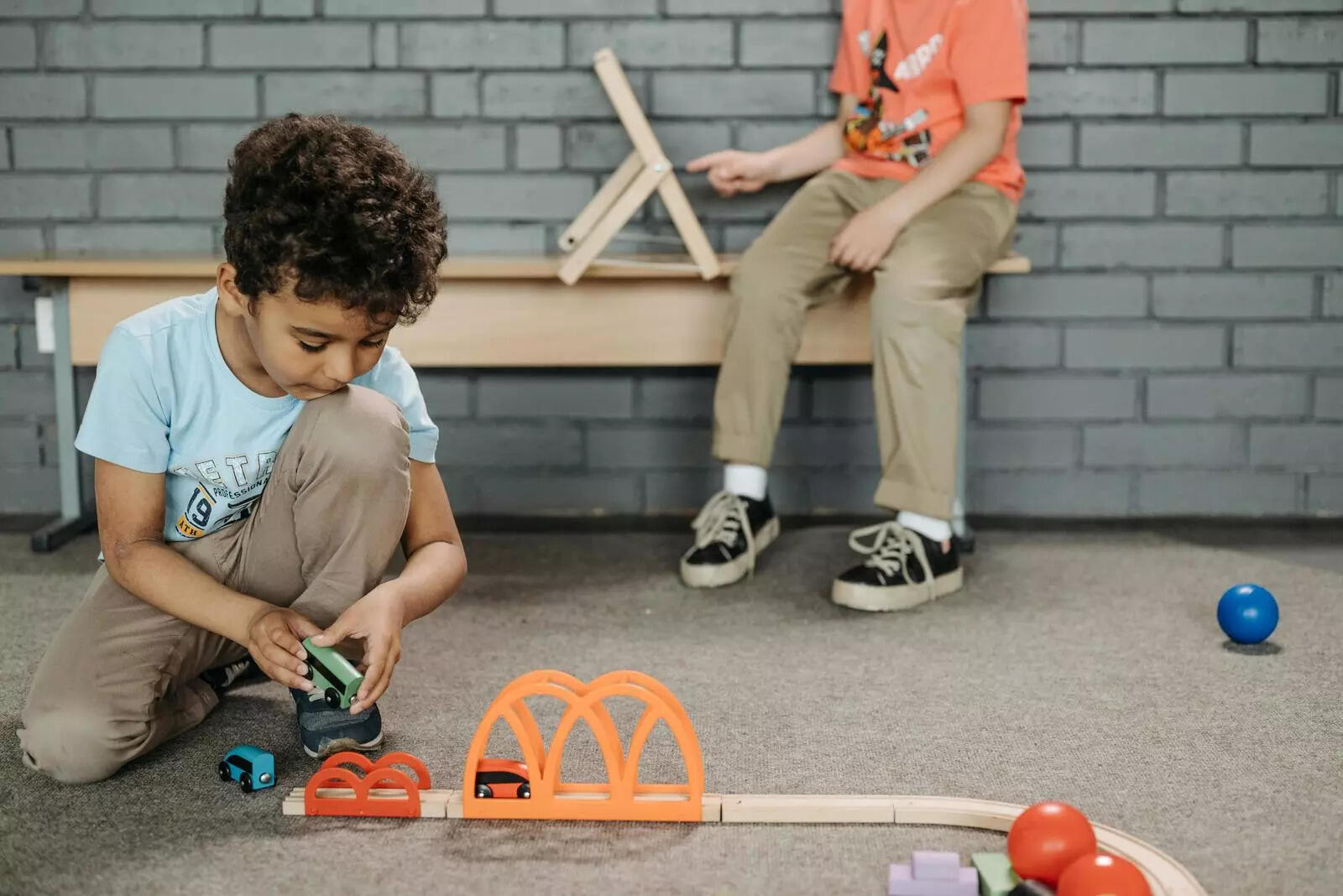
Playful learning naturally extends attention through engagement (Image: TOI)
An fNIRS (functional near-infrared spectroscopy) study published in Frontiers in Behavioral Neuroscience found that mindfulness practices stabilise attention and improve cognitive flexibility in pre-schoolers.
Kids in pre-schools, who were exposed to mindfulness exercises, showed neural activation patterns in the brain’s attention and flexibility centers consistent with improved sustained attention and cognitive shifting, which demonstrated the neurobiological impact of mindfulness.Bringing her expertise to the same, Sibi Fakih, Head Academic Research and Development at Kangaroo Kids International Preschools, recommended a list of unique activities for parents to boost focus in pre-schoolers -
Treasure hunt with clues
Create a simple treasure hunt with picture-based or rhyming clues.
This encourages kids to pay attention, remember steps, and follow a sequence. The excitement of finding the next clue helps sustain engagement over a longer period.
Try freeze-and-move games
Games like “Freeze Dance” or “Statue” strengthen a child’s ability to start and stop action based on cues. They train impulse control, a core part of attention, while keeping the experience playful.
Engage in sensory sorting challenges
Provide different textured objects (soft, rough, smooth) and ask children to sort them by touch alone.
Engaging multiple senses helps the brain build stronger attention pathways and enhances concentration.
Encourage story building circles
Sit in a circle and start a story with one sentence. Each child adds a line, listening carefully to maintain the storyline. This develops active listening, memory retention, and creative thinking—all key attention skills.
Practice mindful movement
Introduce short, child-friendly mindfulness exercises like pretending to be a “slow-breathing dragon” or balancing like a “flamingo.”
These activities calm the nervous system, improve self-regulation, and help children bring their focus inward.
Enable an attention-friendly environment
Beyond activities, an environment that supports focus is essential. Limit background distractions like TV noise, provide a comfortable and well-lit space, and build in short breaks. Praise effort and persistence rather than just results—this reinforces a growth mindset and encourages children to keep trying.Attention is not fixed; it grows with practice, consistency and patience. By weaving these simple yet powerful activities into everyday play, parents and educators can help pre-schoolers develop a stronger, more flexible attention span that will benefit them throughout their learning journey.









 English (US) ·