

 4 days ago
5
4 days ago
5
ARTICLE AD BOX
The Indian Express’s journalist Devendra Pandey recalls the debut of Jasprit Bumrah, 10 years ago. Devendra was reporting on that tour in Australia where Bumrah played the final game of the 5-match ODI series and clinched India’s solo win.
It was my first trip to Australia as a young cricket journalist, and I had no sense then that I was about to witness the birth of greatness. That tour also marked the international debut of Jasprit Bumrah, who would go on to become India’s finest fast bowler—and one of the game’s GOATs. This Friday marks ten years since that first appearance. His beginning, like so many remarkable careers, arrived without warning or ceremony, forged instead in chaos.
In early January 2016, the BCCI’s senior selection committee decided to take a punt on a young fast bowler from Gujarat for India’s T20 series in Australia. Bumrah was barely known outside IPL circles, where his awkward, almost jarring action for the Mumbai Indians had made him intriguing, if not entirely trusted.
Before he could even pack his bags for Adelaide alongside Yuvraj Singh, Ashish Nehra, Hardik Pandya and others, Bumrah was told his plans had changed. He wasn’t joining the T20 squad just yet. Instead, he was flying to Sydney.
Young pacer Jaspreet Bumrah gets his ODI cap. All set to make his Debut at the SCG #AUSvIND pic.twitter.com/M9HmZiw8S1
— BCCI (@BCCI) January 23, 2016
There was no ticket to Adelaide waiting. Bumrah would travel first to Sydney instead. The arrangement was simple and unsentimental. Bumrah would travel with the T20 players who were also part of the ODI squad, reach Sydney a day before India’s fifth and final ODI against Australia, and—most likely—remain a spectator.
For me, touring Australia for the first time, Bumrah’s journey felt like a footnote. He wasn’t in the ODI squad. He wasn’t expected to play. Just another promising name passing through.
Destiny, though, had other ideas.
On the eve of the match, Bhuvneshwar Kumar was ruled out with a fracture in his left thumb. The obvious replacement was left-arm seamer Barinder Sran. But MS Dhoni, never one for obvious choices, looked elsewhere. He chose Bumrah—the fast bowler not even named in the ODI squad.
Kapil Malhotra, India’s team manager at the time, still recalls the moment vividly. Bumrah had barely shaken off his jet lag. He was still adjusting to the time zone when he was told he would make his international debut. Raised by a single mother—his mother was a school principal in Ahmedabad—Bumrah waited, expecting long meetings, explanations, perhaps a detailed plan.
Story continues below this ad
Those who had played under Dhoni knew better. The captain disliked long conversations.
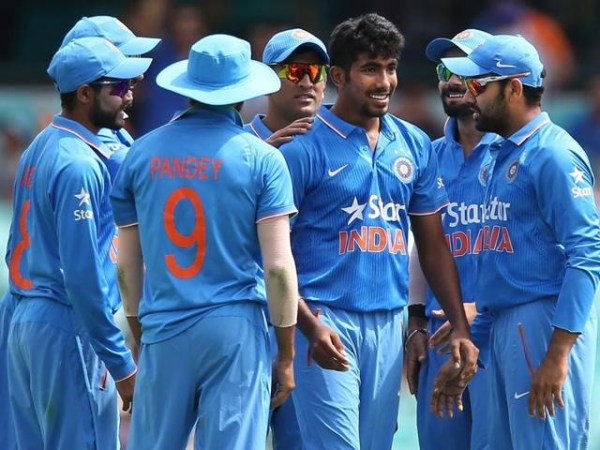 Bumrah was India’s best pacer on that day in Sydney in 2016, on his international debut. (AP Photo)
As the start of play drew closer, Bumrah waited for a senior player to walk up, to offer advice or reassurance—anything at all. No one did. Not a word. Finally, Dhoni came over and said, simply, “Just be yourself and enjoy.”
That was it.
When Bumrah took the ball, there was no visible sign of nerves. In a high-scoring contest where most bowlers were taken apart, the debutant stood out. He conceded just 40 runs in his ten overs, while more experienced teammates went at six an over or more. His open-chested, unorthodox action—combined with decent pace and a release point wide of the crease—posed questions Australian batters struggled to answer.
Steven Smith later admitted Bumrah was quicker than expected. His inswinger, delivered with a snappy wrist and an unfamiliar angle, was difficult to pick. Malhotra revealed after the match that the Indian dressing room was buzzing, while the Australians were left wondering why India hadn’t found room for him sooner.
Story continues below this ad
In quieter conversations after the game, Bumrah admitted something else. Dhoni had never seen him bowl at any level before that match. During the game, Bumrah wanted to bowl yorkers at the death and sought his captain’s permission. Dhoni hesitated—missed yorkers could cost matches. What he didn’t yet know was that yorkers were Bumrah’s greatest strength.
But Bumrah trusted his skill. He went for them anyway.
The execution impressed even Dhoni.
India won the match, thanks largely to Manish Pandey’s century. But somewhere that night, Dhoni knew he had found something rarer—a bowler capable of redefining India’s fortunes at the death.
India went on to win the T20 series 3–0. Bumrah finished with six wickets. After one of the games, he asked Malhotra out for dinner. The manager smiled and shook his head. “You’ll be mobbed,” he said.
Bumrah laughed. “Sir, mujhe kaun jaanega?”
Story continues below this ad
He had no idea that ten years later, the entire cricketing world would.



 English (US) ·