

 1 hour ago
3
1 hour ago
3
ARTICLE AD BOX
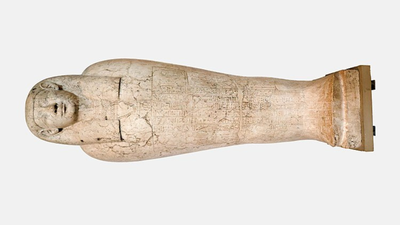
In July 2018, archaeologists in Alexandria, Egypt, cracked open a colossal 27-tonne black granite sarcophagus at an under-construction site. This huge grave had puzzled archaeologists for weeks.
Buried for over 2,000 years, it promised both treasures and terrors. Instead, upon opening, it revealed neither jewellery nor gold but some skeletons lying in foul-smelling liquid. Before any further speculations could happen, the rumours spread across the town that they might be Alexander the Great’s, as was the fear of the Ptolemaic curse. The incident bolstered discussions over dashed dreams of Alexander, sparking fresh rows about the lives of ancient individuals and how they survived through wars.
How Egypt’s giant black sarcophagus was discovered in Alexandria
The sarcophagus surfaced during routine construction of the Sidi Gaber district of Alexandria. It measures nearly 3 metres long and 2 metres high. This intact Ptolemaic era giant, dating to around 323 BC, post Alexander the Great's death, drew instant fame. Sealed tight, it weighed 27 tonnes and stood out as one of the largest ever found in archaeological history.Social media exploded with wild theories: Was it Alexander's lost tomb? Or a cursed pharaoh's lair? Egypt's Ministry of Antiquities faced mounting pressure but proceeded with caution, enlisting military engineers for the lift.
“When we open the sarcophagus, we hope to find objects inside that are intact, which will help us to identify this person and their position,” Dr Ayman Ashmawy, the head of ancient Egyptian artefacts at Egypt’s Ministry of Antiquities, told The Guardian.As BBC News reported on 20 July 2018, “the lid shifted just 5 cm at first, unleashing a stench so vile, described as rotten eggs mixed with sewage that workers recoiled.”
Full opening confirmed the rumours were off-base.
Whose are these three skeletons
Peering inside, the team found three skeletons submerged in 1.5 metres of red-brown, contaminated water. No ornate mummies, gold, or jewels, just bones jumbled in a family-style burial.Mostafa Waziri, Secretary-General of Egypt's Supreme Council of Antiquities, broke the news in his official statement, “We found the bones of three people, in what looks like a family burial… Unfortunately, the mummies inside were not in the best condition, and only the bones remain.” One skull bore cracks hinting at an arrow wound, suggesting violent death, perhaps a soldier. Experts suspect military men from Ptolemaic times, when Greeks ruled Egypt. DNA tests and further analysis later pointed to a possible nobleman, butcher, and teen, with signs of battle injuries but the sarcophagus itself held no inscriptions to name its occupants.
Debunking the mummy curse myth
The putrid odour reignited "mummy's curse" tales, evoking the 1922 opening, where Lord Carnarvon died soon after. Online panic peaked: Would plagues follow?Waziri quashed it with humour. “I was the first to put my whole head inside the sarcophagus… and here I stand before you… I am fine,” he declared at a press conference with the BBC.Science backs him as National Geographic notes no solid evidence links tomb openings to supernatural woes, Carnarvon's death was likely from a mosquito bite and infection, not ancient hexes. On the other hand, the smell coming from it was just sewage from rising groundwater infiltrating the sealed tomb over centuries. In short, no archaeologists fell ill, and the site stayed safe.
What it tells us about Ptolemaic Egypt
This black granite sarcophagus in Egypt sheds light on Alexandria's layered history.
Founded by Alexander in 331 BC, it blended Greek and Egyptian ways under the Ptolemies. Such tombs, often for elites, also highlight everyday burials, not just kings but ordinary men as well.The skeletons' poor preservation underscores time's toll; without ideal conditions, flesh vanishes, leaving bones to tell stories. Ongoing studies at Alexandria University aim to analyse, classify and date them via osteology and genetics, potentially revealing family ties or battle tales.
Is it the grave of an Alexandrian warrior?
Far from a letdown, the skeletons in the Alexandria sarcophagi remind us that archaeology thrives on surprises. No legendary ruler, but real people, maybe warriors, fell in strife. It humanises antiquity, proving history hides in humble graves, not just pyramids.Experts like Professor Nicholas Reeves, writing in The Guardian, call it "priceless" for its Ptolemaic insights. Displayed briefly in Alexandria's museum, it now fuels debates on preservation amid urban growth.In a world craving curses and kings, this tale grounds us: The past's true magic lies in its ordinary souls.





 English (US) ·