

 1 hour ago
6
1 hour ago
6
ARTICLE AD BOX
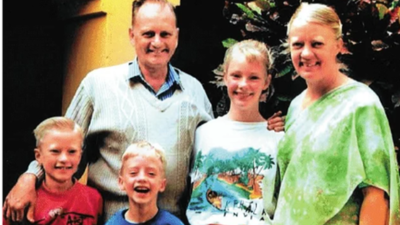
Graham Staines with his sons, daughter and wife Gladys, who was later conferred the Padma Shri. An inquiry panel dismissed accusations of forced conversion that were said to have led to the fatal attack on the missionary and his sons
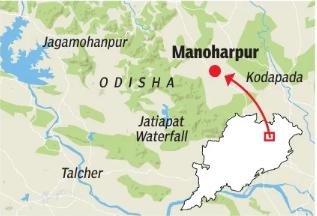
Nayam Marndi has long lost count of her own age, but the woman — now in her 70s — has not forgotten the horrific night of Jan 22-23, 1999. Sitting on the verandah of a neighbour’s house in Kacha Sahi of Manoharpur village, she points towards the spot, next to a church, where Graham Staines and his two sons, Philip (10) and Timothy (6), were burnt alive.
“It happened exactly there,” she says, the memory of that night tightening her wrinkled face and moistening her eyes.Twenty-seven years after the brutal killings, the case is back in the headlines after the Odisha govt placed before the Supreme Court its 2022 remission policy, which allows remission for convicts whose death sentences have been commuted to life imprisonment after 25 years in jail. Dara Singh, convicted for the killing of Staines and his two sons, has already spent more than 26 years in prison.
.
Odisha advocate general Pitambar Acharya informed the apex court that the State Sentence Review Board is actively examining Singh’s remission plea and has sought reports from Odisha prison authorities and the administration of Singh’s native Auraiya district in UP.A woman in her 30s in Kacha Sahi appeared uneasy at the prospect of Dara’s release. “Mahendra Hembram had come here some time ago, and our people told us to be careful.
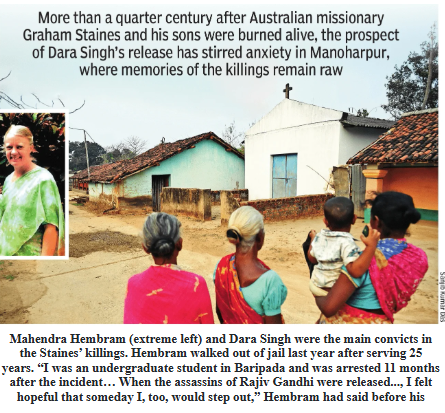
We did feel intimidated. I don’t know what it will mean for us if Dara Singh returns,” the woman – a Christian – said, adding, “The situation, after all, has remained peaceful all these years.” Hembram, another convict in the burning case, came straight back to the village after serving 25 years in prison.“All of us — my husband Benjamin, our two sons and daughter — were locked inside as the mob grew in size,” recalls Marndi. “From the room, we heard the shouting of the crowd and the cries of the helpless victims,” says the woman whose house stands just one dwelling away from the church. By the time their door was unlatched the next morning, the burnt vehicle and bodies inside had turned the village into the site one of the most horrific crimes Odisha had ever witnessed.“Life has been quiet since then. Our children have grown up. But the memory is still fresh,” says Marndi, who speaks only Santali but understands Odia.
“Our village had never seen a night like that before, and it has never seen anything like it since.”Night That Changed ManoharpurBack to that winter night in Jan 1999. Staines had converted the rear of his station wagon into a makeshift bed, covering the vehicle with straw to keep out the cold. Close to midnight on Jan 22-23, a mob descended on the spot, raising loud cries as it advanced. Armed with axes and other weapons, the attackers smashed the vehicle before dousing it with petrol and setting it ablaze.
.
The inferno consumed the missionary and his two young sons, turning the quiet clearing into the site of a brutal act of religious hatred. Staines and his children were asleep after attending an annual “jungle camp”, a social and spiritual gathering. The mob was enraged by what it believed were missionary conversions and the “ruining of tribal culture”.How The Village RemembersFor younger residents, the horror survives in stories that still surface in village conversation.
“We have heard the account from our elders. People still talk about it,” says Malati Marndi, who came to Manoharpur after her marriage five years ago.Ask anyone in the village, and they pause before speaking. Nimai Murmu, a 67-year-old farmer, finally puts it this way: “There were tensions and disagreements, but no one imagined it would turn into something so horrific. We live together peacefully now, but the scar of that night will stay with us forever.”The village itself has changed visibly. A new, much larger, church now stands a stone’s throw from the old one, which remains intact, but locked. The road leading in is well paved, like most in the state, and clay-tiled roofs have started to make way for concrete structures. Prosperity is visible in parts, though for many villagers, rearing goats, collecting mahua flowers, and seasonal agriculture remain the main sources of livelihood.“I was an undergraduate student in Bhubaneswar then,” recalls Bhuban Murmu, a 47-year-old grocery shop owner. “I read about the incident in a newspaper and rushed here. The village felt unfamiliar that day — it was hard to believe it was the same place where we had grown up.”The murders shocked the nation. Then PM Atal Bihari Vajpayee condemned the killings, while President K R Narayanan described the crime as “belonging to the world’s inventory of black deeds” and “a monumental aberration” that had tarnished India’s tradition of tolerance.The attackers had accused Staines of carrying out forced conversions — allegations his family has consistently denied. Singh and Hembram were sentenced to life imprisonment, with the Supreme Court observing that such violence “strikes at the root of an orderly society”.Making A Home In IndiaThe shock of that night still reverberates far beyond Manoharpur, around 70km from Keonjhar district headquarters and close to the Mayurbhanj border.
It was in the isolated pockets of Mayurbhanj, where leprosy patients once lived as outcasts, that the Australian missionary devoted much of his life. Arriving in Baripada in 1965, he spent the next three decades transforming countless lives before his own was cut short.Born in 1941 in Palmwoods, Queensland, Staines was just 24 when he first came to India. Working with the Evangelical Missionary Society of Mayurbhanj, he immersed himself in local life and eventually became fluent in both Odia and Santali.
The Mayurbhanj Leprosy Home became the centre of his mission. There, Staines did not just treat patients; he taught skills and crafts, helping those ostracised by society build sustainable livelihoods.
His “jungle camps” — mobile outreach programmes — became a lifeline for remote tribal hamlets.Staines’s widow Gladys (75), a nurse, remained in India for many years after the deaths of her husband and children, continuing his work.
She founded the Graham Staines Memorial Hospital in Baripada in 2004 before eventually returning to Australia. She received the Padma Shri in 2005.Today, the Staines family’s legacy endures. The leprosy home in Baripada continues to serve many, while the hospital founded by Gladys functions with a skeletal staff of just one doctor and a couple of nurses. “The leprosy home currently has 51 inmates,” said Subhankar Ghosh, a close associate of the Staines family who remains involved in the work they began.
Run on donations from good Samaritans, it is a constant struggle to keep both the home and the hospital going, Ghosh says.Unfinished HealingThe CBI chargesheeted 18 people on June 22, 1999. Three years later, on Sept 15, 2003, a trial court convicted Dara Singh, a Bajrang Dal member, and 12 others. Singh was sentenced to death and the rest to life imprisonment. The Orissa high court, on May 19, 2005, commuted Singh’s death sentence to life and upheld Hembram’s life term while acquitting the rest.
The Supreme Court later affirmed the life sentences of Singh and Hembram.Hembram, now 47, walked free in April last year after Odisha remitted his life sentence. On March 18, the SC said it expected the state govt to take a decision on Singh before May 13. “The sentence review board will take an appropriate decision soon,” advocate general Acharya said.Hembram insists what happened that night in Jan 1999 was “more of an accident than intentional”.
“I was an undergraduate student in Baripada and was arrested 11 months after the incident... When the assassins of former PM Rajiv Gandhi were released after completing their sentences, I felt hopeful that someday I, too, would step out,” he adds. Hembram is now planning to marry a college teacher and start afresh.The Justice D P Wadhwa Commission, set up by the Centre to probe the killings, concluded that the crime was personally driven by Singh.
It found no evidence linking the attack to any organisation. It found that Singh had grown into a local strongman who exploited religious sentiments to build up support. With many cases pending against him and little administrative presence, he cultivated a following by intercepting cattle being transported and redistributing them.
Over time, tribal youth began to see him as a protector figure. His attention later shifted to Christian missionaries.
It was in this climate, the commission said, that he mobilised supporters and led the mob attack on the Staines.Though associated with missionary activity, the commission noted that Staines was not directly involved in conversions. But tensions between converted and non-converted tribals, combined with prolonged administrative indifference, had created a fragile social fabric. It was within this fraught landscape that one of the country’s most shocking hate crimes unfolded, leaving scars the region is still grappling with nearly three decades later.







 English (US) ·