

 1 hour ago
6
1 hour ago
6
ARTICLE AD BOX
Three proposed bills promise women's reservation but open a wider debate on delimitation, census-based seat allocation and federal balance, with opposition and legal experts flagging serious political and constitutional concerns.

India Today breaks down the provisions of the three bills and the key issues likely to arise during the debate.. (File Photo: ITG)
Three important bills are set to be debated in the Parliament of India over the next three days, with the government claiming they are necessary to implement 33% reservation for women, while the Opposition says they raise serious political and constitutional questions.
India Today breaks down the provisions of the three bills and the key issues likely to arise during the debate.
THE BILLS
The first proposed Constitutional Amendment Bill seeks to increase the number of seats in the Lok Sabha to 850, 815 seats for persons directly elected from the states and 35 seats for persons representing the Union Territories, in a manner Parliament may decide by law. It also calls for changes in the number of seats in each state assembly on the basis of population.
The second proposed amendment seeks changes in the Union Territories Act, the J&K Reorganisation Act and the GNCT Delhi Act to allow for delimitation and changes in the number of assembly seats.
The third bill proposes a new Delimitation Act to set up a Delimitation Commission of India to undertake the exercise.
CONSTITUTIONAL AMENDMENT BILL
The most significant proposal is Bill No. 107/2026 — the Constitutional Amendment Bill — which provides for an increase in the number of Lok Sabha seats, changes in the number of seats in state legislative assemblies, and other amendments.
Increase in number of Lok Sabha seats
The amendment proposes: “not more than eight hundred and fifteen members chosen by direct election from territorial constituencies in the States; and (b) not more than thirty-five members to represent the Union territories, chosen in such manner as Parliament may by law provide.”
Opposition parties have raised questions over the basis of the figure of 850 and how seats will be distributed among states and Union Territories.
WHAT IS THE CONTROVERSY IF SEATS ARE ‘ADJUSTED’?
There are two key issues: how the population will be counted and which states may lose representation.
Clause (3) of Article 81, which deals with the composition of the Lok Sabha, provides that allocation of seats to states will be based on population and can be adjusted according to census figures.
After the 2001 and 2003 amendments, readjustment of seats was frozen on the basis of the 1971 census until after the first census conducted post-2026.
The proposed bill seeks to “unfreeze” this, allowing Parliament to determine which census figures will be used.
The amendment proposes: “(3) In this article, the expression ‘population’ means the population as ascertained at such census, as Parliament may by law determine, of which the relevant figures have been published.”
This has triggered concerns over whether the 2011 census or another dataset will be used.
ARE WOMEN GETTING RESERVATION IMMEDIATELY?
The short answer is no.
Reservation linked to delimitation
The proposed amendment to Article 334A states that reservation for women will come into effect only after a delimitation exercise is completed.
“the provisions relating to the reservation of seats for women shall come into effect after an exercise of delimitation is undertaken for this purpose.”
This means delimitation must first be carried out at both the national and state levels.
At the same time, the Statement of Objects and Reasons says the latest published census will be the basis for women’s reservation.
This raises two unresolved questions: how long the delimitation exercise will take and which census data will be used.
An open petition by women’s organisations, MPs and lawyers has called for “delinking” reservation from delimitation, arguing that a fixed 33% quota does not depend on population changes.
WOMEN, SC/ST QUOTAS - HOW WILL IT WORK?
Under Section 8 of the proposed Delimitation Bill, the Commission will determine:
- Allocation of Lok Sabha seats to each state and Union Territory, including SC/ST reservation
- Total number of seats in each state assembly and SC/ST reservation
- Reservation of one-third seats for women, including within SC/ST categories
The bill provides that seats reserved for women will be allotted by rotation across constituencies.
It also specifies that seats reserved for women within SC/ST categories will be rotated within those constituencies.
HOW WILL ASSEMBLY SEATS BE CALCULATED?
The Delimitation Commission will first determine Lok Sabha seats for each state and then calculate the number of seats in state assemblies accordingly.
While Article 170 continues to cap assembly seats between 60 and 500, the amendment allows seat allocation to be based on “population as ascertained at such census, as Parliament may by law determine”.
This means assembly seat allocation will also depend on the census data chosen.
ARE SOUTHERN STATES GOING TO LOSE SEATS?
Opposition parties, particularly in southern states, have raised concerns that population-based redistribution could reduce their representation.
States that have implemented population control measures may lose seats, while states with higher population growth may gain.
The Statement of Objects and Reasons acknowledges that demographic changes, migration and urbanisation have led to disparities.
Former Supreme Court judge Sanjay Kishan Kaul said, “Anything that reduces the political bargaining power of states will be seen negatively if the ratio of seats changes, it may divide the situation region-wise.”
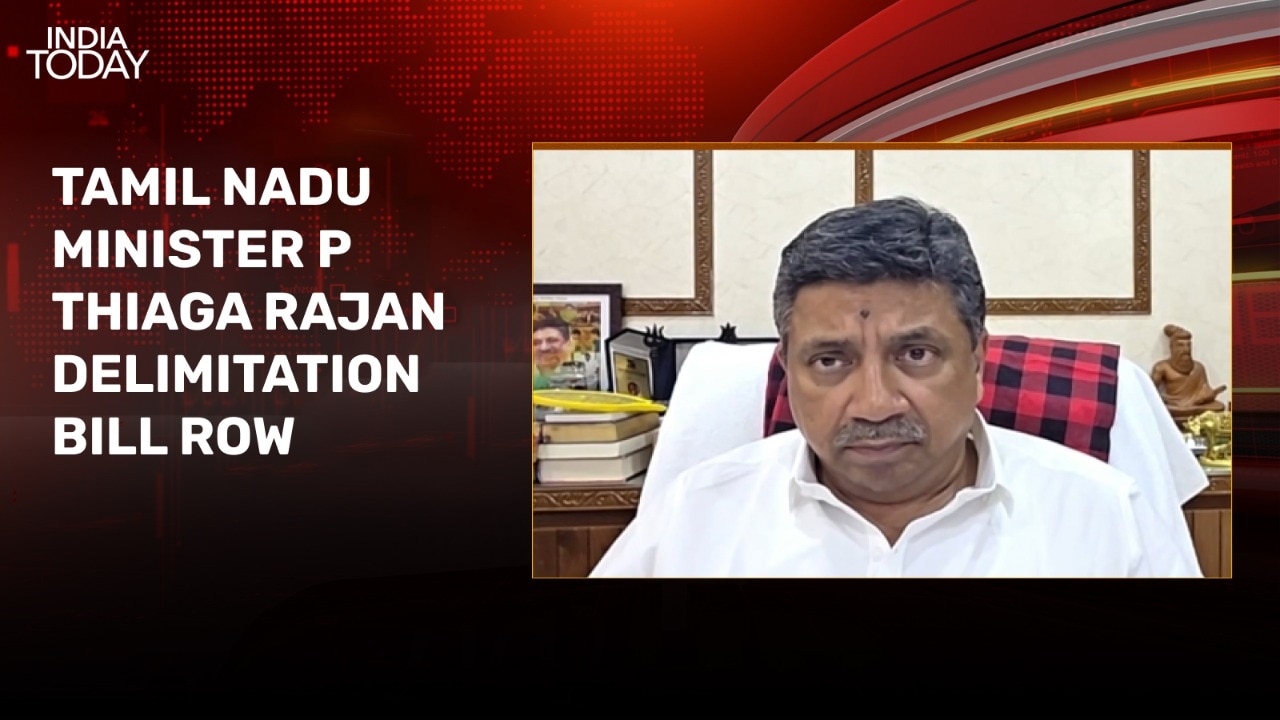
Tamil Nadu Chief Minister MK Stalin warned of protests if states lose representation, while DMK leaders called the move a violation of constitutional guarantees.
RESERVATION HAS AN END DATE
The proposed amendment retains the provision that women’s reservation will last for 15 years from implementation, unless extended by Parliament.
This mirrors the provision under the 2023 law on women’s reservation.
OPPOSITION: PRO-WOMEN, ANTI-DELIMITATION
Opposition parties have said they support women’s reservation but oppose linking it with delimitation.
Congress leader Rahul Gandhi said the Opposition “unequivocally supports women’s reservation but will oppose delimitation”.
Legal experts have also cautioned that combining seat redistribution, delimitation and reservation into one framework could create a politically sensitive situation.
- Ends
Published By:
Sonali Verma
Published On:
Apr 15, 2026 21:05 IST







 English (US) ·