

 42 minutes ago
4
42 minutes ago
4
ARTICLE AD BOX
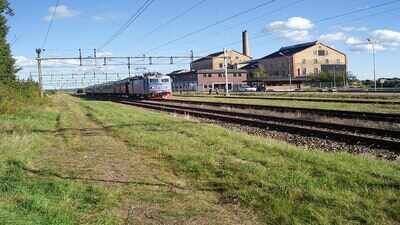
Tourist train pulled by a Green Cargo engine at a freight station in Hasslarp, Sweden, on Åstorp–Kattarp route. It is heading towards Kattarp. A former sugar factory is in the background. Image Credit: Wikimedia Commons
A railway station can reshape a town by improving connectivity, influencing commuting patterns, and changing where people choose to live. But does better rail access actually make people wealthier? In a recent 20-year study conducted by researchers at Lund University and K2, Sweden's National Knowledge Centre for Collective Mobility, a different answer is provided.
According to the study, towns in Sweden that gained train stations between 1995 and 2015 saw an 18.2 percent increase in total population 20 years after the stations opened, but there was no significant increase in the average income of residents. The train stations primarily influenced where people chose to live, leading to a redistribution of population within regions.The paper also reports that the gains were not evenly shared: areas with new stations saw a 21.6 percent rise in the working-age population and a 5.8 percentage point increase in post-secondary educational attainment, while unemployment was 2.7 percentage points higher than in the matched control areas.
Using a conditional difference-in-differences design, the authors found that the effects varied by initial income level, suggesting stations can reshape local demographics and labour markets in more than one way.Comparison of 44 towns over 20 yearsAccording to a study available through ScienceDirect, as part of the study, researchers assessed 44 Swedish municipalities where the train service operated from 1995 to 2015 and compared them with other similar municipalities which did not have stations.
Using a difference-in-differences method, the researchers measured the impact on population, income, education and unemployment over the 20 years after the stations opened. The study found that towns with stations experienced significantly higher population growth than comparable towns without stations.
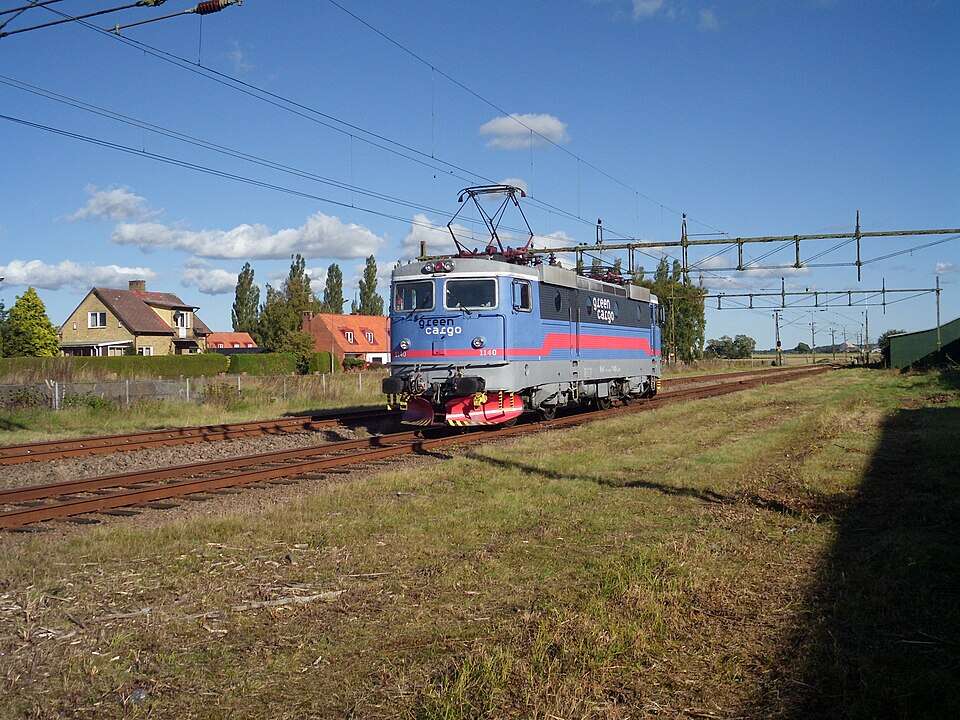
A Green Cargo engine at a freight station in Hasslarp, Sweden, on Åstorp–Kattarp route. (This side of the station is oriented towards Åstorp.). Image Credit: Wikimedia Commons
The population grew, but average earnings did notThe first finding concerned population growth. Twenty years after the stations opened, towns with rail access had 18.2 percent more population than similar towns without stations.
The working population grew by 21.6 percent, and the total level of earnings increased by 22.5 percent alongside the population growth. However, researchers found no significant increase in average income among residents.Lead researcher Carl-William Palmqvist, an associate professor at Lund University and a researcher at K2, said the findings point to a redistribution of people within regions rather than an overall productivity boost.
In other words, towns with stations gained residents through regional redistribution rather than showing evidence of broader productivity growth.Levels of education grew, while levels of unemployment also increasedThe study also highlighted more complex socioeconomic changes. The researchers reported that the share of residents with post-secondary education rose by 5.8 percentage points in towns where the stations were built. By contrast, the share of residents receiving unemployment benefits rose by 2.7 percentage points compared with towns that did not receive stations.
According to the researchers, the changes were probably driven by people from different social backgrounds moving to different places rather than by a uniform shift across the whole community.The effect also depended on a town’s starting conditions. Richer towns tended to attract relatively affluent residents, while poorer towns attracted people with similar income levels. The authors found that population changes varied widely from place to place, especially across towns with different income levels.Implications for the findingsThe researchers hope the findings will help guide future transport investment, especially decisions about new railway stations or services in regions and municipalities. Rather than assuming new railway stations will always bring prosperity, decision-makers should note that they mainly influence where people choose to live. Improved connectivity does not guarantee higher average incomes or productivity on its own.Countries considering investment in regional rail networks, such as the UK, should take the study’s main conclusion into account. Improvements in transport networks can shift population patterns and support local development, but they do not necessarily raise individual incomes. Sweden’s experience suggests that railway stations can bring more people to a locality, but they alone may not be enough to raise individual incomes.









 English (US) ·