

 1 hour ago
3
1 hour ago
3
ARTICLE AD BOX
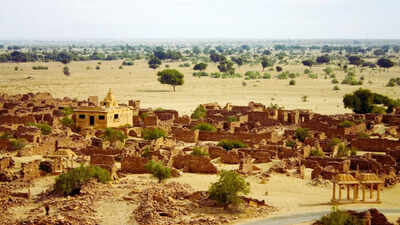
Kuldhara Village in Jaisalmer
About 18 km west of Jaisalmer, amid the stark beauty of Rajasthan’s Thar Desert, lie the silent ruins of Kuldhara village. Imagine hot sun, the day as dry as it can be, dust storm blinding you momentarily, crumbling sandstone homes, roofless temples, and deserted streets stretch across the arid landscape…no this is not a description of a scene from a Western cowboy movie.
This is the “haunted” village of Kuldhara, preserved in stillness for nearly two centuries.Officially, Kuldhara is an abandoned 19th-century settlement once inhabited by Paliwal Brahmins. Unofficially, it has become one of India’s most talked-about “haunted” destinations.While historians and archaeologists offer grounded explanations for its abandonment, the village continues to draw paranormal enthusiasts, ghost hunters, and curious travellers.
Here are five reasons why Kuldhara holds such a powerful grip on the imagination.
The mystery of the sudden abandonment
How was one entire village abandoned – some say overnight. You see, Kuldhara was established in the 13th century and flourished for centuries under the Paliwal Brahmin community, known for their agricultural expertise and water management systems in the desert. However, in the early 19th century, most accounts place it around 1825, the village was abruptly abandoned.
Oral tradition holds that not just Kuldhara, but around 80–85 nearby Paliwal villages, were vacated overnight.
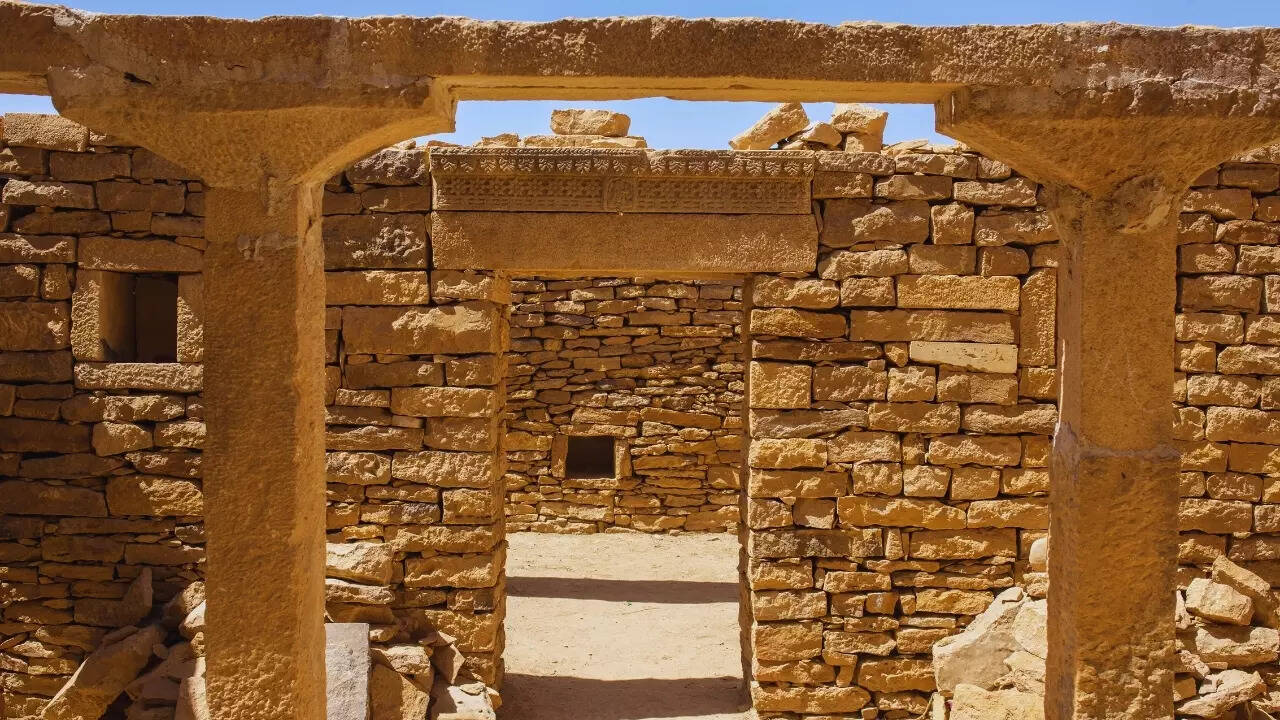
Abandoned homes in Kuldhara
What was the reason? According to local folklore, the reason behind their sudden departure was their oppression by Salim Singh, a powerful minister in the Jaisalmer kingdom, who imposed heavy taxes on them or wanted to marry a girl from that town against her will. Historians, however, suggest a combination of factors:
- Excessive taxation
- Political instability
- Declining water resources
- Changing trade routes
There is no conclusive evidence within archived sources to substantiate the dramatic phenomenon of an overnight flight, but the sudden disappearance, for sure, generates interest among paranormal enthusiasts.
Among these enthusiasts, the concept of an entire community disappearing “overnight” adds to the mystique.
The legend of the curse
Perhaps the most persistent element of Kuldhara's reputation is the supposed curse that departing villagers left behind. The story states that the Paliwals had laid a curse upon the land so that nobody should have been able to reside there ever again. To this date, Kuldhara remains uninhabited. There is no historical evidence to support the existence of the curse, and Rajasthan's tourism department promotes the site more for its heritage value rather than paranormal claims.

The desert setting and architectural ruins
Even without ghost stories, Kuldhara is atmospheric. The village consists of:
- Rows of sandstone houses
- A temple complex
- Narrow lanes
- Courtyard-style homes
- Remains of a well-planned settlement layout
The Archaeological Survey and Rajasthan authorities have preserved the ruins, and the site is maintained as a protected heritage location. By day, the golden sandstone glows under the desert sun. By dusk, shifting light and long shadows transform the ruins into a dramatically eerie landscape. Paranormal enthusiasts often describe such environments as ideal for “energy sensing” or atmospheric investigation, though there is no scientific evidence supporting supernatural activity at the site.
The silence of the Thar Desert, broken only by wind, contributes significantly to the psychological impact.
Popular culture and media attention
Kuldhara’s haunted reputation has been amplified by:
- Indian paranormal television shows
- Travel documentaries
- Social media storytelling
Several paranormal investigation teams have filmed night visits to the village. Some claim to record strange sounds or experiences; none of these claims have been scientifically verified. More importantly, the Rajasthan authorities restrict access post-evening hours, and official entry is allowed only during the designated timings.
Media exposure has played a big role in shaping up people's perception. Once labelled “India’s most haunted village” in travel features and online lists, Kuldhara’s identity shifted from archaeological site to paranormal hotspot in popular imagination.
The psychological allure of abandoned places
Paranormal tourism often overlaps with what psychologists call “dark tourism,” travel to sites associated with tragedy, mystery, or abandonment. Kuldhara fits this category not because of documented violence or disaster, but because of unresolved narrative. There are unanswered questions like: was the abandonment truly sudden? Were economic factors the main cause? Did environmental stress make survival impossible?The lack of definitive archival clarity allows folklore to thrive, and we, as curious travellers, love it. Today, Kuldhara is managed as a tourist attraction by the Rajasthan government. Visitors pay an entry fee, and the site is open during daylight hours. Rather than a confirmed “haunted village,” Kuldhara is better understood as a historical desert settlement layered with folklore.









 English (US) ·