

 1 week ago
6
1 week ago
6
ARTICLE AD BOX
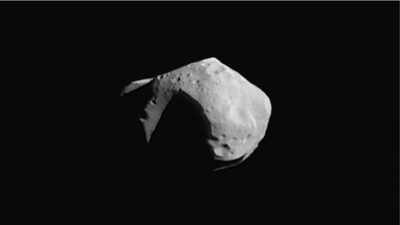
A recent study has confirmed that a massive crater in the North Sea, previously debated, was caused by a colossal asteroid impact 43-46 million years ago. Image Credits: Wikimedia Commons
When we look out over the North Sea, we usually picture shipping, wind turbines and fishing boats. We picture heavy industrial shipping vessels cutting through the choppy waters, offshore wind turbines spinning rhythmically against an overcast sky, and commercial fishing boats navigating the shallow coastal shelves.
For generations, people have viewed the North Sea as a familiar part of European geography. The seabed beneath these waters is often seen as a landscape of shifting sandbanks, sediment and marine life.But a closer look beneath the ocean floor reveals a very different story of ancient chaos and cosmic violence. Hidden hundreds of metres beneath the modern seabed lies a massive scarred geological footprint that completely alters our understanding of our planet's history. Sometimes, modern surveys reveal that a tranquil underwater landscape was once the site of a dramatic extraterrestrial disaster. For geologists, a single event can reveal a time when Earth faced sudden changes from deep spaceThis prehistoric event was documented in a study published in Nature Communications, titled Multiple lines of evidence for a hypervelocity impact origin for the Silverpit Crater. The research paper presents new evidence in the long-running debate over the Silverpit Crater.
By combining state-of-the-art seismic imaging with a thorough laboratory evaluation of historical drilling core samples, the authors provided compelling evidence that a major space rock collided with our planet millions of years ago, altering the surrounding environment in an instant.The paper says high-resolution 3D seismic imaging revealed the crater’s full architecture, including a central uplift, an annular moat, a damage zone and even multiple secondary craters on the ancient seabed.
Biostratigraphy pins the event to the middle Eocene, about 43–46 million years ago, while two shocked grains in nearby drill cuttings indicate pressures of roughly 10–13 GPa, matching the numerical impact models.Uncovering the definitive proof of a prehistoric collisionTo fully understand why this confirmation has caused such a stir among modern geologists, it helps to look at the long history of the site itself.
Located roughly eighty miles off the coast of Yorkshire, the three-kilometre-wide crater was first identified by geophysicists in 2002 during routine industrial exploration for oil and gas reserves. For more than twenty years, the scientific community remained divided over its origin, with some experts arguing that the rings may have resulted from underground salt movements or volcanic collapse.
The debate became so contentious that during a formal academic meeting in 2009, a majority of attending geologists actually voted against the asteroid theory.The Nature Communications study addresses those earlier doubts by presenting evidence that is difficult to explain by ordinary geological processes. The research team, led by Dr Uisdean Nicholson of Heriot-Watt University along with Professor Gareth Collins of Imperial College London, managed to locate and study microscopic rock fragments recovered from an old exploratory well in the area. Under high-powered microscopes, these samples revealed the presence of rare, shocked quartz and feldspar crystals that bear distinct physical fractures.
These unique structural changes can only be produced when minerals are subjected to the extreme, instantaneous shock pressures generated by a hypervelocity cosmic impact.By utilising these mineral findings alongside sophisticated computer simulations, the scientists were able to reconstruct the exact dynamics of the ancient disaster. The data indicates that an asteroid measuring approximately one hundred and sixty metres in diameter plummeted from space at a speed of fifteen kilometres per second.
The space rock struck the shallow ocean at a low angle from the west, creating an explosion at the seafloor that vapourised water and bedrock alike.
Within mere minutes of the collision, a staggering curtain of vapourised rock and water rose one and a half kilometres into the sky before collapsing back down into the ocean.
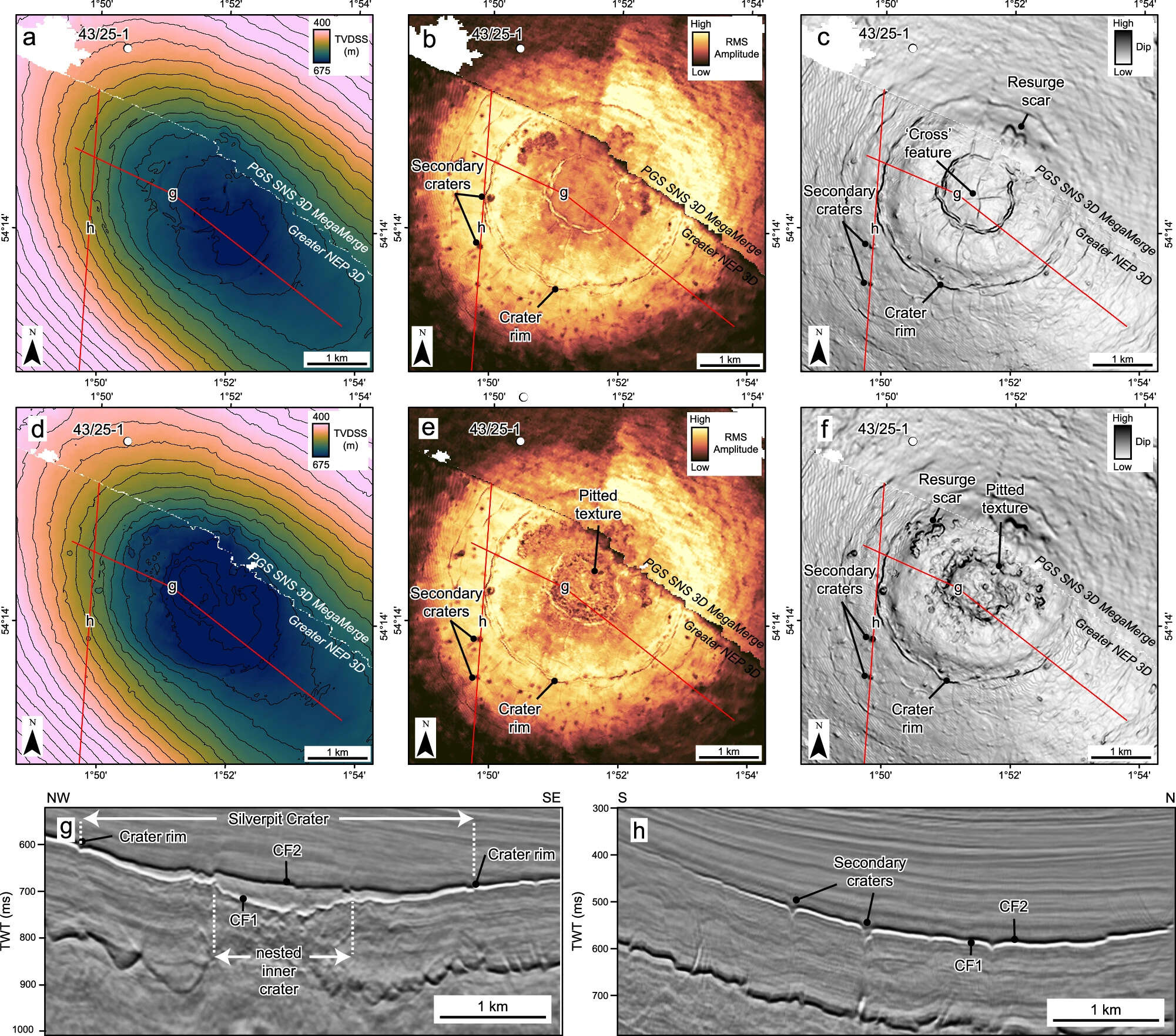
Scientists combined advanced seismic imaging with analysis of ancient rock samples, revealing a hypervelocity collision that vaporized bedrock and triggered a colossal tsunami. Image Credits: Multiple lines of evidence for a hypervelocity impact origin for the Silverpit Crater study
The reach of an ancient tidal waveThe modelling provides a picture of the immediate environmental aftermath across northern Europe during the middle Eocene epoch.
When the towering plume of displaced water crashed back into the sea, it unleashed a massive, energetic tsunami that exceeded one hundred metres in height. This wall of water would have moved outward across the shallow sea at high speed, reshaping the ancient coastlines of what we now know as Britain, Scandinavia, and mainland Europe.According to the analytical models presented in the study, the preservation of the Silverpit Crater makes it an incredibly rare asset for modern planetary science.
Because Earth is geologically active, most ancient impact structures on land are eventually worn away or destroyed. Out of around two hundred confirmed impact craters discovered across the entire globe, only a tiny fraction have been identified beneath the ocean floor.
The structure was buried under sediment, which helped preserve features including a flat-topped central uplift and an encircling moat.This exploration into the deep history of the North Sea highlights the value of looking beyond the visible surface of our modern world. By showing strong evidence of a major environmental catastrophe right off the British coast, the study reminds us that our planet is connected to the wider solar system. Recognising the immense power of these relatively small space rocks encourages modern astronomers to keep a watchful eye on current near-Earth objects, demonstrating that the quiet waters we cruise over today carry the silent memories of a time when the sky fell.








 English (US) ·