

 1 hour ago
6
1 hour ago
6
ARTICLE AD BOX
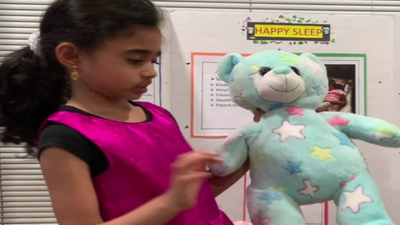
Image of kindergartener Vennela Attili| Image Credit: Patient Innovation
What makes this child's invention worth mentioning lies in the attempt to come up with a solution to the problem that many parents face. The idea comes from a young person who decided to develop a stuffed doll capable of mimicking such aspects as warmth, movement, and breathing.Happy Sleep was an invention made by a then-five-year-old child named Vennela Attili. As stated by Patient Innovation, the invention was inspired by the child's need to have an object that would simulate warmth, breathing sounds, and movement in order to help her relax and fall asleep independently.Even though no independent study has evaluated the effect of this invention on children's sleep, it can be linked to the findings obtained through scientific research.A familiar source of comfortThe advantage of the innovation is also associated with its simple nature. Instead of presenting some technological breakthrough, this innovation works with one thing with which kids are already well acquainted at the moment of sleeping - their favourite soft toy.Kids tend to develop emotional attachment to transitional objects, like a blanket or soft toy. This may help explain why the concept is easy to understand and relate to for many families.
The familiarity of stuffed toys may help explain why the idea has attracted attention.Addressing a common sleep strugglePutting children to bed in the evening continues to be a difficult task for many families. Many young children struggle with sleep during their early years, which can have an impact on emotions, behaviour, and the performance of the family as a whole.In this way, it seems that this invention tries to respond to one of those common situations experienced by families.
Namely, the time when the lights are turned off, but the child has not yet fallen asleep. As indicated by Patient Innovation, the idea behind Vennela’s invention came from watching how her mother used to sit next to her and gently pat her back in order to put her to sleep.
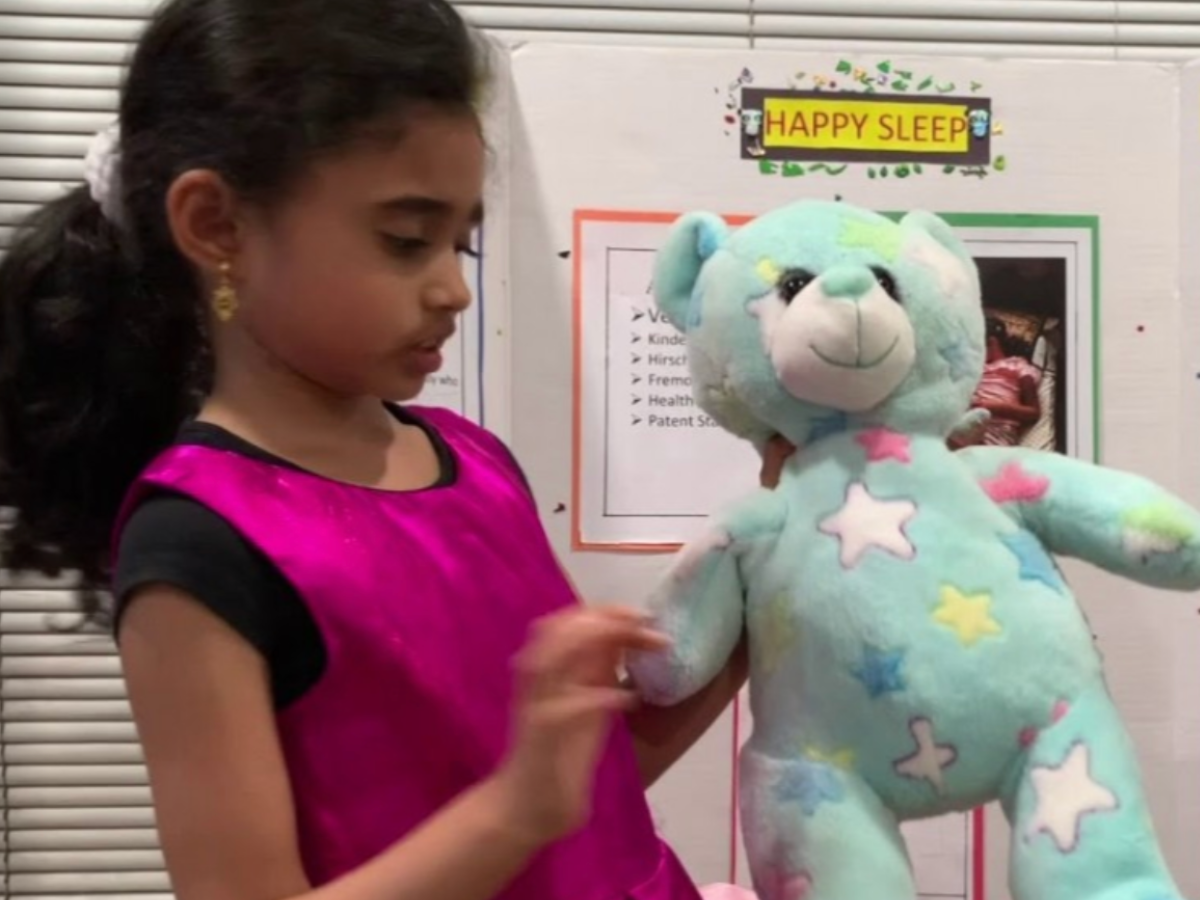
Image of kindergartener Vennela Attili| Image Credit: Patient Innovation
Why breathing and warmth matterEven though no published study has been done yet on the Happy Sleep prototype, there are a number of studies that give us a sense of why breath-like movements and warm sensations may bring some comfort to kids.According to a 2024 systematic review, parents' involvement in bedtime routines has an impact on how their children sleep. The researchers pointed out that many children need their parents present at bedtime to feel secure. A toy designed to mimic some aspects of parental presence may be intended to provide comfort during bedtime, although its effectiveness has not been independently evaluated.The issue of pre-sleep arousal is also under scrutiny in recent studies.
According to one study, higher pre-sleep arousal levels are associated with delayed sleep onset in preschool children. To put it simply, children who remain physically or mentally active before sleeping take more time to fall asleep.A soft toy that provides predictable sensory cues may be aimed at reducing that sense of alertness, although further research would be needed to determine whether a specific product achieves that effect.The rise of comfort-based sleep aidsUsing sensations for comfort in order to get good-quality sleep is nothing new, either. There continues to be ongoing research on the impact of touch, pressure, and other factors related to comfort on children's sleep.While it cannot be applied to breathing dolls, it shows that there is an increasing interest in ways of improving children's sleep without using medications. Moreover, sleep scientists examine the connection between body temperature and sleep.
Researchers continue to investigate the relationship between body temperature regulation and sleep quality.While it does not prove that a heated doll can help children sleep better, it provides evidence of why warmth is considered comforting.Safety remains importantIt is also pointed out by specialists that all sleep-related innovations intended for children must be regarded taking into consideration proper age safety measures.According to the reports, infants should not sleep on pillows or stuffed animals due to possible choking hazards. Safety measures depend on the child’s age, which makes it necessary to pay attention to the fact that certain sleep-related innovations are not appropriate for babies.Such a point should be remembered while considering inventions that improve sleep.A child’s solution to a universal problemThe significance of this story lies not only in the age of the inventor but in the problem she tried to address.
Difficulty falling asleep is an issue faced by many households worldwide, and the concept of having a stuffed animal friend is something most kids can relate to easily.Regardless of whether further studies will prove the usefulness of these inventions, one thing is clear: this invention is remarkable due to its combination of innovation with emotional satisfaction. In this respect, the story itself has nothing to do with the technology but is rather about the child recognising a common problem and finding a solution.









 English (US) ·