

 8 hours ago
3
8 hours ago
3
ARTICLE AD BOX
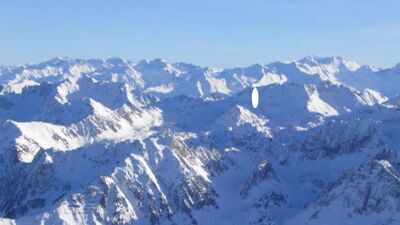
For decades, archaeologists largely assumed that Europe's highest mountain landscapes were places people crossed rather than inhabited. Harsh winters, steep terrain and short growing seasons seemed to make long-term occupation unlikely, leaving many alpine regions treated as seasonal or marginal in archaeological research.
Fresh evidence from the Spanish Pyrenees paints a rather different picture.According to the Department of Prehistory, Universitat Autònoma de Barcelona dataset, it has brought together two decades of excavation and radiocarbon dating to reveal that people were making repeated use of these high-altitude environments soon after the last Ice Age. Instead of brief visits, the findings point towards an enduring relationship between mountain landscapes and the communities that returned to them for thousands of years.
Humans reached the high Pyrenees earlier than expected
According to the dataset, one of the most rugged parts of northern Spain. Over the past twenty years, archaeologists from the Autonomous University of Barcelona have surveyed the region extensively, documenting hundreds of archaeological locations scattered across valleys, rock shelters and alpine meadows.To understand when these places were occupied, the team assembled an open-access database containing 124 radiocarbon dates collected from 45 archaeological sites.
The dates were obtained largely from charcoal preserved in ancient hearths and occupation layers, allowing researchers to build the first detailed chronological framework for a high-mountain landscape in the Pyrenees.The chronology reaches much further back than archaeologists once expected. Evidence from the park shows that humans were already present in these mountains between roughly 8,700 and 7,600 BC, shortly after glaciers retreated from much of the landscape.
Rather than waiting for the environment to become fully established, hunter-gatherers ventured into valleys that were still adjusting to post-glacial conditions.As per the dataset, this represents a continuous human sequence spanning the entire Holocene, the geological period that began after the last Ice Age. In archaeological terms, that continuity is unusually rare for such high elevations.The discovery also challenges an older assumption that mountain environments only became important after farming spread across Europe.
Instead, the earliest evidence comes from communities that still depended primarily on hunting and gathering, showing that alpine landscapes entered the human story much earlier than previously believed.
A rock shelter used for nearly 10,000 years
Among all the sites examined, one stands out above the rest. Abric de les Obagues de Ratera, a rock shelter situated at more than 2,300 metres above sea level, preserves one of the longest occupation records known anywhere in the Catalan Pyrenees.Excavations uncovered layer after layer of human activity stretching across nearly 10,000 years. Ancient hearths, charcoal deposits and later occupation levels reveal that successive generations repeatedly chose the same sheltered location despite enormous cultural changes taking place across Europe.The site's significance becomes even clearer when compared with other excavated locations. While many archaeological sites yielded only a single radiocarbon date, Obagues de Ratera produced a long sequence documenting repeated visits from prehistoric hunter-gatherers through to historical communities.
Two additional sites, Cova del Sardo and Portarró, display similarly long occupation histories, reinforcing the idea that returning to familiar mountain locations was a recurring pattern rather than an isolated event.According to the data, this kind of diachronic occupation is becoming increasingly visible as mountain archaeology develops. Instead of finding isolated episodes separated by long periods of abandonment, archaeologists are uncovering places where people returned generation after generation, adapting the same locations to changing ways of life.
How human presence changed through time
The radiocarbon record does more than establish when people first reached the high Pyrenees. It also reveals that human activity was far from constant. Some periods saw relatively limited evidence of occupation, while others produced a noticeable increase in archaeological remains, suggesting that mountain use expanded and contracted over time.One of the clearest increases appears during the later Neolithic, between about 3300 and 2500 BC.
The researchers stress that radiocarbon dates cannot be translated directly into population numbers, since factors such as excavation methods, preservation and settlement patterns all influence the archaeological record. Even so, the concentration of dates points to a sustained rise in activity across several different sites rather than isolated episodes.According to the dataset, another period of intensified occupation during the Roman era and Late Antiquity, followed by continued activity through the medieval period.
Instead of representing an untouched wilderness, the high Pyrenees appear to have remained connected to changing human societies for millennia, even as economies, technologies and ways of life evolved. The researchers are careful not to overstate what the data can reveal.
They explain that the number of radiocarbon dates should not automatically be interpreted as evidence of population growth because many variables influence what survives in the archaeological record.
Their analysis instead focuses on identifying broader patterns of continuity and change through time rather than estimating ancient population sizes.
The Pyrenees hold hundreds of archaeological sites
According to the dataset concerns the variety of sites discovered across the national park is of concern. Archaeologists have now documented almost 380 archaeological locations, ranging from rock shelters and caves to livestock enclosures, settlements and other stone-built structures spread across elevations of roughly 1,500 to 2,900 metres above sea level.
Most lie close to water sources and alpine grasslands, landscapes that would have supported seasonal grazing as well as repeated human occupation.Rock shelters provide the longest chronological sequences, with evidence stretching back to the earliest phases of occupation. Stone-built livestock complexes generally belong to the last two thousand years, while larger architectural sites became increasingly common during historical periods.
Together, these different site types illustrate how people's use of the mountains changed through time rather than following a single pattern.As per the dataset, high-mountain archaeology has changed dramatically over the past three decades. Areas once considered too remote or inhospitable to preserve substantial evidence have instead produced an extensive archaeological record, revealing that alpine environments formed part of everyday human life far earlier and for much longer than once believed.









 English (US) ·