

 9 hours ago
4
9 hours ago
4
ARTICLE AD BOX
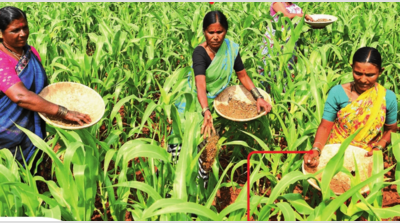
Onions, lentils and roti — a diet limited to these items is far from wholesome. But in Marathwada, there is little else on the plate for many women who also have to toil in agricultural fields for a living. In one village, though, a group of women decided to change that, by seeking a small patch of landIn Maharashtra’s droughtprone Marathwada region, where poor diets have to contend with an unforgiving terrain, a few women are breaking the cycle of punishing labour and persistent illness by making a simple yet firm decision: to fight for a small patch of land to grow vegetables that can help them meet their nutritional needs.The campaign, which has gone beyond concerns of diet and health to address larger issues of invisibility and the denial of agency, unfolded about three years ago in Kathoda village of Beed — one of the key Marathwada districts that serves as a labour pool for the sugarcane belt of western Maharashtra and Karnataka.The harvesting season draws close to 15 lakh migrant workers, a significant portion of them women. Three of them — Dwarakatai Waghmare (45), Jayshree Ovhal (50) and Anita Waghmare (40) — all members of the Dalit community — attended a talk organised by an NGO and went back home to start a mini revolution.
Dangerous GapLike other women from the region, this trio, too, had been eating the simplest of meals. “We would eat dal and bhakri, fill our stomachs and work in the fields and we thought that was enough. Sometimes, we would buy vegetables at high prices from Beed but it was always too little, and set aside for the men. We had no concept of a balanced diet. We didn’t even know that illnesses came because we did not get nutrition from vegetables,” said Anita Waghmare.Harvesting sugarcane is backbreaking work. Teams of canecutters, working on contract, are in a race against time in harvest season. For women, menstruation is an undesirable reality as it can interfere with the work. Many opt to undergo hysterectomy in their 20s just to be able to keep working without the enforced break. The Kathoda trio was no exception.The surgery, poor nutrition and lack of care put their health in grave danger.
Women who undergo hysterectomies at a young age experience early menopause, leading to increased risk of osteoporosis and cardiovascular disease. Poor nutrition can disrupt hormonal balances, complicating reproductive health.“The limited diet of bhakri and dal or onion and chutney that most farmers eat lacks nutrients, exacerbating their health issues. Inadequate nutrition can lead to deficiencies in vitamins and minerals, causing anaemia, weakness, and fatigue,” said Dr Danish Memon, senior consultant and head of department of medicine, Noble Hospitals and Research Centre in Hadapsar, Pune.For years, sickness, lethargy, and weakness were so routine for these women that they barely figured out that it was something that needed to be treated. “Most of the time, when we were in cane fields, we would not go to hospitals despite being ill as we had a contract to fulfil. When we were menstruating, the pain was unbearable and we would bleed a lot. Even after the hysterectomy, our lives were just about migrating for work and being ill,” said Jayshree Ovhal.A Spark Is LitThe trigger for change came when the three attended a talk on health and nutrition organised by Mahila Kisan Adhikaar Manch (MAKAAM) in 2023.“Three years ago, during an awareness lecture, we were told about the importance of eating well, how it affects our bodies, and the changes our body goes through. When the health experts convinced us to invest in vegetables and our health, we wanted to try it,” said Dwarakatai.Her body language and personality — she has a sure stride and a ready smile — stands out in an area where women are usually shy and reticent. The confidence was hard won.“The half-acre land to grow vegetables came after a fight with our families, who felt it was a waste of space and effort,” Dwarakatai said.The thought that diet could shape their health was something the women never knew. But now they know the benefit of the brinjals, cluster beans, leafy and other vegetables they grow, cook and consume.
“It has been three years of eating fresh vegetables from our farms and we now feel better. Our lives are not going to improve greatly, but at least our children will eat nutritious food and be healthier,” Ovhal said.And even though they started out to change what was on their plate, they have succeeded in denting the status quo as more women followed on the path carved out by them. MAKAAM also gave free training to the women on organic farming, inspection of seeds, preparation of organic fertilisers, and natural compounds that kill insects and pests.“Earlier, we depended on the upper caste families for agricultural tools. But not-for-profit organisations gave us some implements that we share during farming and also help out each other. The first year was a success and, now, more women have joined us. We don’t sell what we grow, instead we share it with others. Because our vegetables are of good quality, even upper caste households want us to sell it to them,” Dwarakatai said.Seema Kulkarni, part of the national facilitation team at MAKAAM, said there was a reason why their intervention succeeded with women in an area where “farming has not been viewed as a serious livelihood option because, with erratic rains, production remains low”.“One key reason why the women were convinced,” Kulkarni said, “was that the alternative offered a way out of exploitative sugarcane migration.”“Since the area has no irrigation, migration cannot stop completely, but over time, even if a few family members can avoid migration, it becomes a strong incentive,” she added.She cited the example of Anita Wagmare who, she said, had stopped being part of the migrant cane-cutter workforce, though her sons still go during harvesting season. Kulkarni said the initiative also appealed to women because it brought them closer to home and to cultivation that involves nurture and care, though she underlined that this should not be essentialised as “women’s work”.Kulkarni, who’s also a senior fellow at Society for Promoting Participative Ecosystem Management (SOPPECOM), which served as a training centre for the women, said it took about a year of sustained conversations to convince them.
She added that Covid became an opportunity, as people realised the importance of growing food when access to food was disrupted. “If we have land, why can’t we at least cultivate vegetables or something that supports us in times of distress?” she said.The programme, Kulkarni pointed out, was not limited to vegetable cultivation. Instead, it focused on bringing diversity into agriculture with around 35 different crops.
Vegetables were a major component, but the aim was also to supplement traditional bajra with pulses and other crops, creating a diverse basket that could support food security. “While this could not fully ensure food security, it could strengthen it,” she said.In Rude HealthToday, their collective has grown to 40 women who cultivate multiple vegetables in small fields. They practice organic farming, using no pesticides.
But, more remarkably, these women have emerged as a powerful voice in the village and are often called to resolve local issues among families. They now attend gram sabhas, are proactive in accessing benefits of govt schemes and know their collective voice is heard.“People would say, ‘What will women do in a gram sabha, what do they understand?’ Neither did we ever go for village meetings because we felt we didn’t belong there, that we were not good enough or educated enough.
But we started attending awareness lectures. We were invited to places like Wardha and Pune to attend workshops and training. There, we interacted with more women farmers and were told about our rights. We now share those learnings with other women.
The knowledge and our unity make upper caste men uncomfortable. They can’t ignore us any more when we show up in numbers,” said Jyoti Thorat (28), another farmer and a former cane cutter, who works as a resource person for Women Cane Cutters Workers’ Organisation.







 English (US) ·