

 1 hour ago
6
1 hour ago
6
ARTICLE AD BOX
Last Updated:March 27, 2026, 16:46 IST
What made Kali Night Frog difficult to identify was its resemblance with existing species. The discovery was not confined to academic work alone but by those working on the ground.


The Kali Night Frog has so far been documented only in the Castle Rock region and is closely tied to stream ecosystems. (In Pic: Kali Night Frog, female and male. Image Credit: Ramesh Badiger
On a rain-soaked evening near Castle Rock in Uttara Kannada district of Karnataka, a faint, repetitive sound echoes through the forest. It blends into the background, indistinguishable from the countless other calls that define the Western Ghats.
For years, it went unnoticed. It was very familiar, yet unremarkable. Turns out it was actually very unique.
A new species of frog, now named Nyctibatrachus kali or the Kali Night Frog, has been formally described from the central Western Ghats. The discovery adds to a region already recognised as one of the world’s most important biodiversity hotspots, and reminds that even well-studied ecosystems continue to hold secrets.
A Discovery in a Time of Decline
Globally, over 9,000 species of amphibians are known today. India accounts for 474 of them, representing about 5.3% of the world’s amphibian diversity. Yet, nearly two out of every five amphibian species face the threat of extinction, driven by habitat loss, climate change and disease.
Against this backdrop, discoveries like the Kali Night Frog carry deeper significance. Over the past 25 years, India has documented 256 new amphibian species, at an average rate of around 10 per year. Each new species contributes to understanding the country’s ecological history and biodiversity.
A Sound in the Rain That Led to a New Species in Karnataka
One day, riding through heavy rain in the forests of Uttara Kannada, CR Naik, Deputy Range Forest Officer (DRFO), Ankola Range, heard something that made him stop.
“While riding my bike in heavy rain, I heard a familiar ‘tock’ sound. Out of curiosity, I turned back and waited. After some time, another sound repeated," he recalls. “I happily ventured out in the pouring rain, waited, recorded its sound on my mobile, and sent it to Prof Gururaja."
At first, the sound did not seem unusual. “After listening to the sound, he said, ‘This seems to be a Kumbara frog,’" Naik says. But what followed would change that assumption. “In the following days, when the team found out that this was a new frog through molecular analysis and acoustics, I was surprised, happy, and proud."
When Familiar Turned New
For the research team, the frog initially appeared to be something already known.
“Initially when CR Naik sent me recording of the frog, based on my previous observations of Night Frog from Kathalekan, I thought it was Kumbara Night frog," says Prof. Gururaja KV, Professor at Srishti Manipal Institute of Art, Design and Technology, MAHE. “However, acoustic and molecular analysis showed it to be a new species of frog."
That moment of correction from assumption to evidence, defined the discovery.
“It is interesting to note that citizen scientists are part of this discovery, and we have a long way to go in this direction as conservation needs collaboration with people, practice and policy," Prof Gururaja adds, pointing to the unusual mix of field staff and researchers behind the finding.
A Species Hidden in Plain Sight
What made the Kali Night Frog difficult to identify was how closely it resembled an existing species.
“The new species Nyctibatrachus kali is morphologically cryptic but differs in advertisement calls and genetics from all current 34 species," explains Aravind CK, PhD Scholar from Manipal Institute of Technology, Bengaluru.
“The call resembles the sound of wood chopping and by hearing it is similar to the calls of other species in the N. sanctipalustris group" he adds.
The distinction lay in detail. “Similar to other species in the group, N. kali also has two distinct advertisement calls, where one is a low frequency call and the other is a high frequency call. Both types of calls differ from other species," he says.
A Discovery Built on Field Observation
The discovery was not confined to academic work alone. It was shaped by those working on the ground.
Ramesh Badiger, Beat Forester, Yellapur Range, recalls the early observations: “While learning about the sounds of frogs, their reproduction, and their habitats, Prof Gururaja’s study team came to Castle Rock in 2021. On that occasion, when they were taken to a new place, they heard the sound of a frog. They told us to observe it, saying it might be a Kumbara Night Frog."
Over time, that observation led to something larger. “Later, we observed them in four sites, and learned about their reproduction, we were extremely happy and proud. I was surprised when I came to know that it was a ‘new frog’," he says.
A Species Rooted in Its Habitat
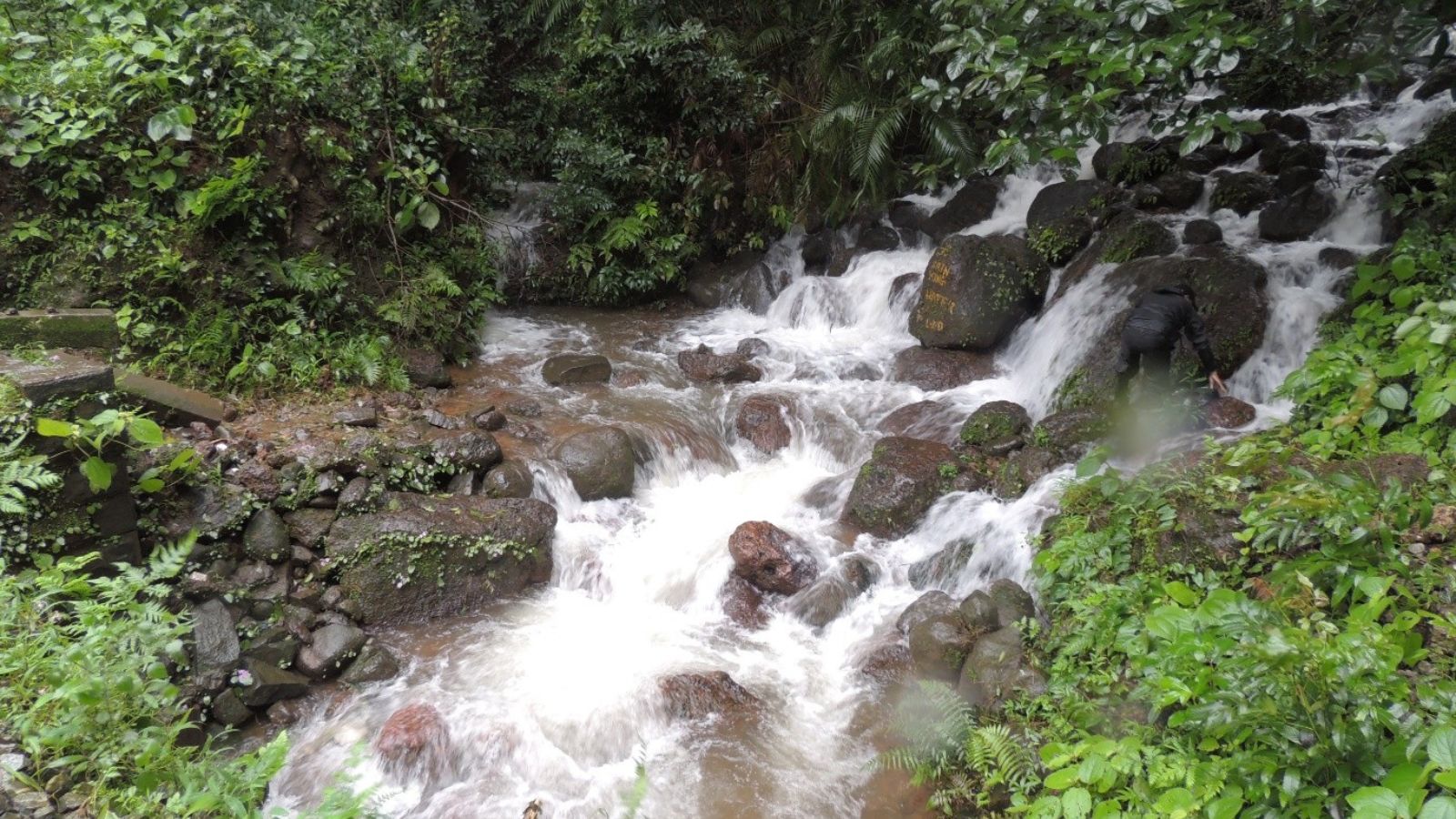
The Kali Night Frog has so far been documented only in the Castle Rock region and is closely tied to stream ecosystems.
“Currently this species is only documented from Castle Rock, and it is a stream dwelling species," says Aravind CK. “Conserving N. kali and its habitat is very important and delicate. The stream networks and the other species that are associated with the stream are prominent here."
More Than a Discovery
The finding also highlights the role of collaboration in conservation.
“I am extremely happy to note that our Forest department frontline staff have played a very important role in identification of this new species," says Kumar Pushkar, IFS, Principal Chief Conservator of Forests (Wildlife).
Listening Closely
At its core, the discovery of Nyctibatrachus kali began with a moment of attention. As Naik puts it, “We hope and wish to develop interest and tendency to listen to the forest as well as see it."
In a place as rich as the Western Ghats, sometimes that is all it takes — to stop, listen, and realise that what seemed familiar may, in fact, be entirely new.
First Published:
March 27, 2026, 16:46 IST
News india A ‘Tock’ Near Karnataka’s Kali River Led Experts To A Frog No One Knew About
Disclaimer: Comments reflect users’ views, not News18’s. Please keep discussions respectful and constructive. Abusive, defamatory, or illegal comments will be removed. News18 may disable any comment at its discretion. By posting, you agree to our Terms of Use and Privacy Policy.

Stay Ahead, Read Faster
Scan the QR code to download the News18 app and enjoy a seamless news experience anytime, anywhere.










 English (US) ·