

 1 hour ago
4
1 hour ago
4
ARTICLE AD BOX

Travel, at its core, is often idealized as a journey through landscapes—a journey through mountains, cities, highways, and hidden corners. However, more often than not, it is the people you meet on your way that truly make or break your journey.
Travel can be measured in terms of distance, but it is lived in terms of moments—small moments of unexpected encounters that linger long after you have returned home.It was such a moment that unfolded on the roads of Bhagalpur—a moment that truly captured the essence of what travel in India can truly feel like.
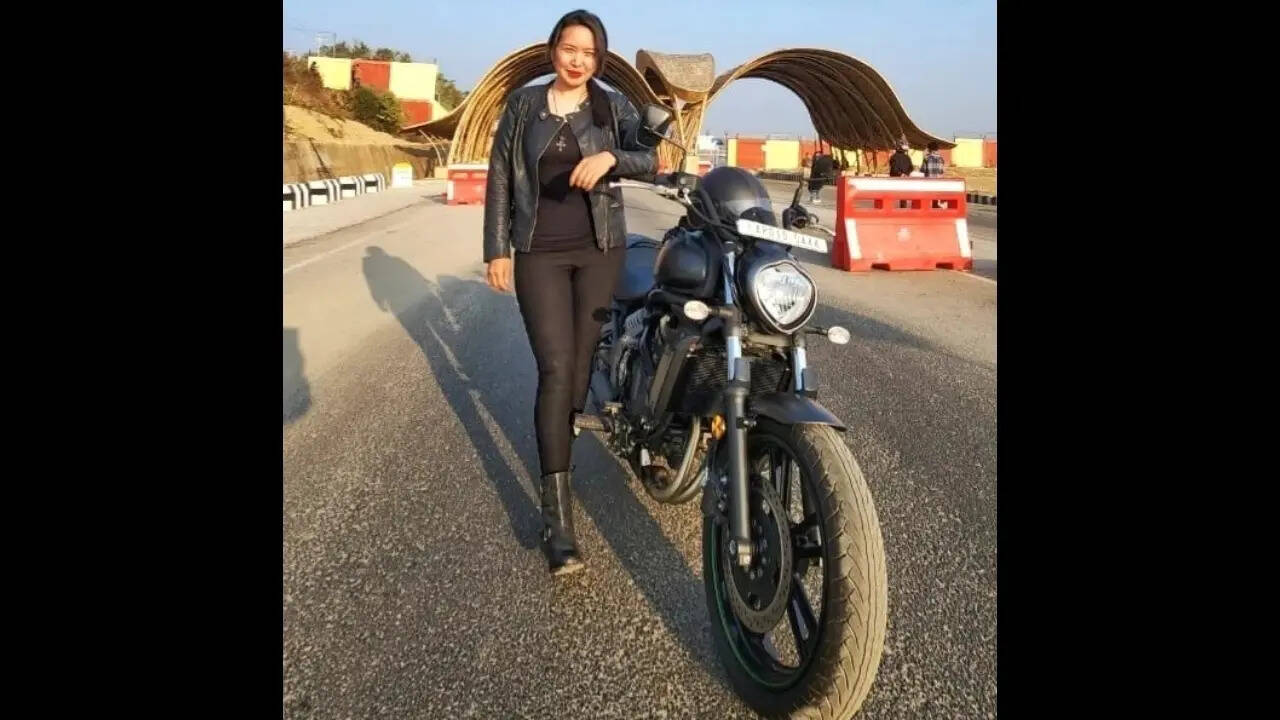
Tenzin Metoh
Tenzin Metoh—a first woman Bullet Rider from Arunachal Pradesh, former Miss Arunachal, and a working professional living a life between 9 to 5—is on a journey across India on her motorbike, riding not just across landscapes but also recording moments of human connections.
Her journey has also taken her through Hyderabad and into the heart of communities across Jharkhand, Manipur, Mizoram, and Assam, where she has enjoyed home-cooked meals as a guest who arrived as a stranger and departed as family.But it was in Bhagalpur where a small act of kindness encapsulated the essence of her journey.She was lost in a new place, trying to find her hotel. She stood by the road, unsure and worried. She was lost.
Two men spotted her. They were on their way to the market, with plans to go there. But they stopped.They didn’t just offer directions. They chose to help in the most direct way possible, by accompanying her and ensuring she reached her hotel safely, even if it meant abandoning their own errands.No questions. No expectations. Just a simple act of kindness.
Beyond one moment: The northeast experience in the rest of India
In order to understand the significance of the present time, it is important to understand the larger reality.The Northeast region of India includes states such as Arunachal Pradesh, Manipur, Mizoram, Nagaland, Meghalaya, Tripura, and Assam. The region is inhabited by over 200 ethnic groups with their respective languages and dialects. Despite their diversity, the people of the region have complained of their cultural alienation while in other parts of the country.In the past few years, various reports and studies have pointed out certain problems faced by the people of the Northeast.
The M.P. Bezbaruah Committee was constituted in 2014 by the Ministry of Home Affairs in response to the tragic death of Nido Tania in Delhi. The committee reported the stereotyping or misidentification of the people of the Northeast in metropolitan cities.Likewise, civil society organizations’ surveys and those by student organizations have shown that many Northeastern people in places like Delhi and Bengaluru, among other locations, have at some point in their lives experienced situations where their identity was misinterpreted, they have heard people use racial slurs at them because of their looks, food, or cultural differences, and sometimes violence accompanied the slurs.Every year, thousands of students and working individuals from the Northeast travel to other parts of India for higher studies, hospitality, health services, and corporate jobs. In Delhi, unofficial numbers indicate tens of thousands of Northeastern people live and work in the city.Because for many, travel in “mainland” India is not just about geography, it is also about navigating perception.
A different kind of story
This is where Tenzin’s experience in Bhagalpur differs. Bhagalpur provided something special, not because it was exciting, but because it was ordinary.Two men saw a person in need. They helped him. And in doing so, they subtly challenged an assumption.This does not deny the existence of difficulties. Rather, it adds depth to the story.
Why this story matters
For those back in Arunachal Pradesh and the rest of the Northeast, stories like this have meaning. They travel faster than facts and figures. They give people a measure of self-assurance, help them make choices, and in some cases, help them feel at ease stepping out into unfamiliar spaces.“Sometimes, the map gets it wrong… but people don’t,” Tenzin says.Tenzin’s words encapsulate something so basic yet so profound: there is another India out there, one beyond the news headlines and reported cases. It’s the India you see in small acts: a meal shared, a talk, a helping hand on the street.“Bhagalpur gave me more than a destination—it gave me faith. Strangers who cared, without a reason. And that’s the India I’m riding for.”Tenzin’s journey isn’t just about the distance covered on two wheels. It’s about capturing moments like these, where unfamiliarity meets familiarity, and difference meets common ground.Because sometimes, it’s not the big acts that bring about change.Sometimes, it’s two strangers making a conscious decision to stop.






 English (US) ·