

 11 hours ago
5
11 hours ago
5
ARTICLE AD BOX
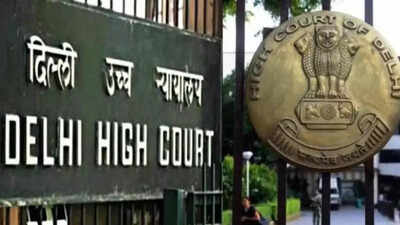
NEW DELHI: In a significant and emotionally resonant judgment, the Delhi High Court has acquitted two engineers accused of demanding a Rs 1,800 bribe, bringing an end to a 34-year-long legal battle that lingered under the shadow of corruption allegations. The Court held that the prosecution failed to establish the essential element of demand for illegal gratification and extended the benefit of doubt to the accused. The case dates back to September 20, 1991, when Assistant Engineer VK Datta and Junior Engineer Dinesh Garg were accused of demanding Rs 1,800 and Rs 900 each as a bribe for facilitating the release of alleged pending bills. Acting on the complaint, the CBI laid a trap and arrested both officials, who were later convicted by a trial court in 2002.
However, decades later, the High Court found serious inconsistencies and gaps in the prosecution’s case, according to news agency ANI. Appearing for the appellants, advocates Sameer Chandra, Vivya Nagpal, Ekansh Bansal, Aryan Tomar, and senior advocate Sunil Dalal, along with his team, argued that the case was fundamentally flawed. They pointed to contradictions in witness testimonies, procedural lapses, and the absence of reliable evidence to prove any genuine demand for a bribe.
The Court noted that official muster rolls, which went unchallenged during the trial, showed that both accused were present at a work site at the time the alleged demand was made, casting serious doubt on the prosecution’s version. Further, testimony from a key departmental witness revealed that no payment was actually due to the contractor at the relevant time, effectively removing any motive for seeking a bribe. Serious doubts were also raised regarding the timeline of events, particularly the registration of the FIR, which appeared to have been recorded at the same time the complainant claimed to have just reached the CBI office. This inconsistency, the Court observed, undermined the credibility of the prosecution’s narrative. Additionally, the prosecution failed to examine crucial witnesses, including the contractor directly involved in the financial transactions.
Inconsistent accounts regarding the recovery of the alleged bribe amount further weakened the case. Reiterating settled legal principles, the Court observed that mere recovery of money is not sufficient to sustain a conviction under corruption laws unless accompanied by clear proof of demand. It emphasised that suspicion, however strong, cannot replace proof beyond a reasonable doubt. Setting aside the 2002 conviction, the High Court acquitted both VK Datta and Dinesh Garg of all charges, directing that they be set at liberty. The verdict brings closure to a prolonged period of uncertainty, underlining that justice must rest on firm evidence, not assumptions, even if it takes decades to arrive.






 English (US) ·