

 1 week ago
8
1 week ago
8
ARTICLE AD BOX
Middle East tensions following military actions have severely disrupted global air travel. Airlines are scrambling as countries shut airspace, forcing cancellations and lengthy reroutes. Indian carriers face particular challenges with restricted westbound and northbound routes. This geopolitical instability is reshaping international flight paths, impacting airports and passengers worldwide.
The Middle East has gone back to uncertainty following the combined military attack of the United States and Israel on Iran that has triggered tensions that have rapidly spread out of military territories.
A number of cities were reported to have explosions. But the shock was to last only momentarily on the ground.It flew up to the skies in a short period.The effect was first experienced with commercial flights. Several countries started shutting down sections of airspace as a precaution several hours into the escalation. Airlines were now forced to scramble, canceling flights, rerouting flights in midflight and reevaluating flight safety on the fly.And with the closure of airspace, the whole aviation system is experiencing it.The airports in the region became tense and overcrowded. Planes sat idle. Board of departure covered with red cancellation notifications. Knowing that new warnings were being received, passengers would refresh airline apps several times over waiting to see the clarity, which continued to change.
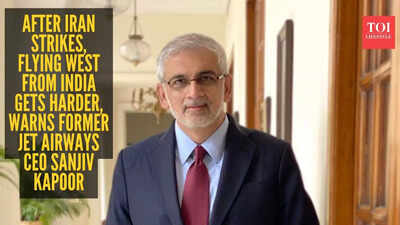
In the case of Indian airlines, it has become quite challenging. The issue was raised by the former Jet Airways chief executive, Sanjiv Kapoor, who posted a flight map on Flightradar24 of an economy route that revealed how the traditional westbound routes have in effect become narrow.
Unfortunately, the north south routes are not accessible to Indian airlines, Kapoor said. No Pakistan overfly, the north is blocked. And the south across Oman and Saudi Arabia owing to DGCA directive. Consequently it is very hard to get any way Westward out of India now.In straight forward terms, airlines that fly between India and Europe or North America are finding out of viable routes. Some of the routes that were straight forward have now been through lengthy routes, increased fuel and complicated scheduling.
In other situations, the flights are not able to fly at all.However, this disruption is way beyond India.In a post on X, British journalist Gideon Rachman described the wider aviation dilemma by saying: Now can’t fly via the Gulf. Getting tricky to get to Asia.”
His comment is an indication of the way geopolitics of the world is silently transforming contemporary air travel. The past few years already made Russian airspace restrictions make airlines reconsider their routes.
This is being further narrowed by instability in the region of the Gulf making the ways of international flights a bottleneck.On Saturday, the magnitude of the disruption was made evident. A number of Middle East countries blocked or shut their airspace due to the attacks, which resulted in airlines all over the world halting operations in the affected areas.Large global airlines, such as Air France, Air India, Turkish Airlines, Norwegian, Air Algerie and Lufthansa, declared cancellations and schedule changes because safety issues were more important than convenience of operations.Even large aviation centers were not spared. The two airports, Dubai International Airport and Al Maktoum International Airport halted their flight operations in times of maximum doubt, leaving scores of travellers stuck in airports and transit lounges.According to data provided by the aviation analytics company Cirium, the extent of the impact was quite widespread indeed. Of approximately 4,218 arrivals planned to land in Middle Eastern nations on Saturday, 966 had been cancelled, which is nearly a quarter of all the arrivals.
The number of cancellations reached over 1,800 flights when outbound departures are also counted.To travellers, the inconvenience came in form of missed flights, postponed vacation and lengthy and anxious queues at the airports. In case of airlines, it implied rewriting flight plans almost in an instant, considering safety evaluations, fuel budget and crew restrictions.And the case is open to change. Aviation authorities keep a close eye on the situation, and it means that new alterations to schedules or routes are always a possibility in case of tensions.Such incidents remind the entire world that geopolitical stability is important in global air travel, though it may seem normal. An international fight going on in a certain area can alter the international flight paths virtually overnight.Thus, although the crisis has its epicentre in the Middle East, its aftermath is already crossing borders much further - airlines, airports and passengers worldwide seek their way around skies which now appear significantly different.







 English (US) ·