

 1 hour ago
6
1 hour ago
6
ARTICLE AD BOX
Last Updated:June 27, 2026, 21:57 IST
Scientists using AI and X ray imaging have read hidden text in a carbonised Herculaneum scroll, a Vesuvius Challenge breakthrough that may unlock hundreds of ancient works.


A charred papyrus scroll. (Edculab)
Scientists have used artificial intelligence to reveal previously unread text hidden inside a carbonised Roman scroll buried during the eruption of Mount Vesuvius nearly 2,000 years ago, marking a major breakthrough in the study of the ancient world.
The fragile papyrus scroll was recovered from the Villa of the Papyri in Herculaneum, an ancient Roman town destroyed alongside Pompeii when Mount Vesuvius erupted in AD 79. The intense heat charred the scrolls, making them too fragile to physically unroll without destroying them.
Using advanced X-ray imaging, machine learning and AI-powered analysis, researchers were able to identify ink patterns hidden inside the tightly rolled manuscript without opening it.
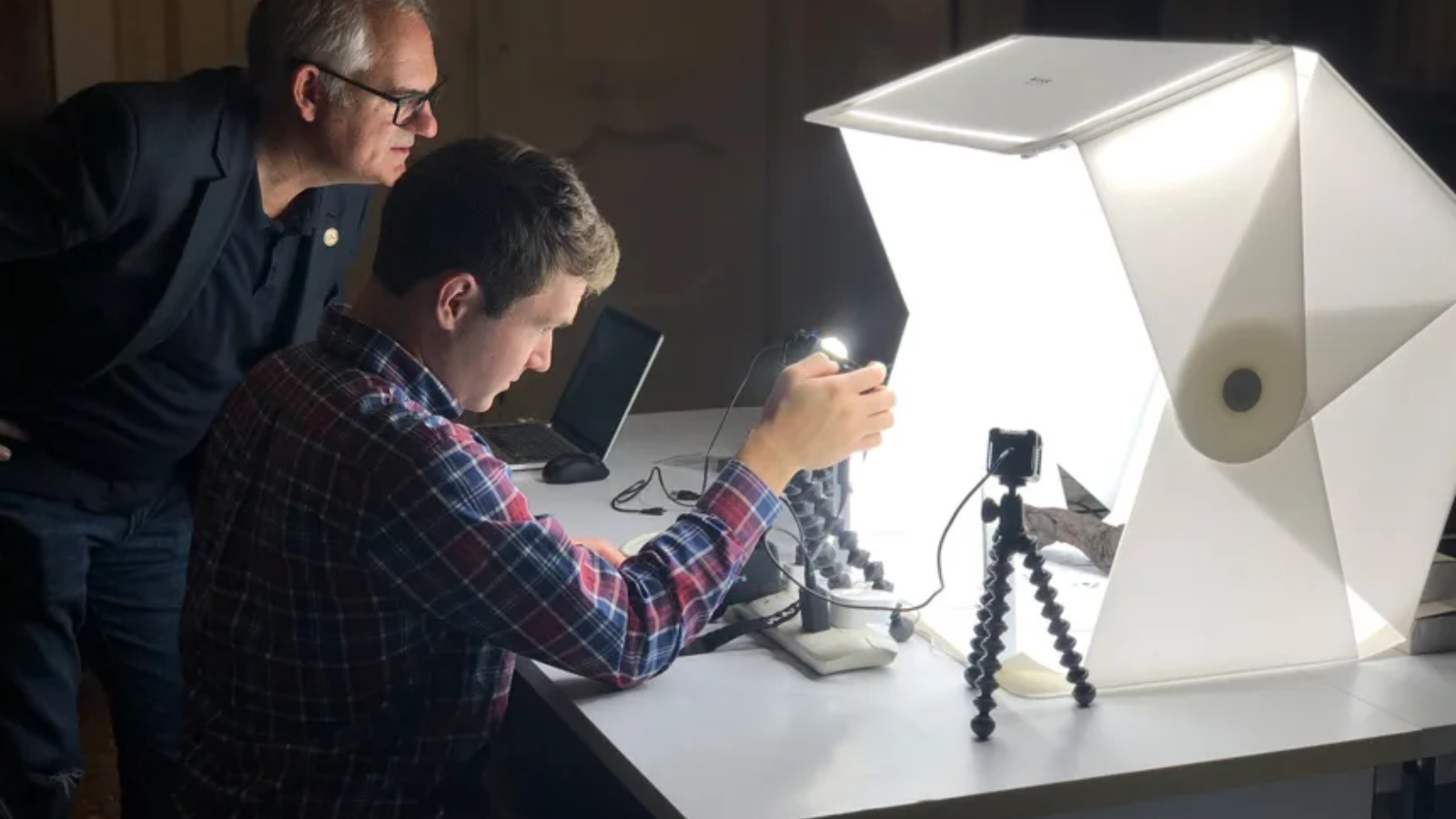
The newly deciphered text is believed to be part of a philosophical work discussing themes of pleasure, music and the senses. Researchers identified references to the ancient Greek philosopher Epicurus and his followers, suggesting the scroll may have been written by Philodemus, an Epicurean philosopher whose works are known to have been housed in the Villa of the Papyri.
The breakthrough is part of the international Vesuvius Challenge, a competition launched in 2023 to encourage researchers to use artificial intelligence to read unopened Herculaneum scrolls. Previous efforts had managed to identify isolated words and short passages, but the latest work has revealed substantially longer sections of continuous text.
Researchers used high-resolution CT scans to create a three-dimensional model of the scroll before AI algorithms detected subtle differences between the carbon-based ink and the papyrus fibres. The technology then reconstructed readable Greek letters from the hidden manuscript.
The Villa of the Papyri is believed to contain the only surviving intact library from the ancient Greco-Roman world. Archaeologists estimate that hundreds of unopened scrolls remain preserved beneath volcanic debris, many of which have never been studied because of the risk of damaging them.
Experts say the latest breakthrough could revolutionise the study of ancient literature by allowing historians to read fragile manuscripts that were previously considered inaccessible.
Scientists hope the same AI techniques will soon unlock hundreds of additional scrolls from Herculaneum, potentially revealing lost philosophical, historical and literary works that have remained unread for nearly two millennia.
Handpicked stories, in your inbox
A newsletter with the best of our journalism
About the Author
The News Desk is a team of passionate editors and writers who break and analyse the most important events unfolding in India and abroad. From live updates to exclusive reports to in-depth explainers, ...Read More
News world AI Unlocks Ancient Roman Scroll Damaged By Volcanic Eruption Nearly 2,000 Years Ago
Disclaimer: Comments reflect users’ views, not News18’s. Please keep discussions respectful and constructive. Abusive, defamatory, or illegal comments will be removed. News18 may disable any comment at its discretion. By posting, you agree to our Terms of Use and Privacy Policy.
Read More









 English (US) ·