

 3 hours ago
6
3 hours ago
6
ARTICLE AD BOX
4 min readFeb 14, 2026 05:00 AM IST
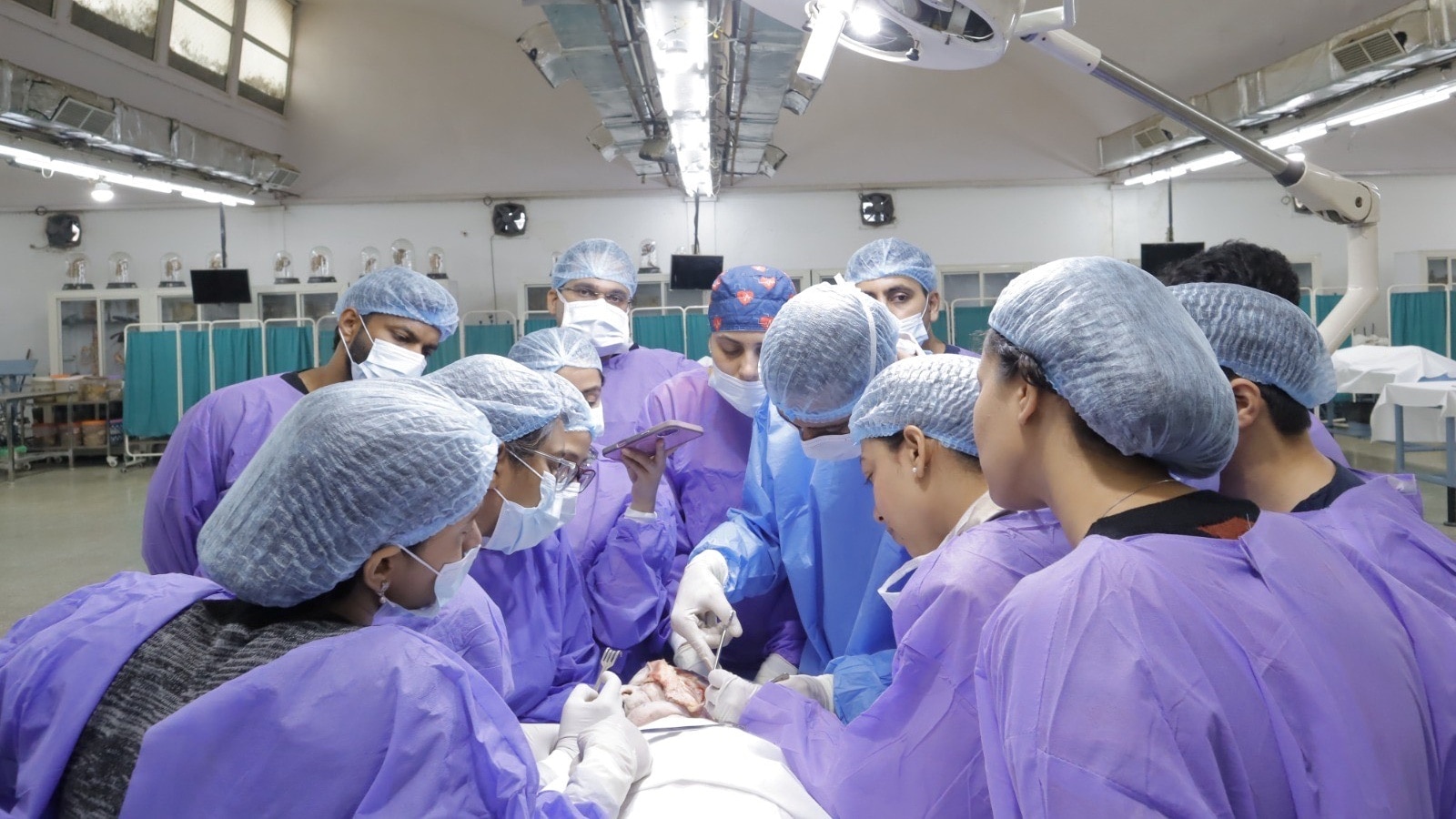 The institute will also be holding a training session with Dr Indranil Sinha, associate chief of plastic surgery at Brigham and Women’s Hospital (Harvard Medical School), Boston, with which AIIMS is collaborating.
An acid attack, burn or a road crash survivor now has hope with the All-India Institute of Medical Sciences (AIIMS), Delhi launching its first facial transplant programme, amping up its reconstructive surgery capabilities. This will help surgeons replace severely damaged facial tissue with tissue from a deceased donor, including skin, muscle, bone and nerves. The recipient can then resume critical functions like breathing, eating, speaking and even smiling.
The institute will also be holding a training session with Dr Indranil Sinha, associate chief of plastic surgery at Brigham and Women’s Hospital (Harvard Medical School), Boston, with which AIIMS is collaborating. “So far, we have managed partial facial reconstruction, that too after 10 and 12 surgeries, among patients with facial deformities due to acid burns, gunshot injuries and trauma. This is the first time the institute will do a full facial transplant,” says Dr Maneesh Singhal, HOD, department of Plastic, Reconstructive and Burns Surgery, AIIMS.
Speaking with The Indian Express, Dr Sinha describes facial transplantation as a highly complex, multidisciplinary reconstructive procedure and not a cosmetic surgery. “The primary goal is to restore critical functions such as eating, speaking, breathing, blinking and expressing emotions. It is considered a last-resort option for patients with devastating functional loss,” he says. Excerpts:
What does a facial transplant involve and what structures are excluded?
The procedure involves transplanting facial skin, muscles, sensory and motor nerves, arteries, veins, and structures such as the lips, nose and eyelids. It does not include the eyeballs or tongue. Dental implants, if needed, are performed later. When harvesting a donor face, surgeons typically retrieve the full facial unit first and then tailor it to the recipient to ensure no critical anatomical structures are missed.
What are the major phases of facial transplantation?
There is pre-operative preparation. Since the surgery is complex, patients must understand lifelong commitment to immunosuppressive medication and continuous follow-up to prevent rejection. Mandatory psychiatric evaluation ensures mental preparedness and long-term compliance. Besides, everybody does not qualify. Patients with a history of cancer are not eligible because immunosuppression increases cancer risk. Those with substance abuse histories may be excluded due to the strict medication discipline required.
Surgical preparation includes multiple cadaver dissections, detailed CT imaging to map anatomy and blood vessels, and extensive coordination between donor and recipient teams. Every team member must clearly understand their role before surgery begins.The surgery itself is a long, technically demanding procedure. The most challenging phase is post-operative care, requiring intensive monitoring and lifelong management.
What does post-operative recovery and long-term care involve?
Patients typically spend about one week in the ICU and another two weeks in the hospital, followed by at least two months of close monitoring. Around three months after surgery, most patients begin to feel significantly better.
Story continues below this ad
Approximately 95 per cent of patients experience at least one episode of acute rejection, requiring hospitalisation and additional treatment. While rejection episodes are common, graft failure is rare. At Brigham and Women’s Hospital, most facial transplants have remained viable for more than ten years, with one graft replacement being done around the ten-year mark. Although the field is still relatively young, survival beyond a decade is expected.
What are practical limitations?
Facial transplantation cannot be used to change identity. The procedure requires constant medical supervision, strict adherence to medication and repeated hospital visits. Missing follow-up or immunosuppressive therapy can lead to complications. Ethnic matching is not strictly required but immune compatibility is essential. In practice, matches often occur within similar ethnic groups due to donor availability patterns.





 English (US) ·