

 1 hour ago
4
1 hour ago
4
ARTICLE AD BOX
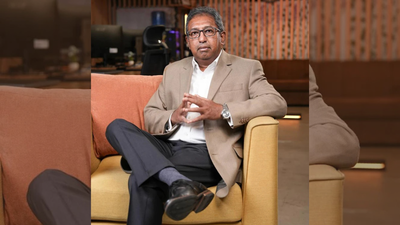
In an interview to TOI’s Sachin Parashar, the Chair to Sri Lankan Parliament Committee on Public Finance and influential Opposition voice, Harsha de Silva, says he is disappointed that the proposed Economic and Technology Cooperation Agreement (ETCA) with India has not yet been signed, while underlining the need for stronger economic integration with India.Excerpts: What do you make of India-Sri Lanka economic ties? Do you think there’s a need to further intensify economic integration also because of the prevailing global uncertainties? You know, when we were kids and we'd ride the bicycle, a slight hill...it’s tough to pedal. And then there comes a small truck. You hold on to the truck and, you know, without much effort, you're taken up the hill, right? And then you let go if you want to, or you just keep tagging on to it.
To me, that's the analogy here. India is the center of growth in the next two decades, in my view. I was concentrating on the five southern states, but now UP shows 11.5% growth.
So this growth is going to go beyond the south. And integration with the economic engine, I think, is not a question that has a yes or no answer. The answer has to be why are we so late in getting there. And how strongly are we going to integrate ourselves with the economic engine. So my point is, it's not about us producing stuff and selling in India. My thing is that together with India, we produce stuff to sell around the world, right? Or, you know, in other words, integrating with what I call production networks, then logistics, ports, energy.
So, it is almost unreal that we haven't still signed the ETCA (Economic and Technology Cooperation Agreement). What is holding back ETCA? President Dissanayake told Times of India in an interview recently that Sri Lanka would like to recommence discussions on ETCA in a progressive and transparent manner.No, see, historically, these protectionist lobbies have been aligned with these political parties. And they have protested against India for a long period of time. I mean, they have suddenly made a 180-degree turn, right? I can't believe what I'm seeing, the head of the JVP (Marxist-Leninist party headed by Dissanayake), you know, shaking hands with Jaishankar. So that rhetoric, actually they believed in it for a long period. So, India was not a place where you were supposed to, you know, have good relations with. But in fact, the ETCA, if you really analyze it, what these people are saying, or the anti-India integration people are saying, and what is actually happening are two different things. Because the trade that comes through the agreement is in Sri Lanka's favor. It is trade that doesn't come through the agreement that is in India's favor.
So, if you want to analyze apples, you have to compare them with another apple, not with an orange. So therefore, this thing about "they will walk over and take away our business"... and also ETCA is very clear that we have restrictions on service trade. For instance, you know, there are several modes of services. You can provide a service coming to Sri Lanka or staying here. We can come here and get the service and go back, etc.
So, the movement of natural persons—say doctors, or architects, or engineers, or bankers, etc.—by themselves is restricted. You can't do it. But the narrative is, "oh my God, all these Indian persons will come and take over our thing." But you've got to go beyond that and understand how it can be helpful. But just one point I want to make is that I am actually disappointed that the President in his two visits to Delhi, and the PM in her one visit to Delhi, have not spoken a word about ETCA. The JVP has been considered pro-China historically. China remains one of your largest creditors. While expanding your economic cooperation with Beijing, you think the government will ensure Sri Lanka does nothing that might impinge on India’s security interests? Anura Kumara Dissanayake, who is president, is a totally different Anura Kumara Dissanayake I knew as an opposition MP. He's transformed. He's transformed into, I don't know... the point that I have and I sort of try to resolve in my own head is: can people do that? Because I can't. I believe in something for 50 years and suddenly to say all what I believed is wrong, and something else I said was completely wrong is right. Anura I can even believe up to a certain extent, but I cannot believe guys like Tilvin Silva (JVP general secretary). You know, I mean, and also, don't forget that because of this belief, more than 50,000 people died in this country, in Sri Lanka. We suffered for years and years because they said "Indian expansionism." I mean, if it was restricted to some theory and you are a university professor, I don't care. But this is real on the ground, right? And that ideology held Sri Lanka back. That didn't let Sri Lanka sort of integrate with India and others. If that had happened earlier, we would be in a much better place now. So to me, whether this transformation is real, I don't still—I can't still fathom, right? So let's see. And if this goes this way, which looks very different to their previous trajectory, perhaps things may change. But one thing I want to say is you can have friends and you can even have best friends, but India is our neighbor, right? It's our only neighbor.
You have in the past spoken about a lack of competitive bidding for projects that were given to the group. After all the controversy which we have seen in the recent past, do you still believe that the Adani group has a role to play in energy transition in Sri Lanka? . Yes, I think so. Well, I mean, it has nothing to do with Adani or anyone else. I mean, if we are letting people use—or if government is procuring anything—it has to be competitively bid upon. That's the basic, whether it is Adani or Reliance or Tata, whoever it is. That is the law. But what I want to say is this: that Indian investment is crucial in Sri Lanka's energy sector. You know, before politics, I worked in both Bhutan and in Nepal.
So, I know what I'm talking about in that sense; I was an advisor with the ADB to both governments. And how us and others developed the Bhutanese energy sector so that 50% of Bhutan's export income comes from selling power to India. And even early power purchase agreements were very tilted and lopsided, but now they are better. Having said that, see, no one can buy a unit at 8 cents and sell at 4 cents, no? It can't happen. And we don't need all that energy in Sri Lanka, right? It is needed in India.
So, think about it as a financial transaction. What's the point in buying at 8 cents? So, I think it has to go beyond the politics. And I think, you know, Adani Group has already made large investments in ports and other things, and they pulled out of two good projects. But you know, those were negotiated during the crisis. Now we are out of the crisis. What is your assessment of the recent incident that saw an Iranian warship being torpedoed and sunk in the Lankan EEZ by the US while it was returning from India? I would like to call it the Sea of Sri Lanka within the Indian Ocean. The 200 nautical miles beyond our shore, even though it is not in our territorial waters—which is only 12 nautical miles—it was about a humanitarian situation. You know, as far as we know—I'm in opposition, but as far as we have made to understand—we didn't know what had happened. We just got a distress call and we responded to it as any right-thinking country would do.
So, there is no politics in this. You know, I can be in opposition, they can be in government, but we as a nation came to the rescue of human beings when they were in distress.



 English (US) ·