

 1 hour ago
6
1 hour ago
6
ARTICLE AD BOX
Last Updated:July 04, 2026, 08:00 IST
As the United States celebrates its 250th Independence anniversary, revisit the remarkable journey that transformed 13 former British colonies into a global superpower.

As the United States celebrates 250 years of Independence in 2026, it's worth looking back at how a group of 13 colonies grew into one of the world's most influential nations.
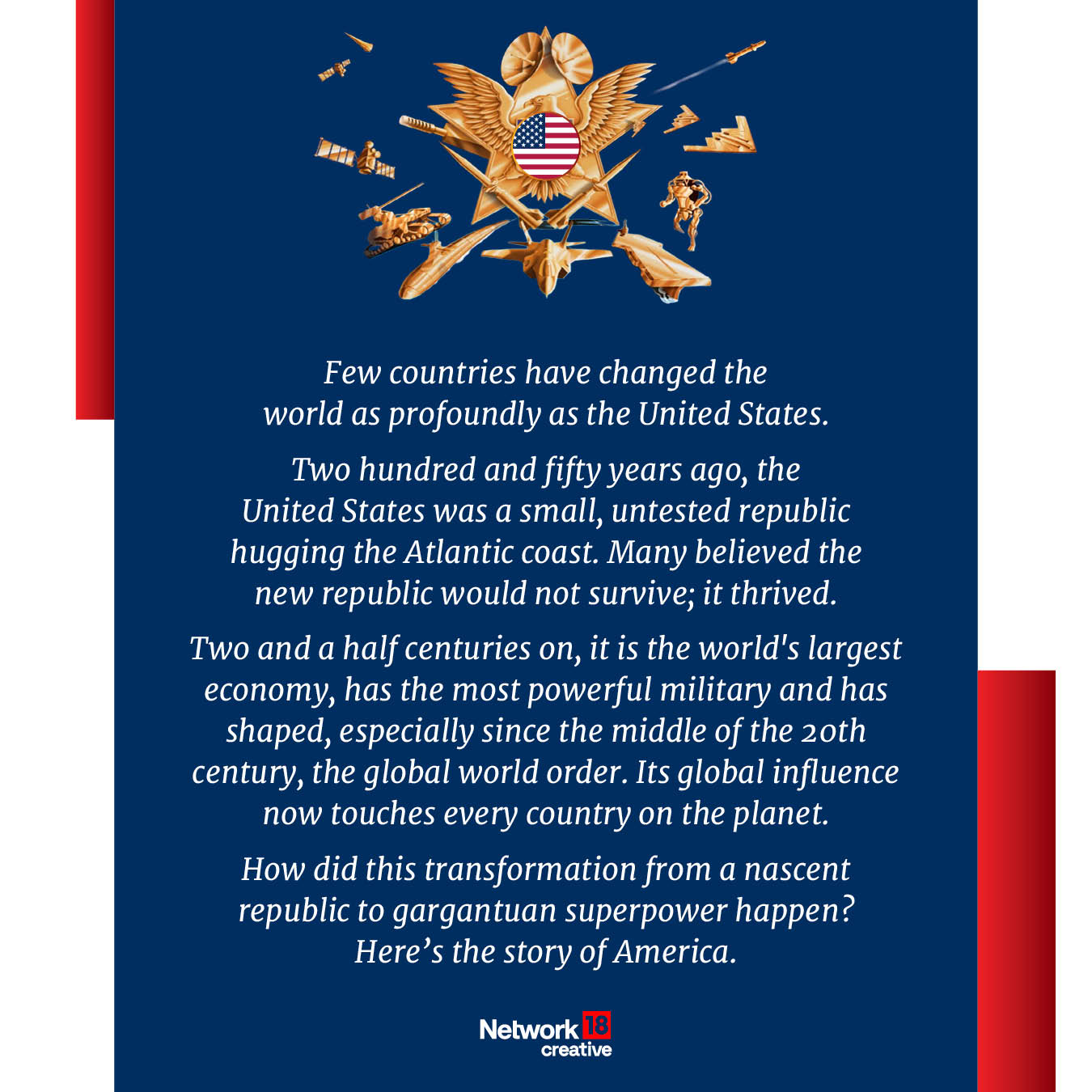
From territorial expansion and industrialisation to global wars and technological breakthroughs, America's rise to superpower status took centuries in the making. Here's a look at the milestones that shaped the country's remarkable journey.
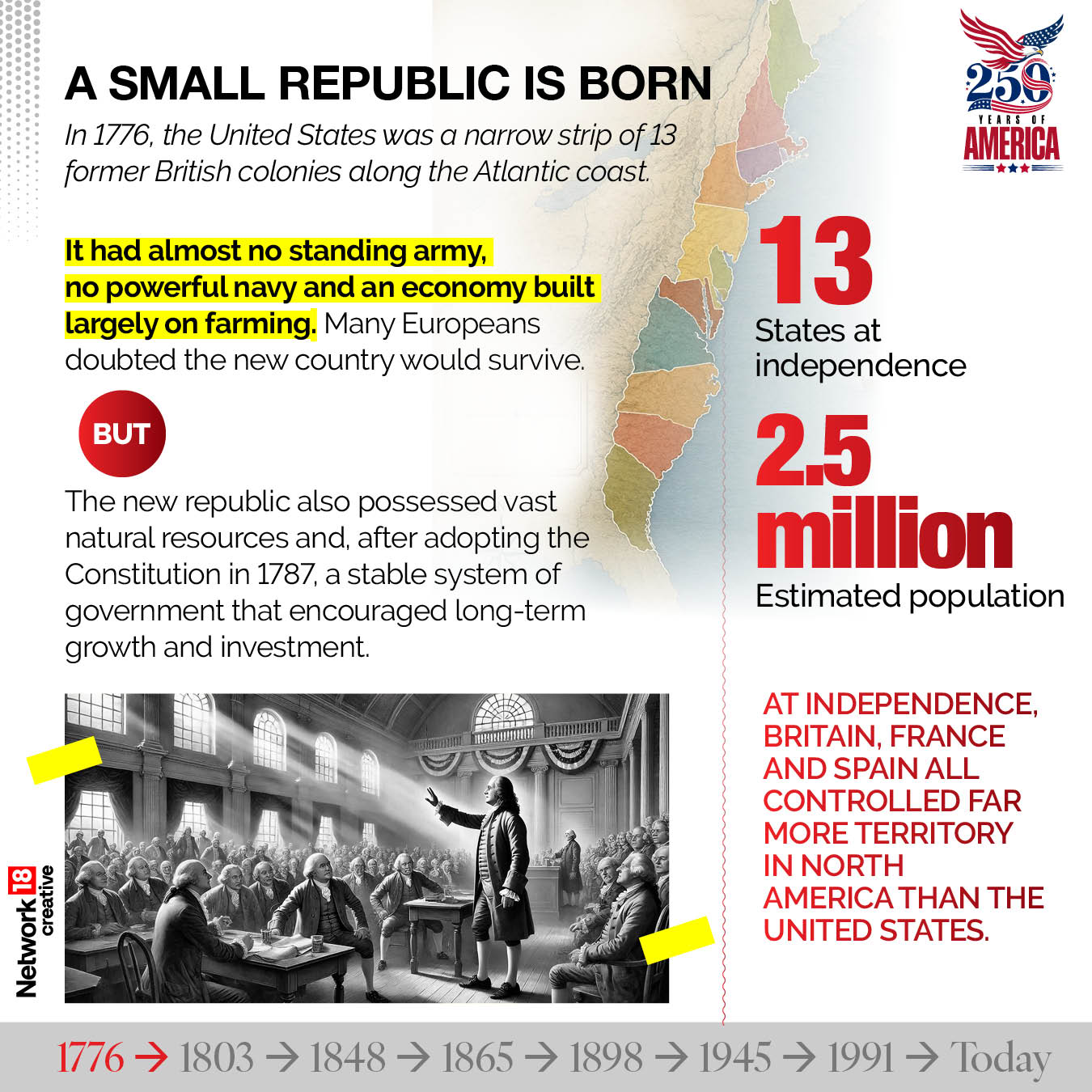
The United States began as 13 former British colonies that declared independence in 1776. With a small population and limited resources, few could have predicted the country's future global influence.

The 1803 Louisiana Purchase nearly doubled the size of the United States, opening vast new territories for settlement, farming, trade, and westward expansion. It remains one of the most significant land deals in history.
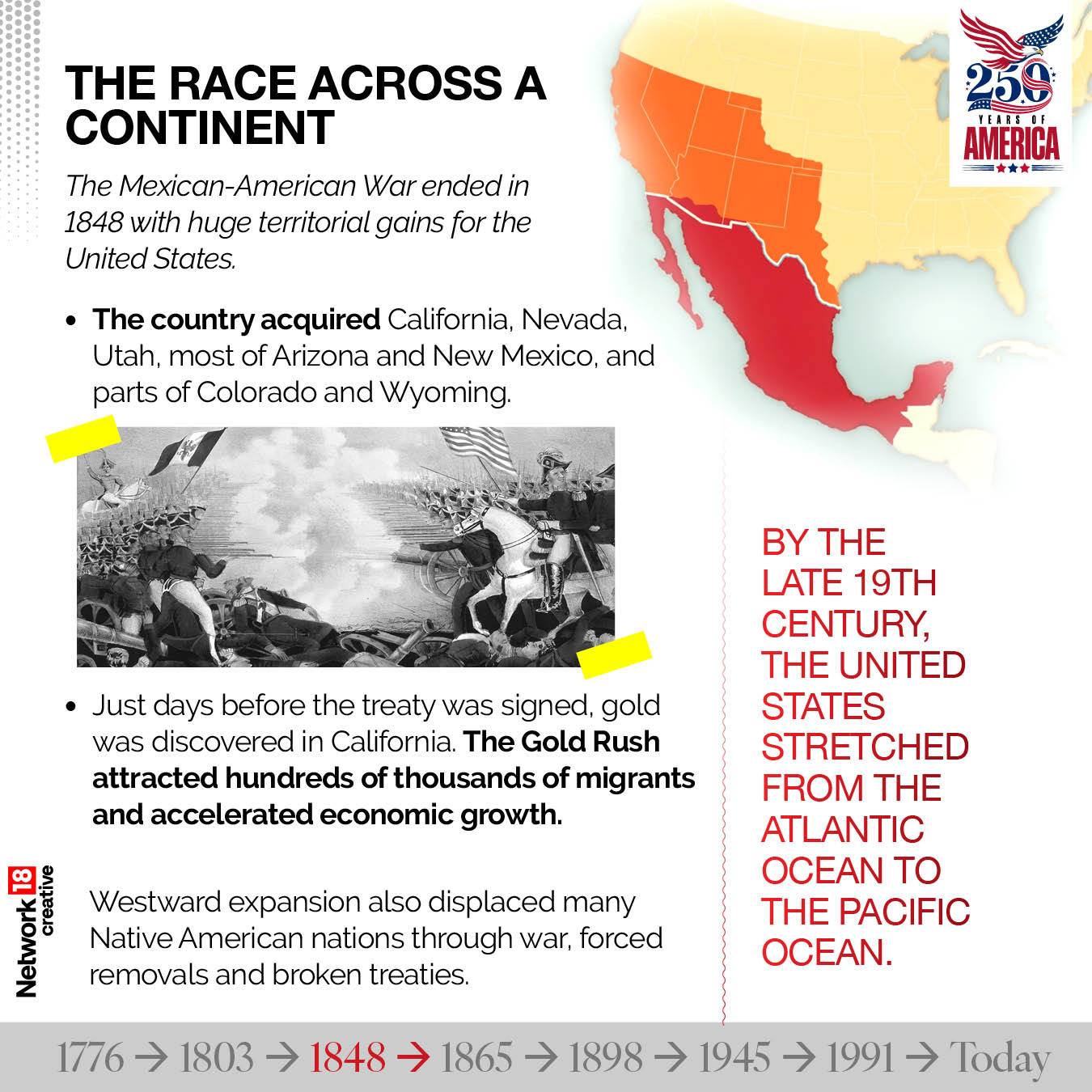
As railways, roads, and settlements spread westward during the 19th century, the United States became increasingly connected. The completion of the Transcontinental Railroad in 1869 revolutionised travel, trade, and economic growth.
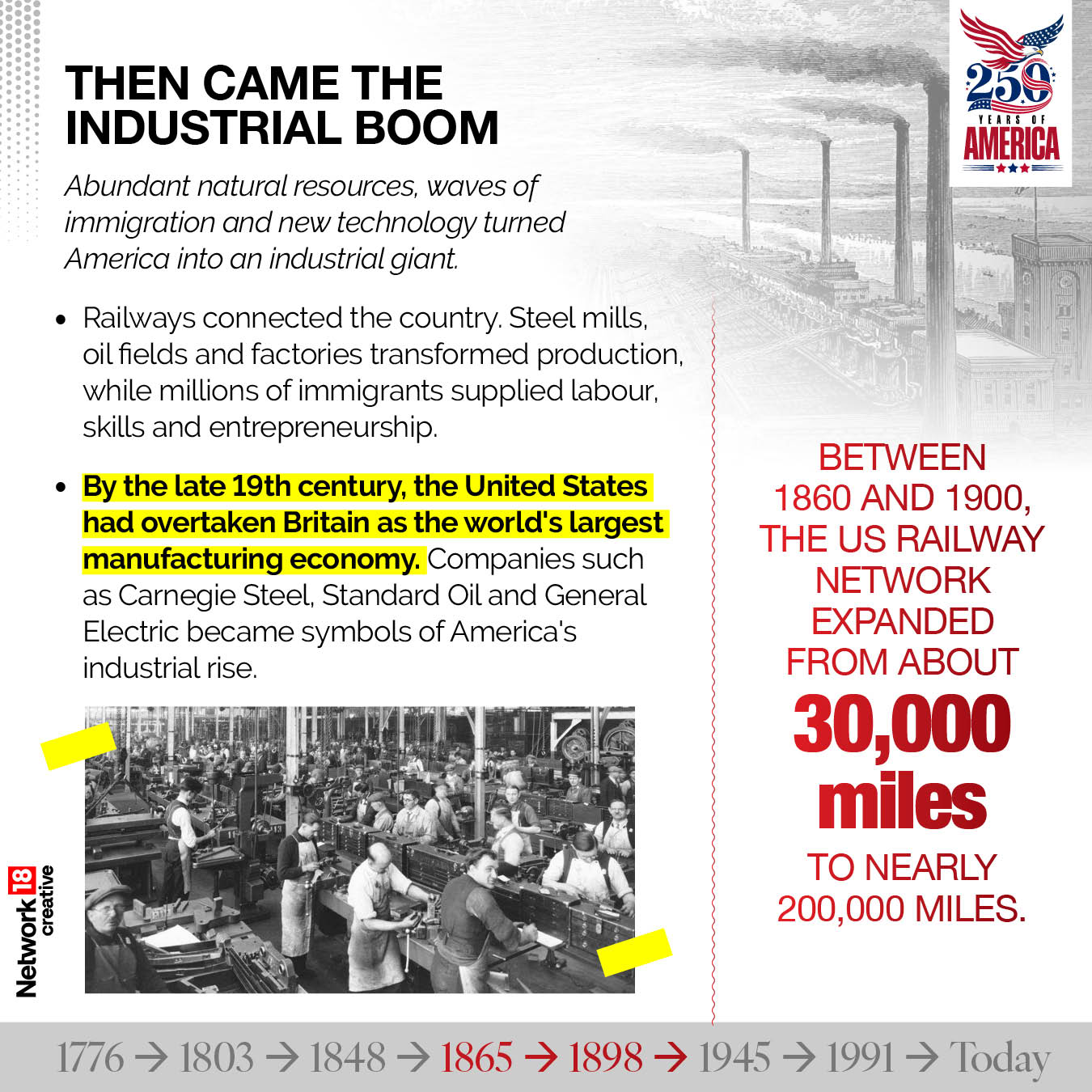
By the late 1800s, rapid industrialisation transformed America into an economic powerhouse. Steel, oil, manufacturing, and innovation fuelled unprecedented growth, while millions of immigrants helped build the nation's workforce.

The Civil War tested the nation's unity like never before. Although deeply divided, the Union emerged stronger after the conflict, ending slavery and preserving the United States as one nation.
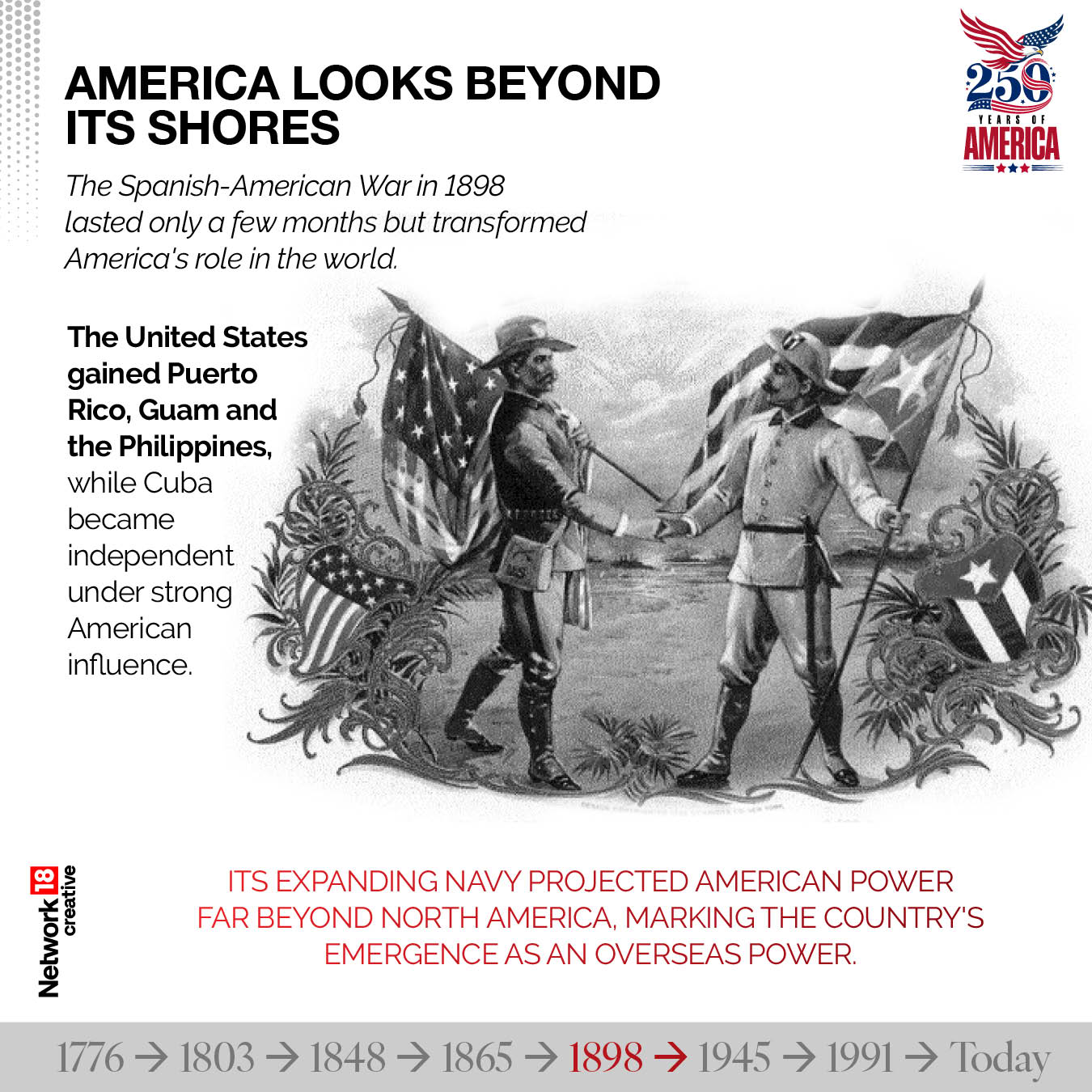
By the end of the 19th century, the United States began expanding its influence overseas. Victories in conflicts such as the Spanish-American War marked America's emergence as an international power.
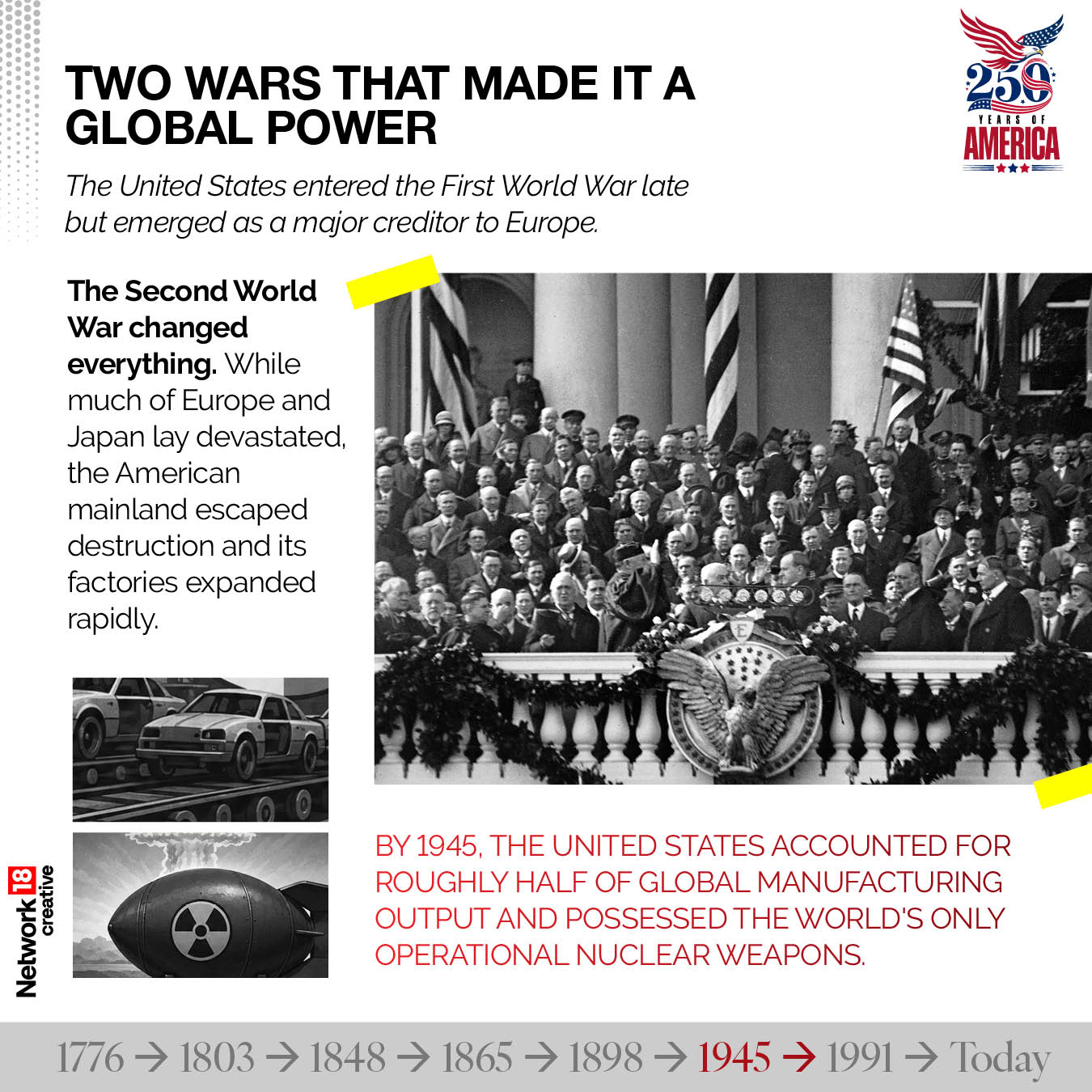
The First and Second World Wars transformed the United States into a global military and economic leader. By 1945, America had become one of the world's most influential nations, helping shape the post-war international order.

Following World War II, the United States played a leading role in rebuilding the global economy and establishing institutions such as the United Nations, the International Monetary Fund (IMF), and the World Bank.
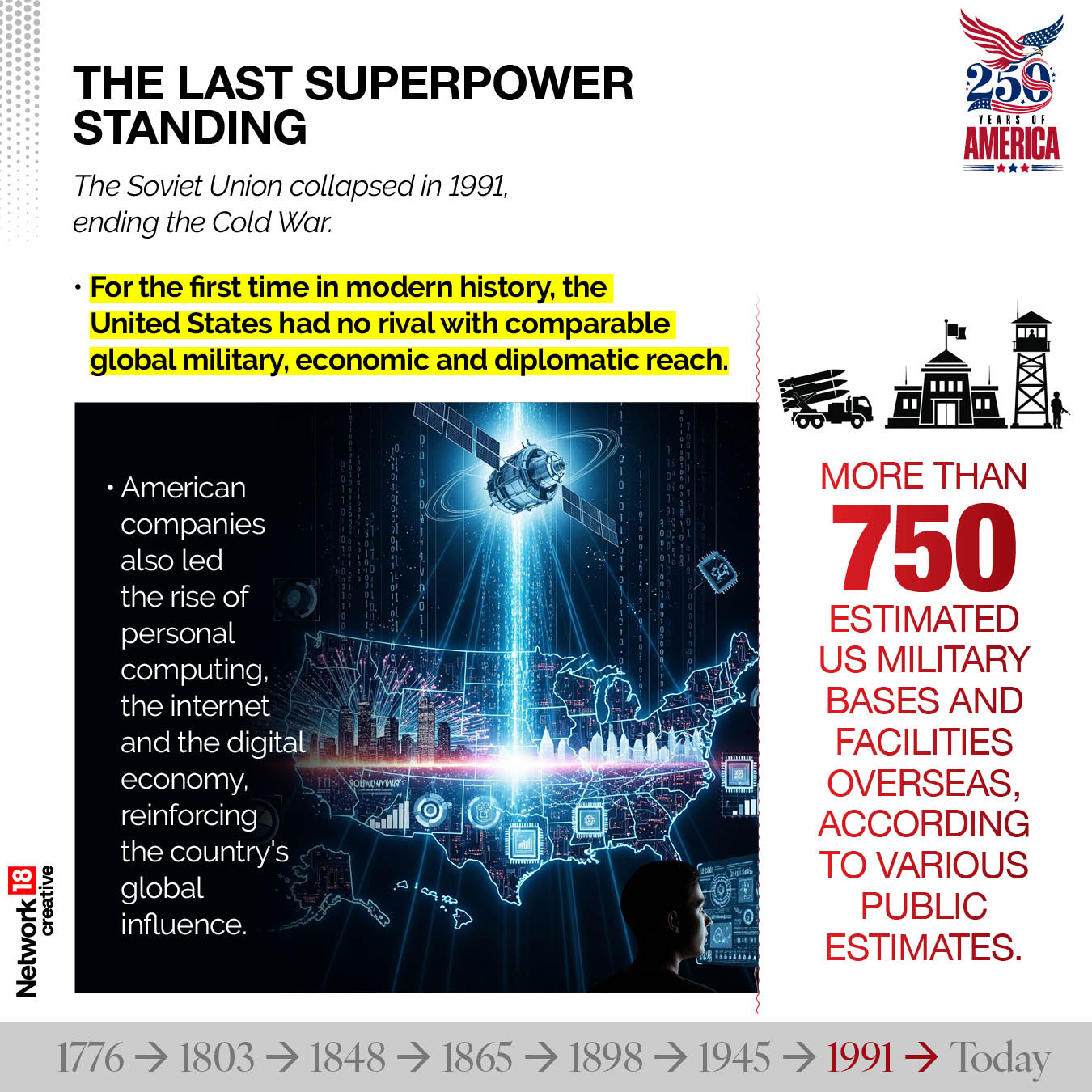
The collapse of the Soviet Union in 1991 left the United States as the world's sole superpower. During this period, its influence extended across diplomacy, defence, technology, finance, and popular culture.

In the 21st century, China's rapid economic and military rise has reshaped the global balance of power. The relationship between Washington and Beijing now defines many of the world's biggest geopolitical and economic challenges.
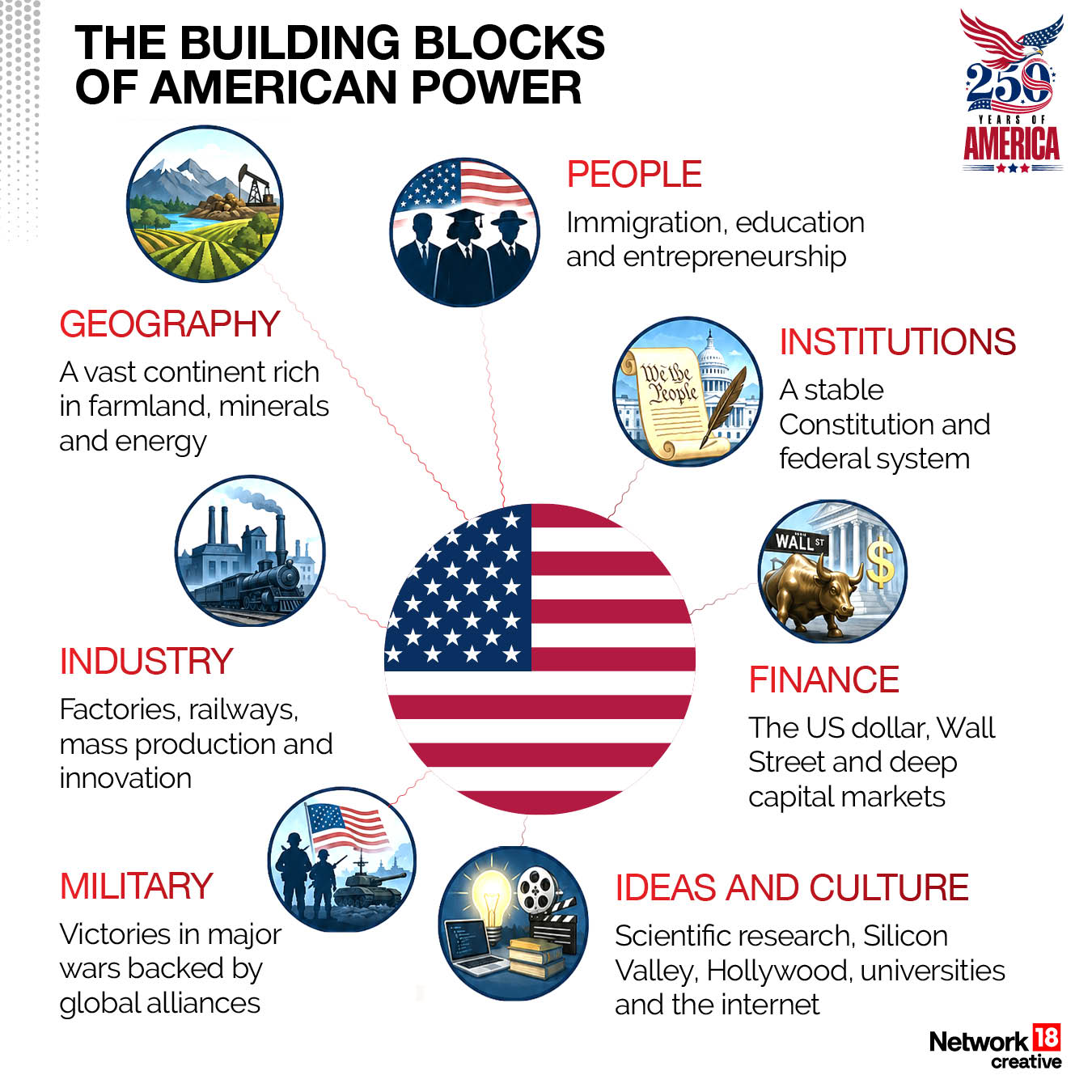
America's global influence rests on several strengths, including its vast economy, technological innovation, military capabilities, natural resources, higher education system, and strong network of international alliances.
News Photogallery world America At 250: How The United States Became A Global Superpower








 English (US) ·