

 1 week ago
12
1 week ago
12
ARTICLE AD BOX
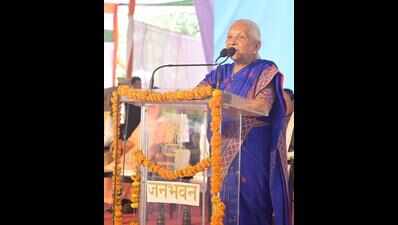
Lucknow: With the On-Screen Marking (OSM) controversy yet to subside, governor Anandiben Patel has directed state universities to move to a technology-driven examination system that includes online transmission of question papers, digital evaluation and the use of CCTV and biometric attendance during examinations.Officer on Special Duty to the governor, Sudhir M Bobde, has issued instructions to all state universities, excluding those offering medical and agriculture courses, to follow the model adopted by Dr APJ Abdul Kalam Technical University (AKTU). The governor’s office said the shift is aimed at strengthening integrity and confidentiality in examinations, ensuring timely conduct of tests and speeding up the declaration of results.AKTU’s system is structured in three stages: online delivery of question papers, digital evaluation through OSM and enhanced monitoring at centres through CCTV and biometric verification.AKTU vice-chancellor Prof JP Pandey said online delivery enables universities to print question papers strictly as per requirement, reducing waste and curbing expenditure.He added that the online mechanism improves control over security and confidentiality of papers.
“If a need arises to change the question paper before the exam starts — due to a leak or any other reason — the replacement can be executed immediately, within a few minutes,” Pandey said.For evaluation, details of answer booklets submitted at examination centres are uploaded to the university’s enterprise resource planning (ERP) system. The booklets are then dispatched to the university through the Department of Posts with insurance coverage.
Using a server-based system, scanned booklets are made available in the login accounts of registered evaluation centres and allotted to examiners through a random allocation process.
Evaluators receive the answer booklet, question paper and the official solution online.Prof Vinay Pathak, vice-chancellor of CSJM University, Kanpur, said digital evaluation reduces dependence on physical storage and simplifies providing evaluated scripts to students when needed.
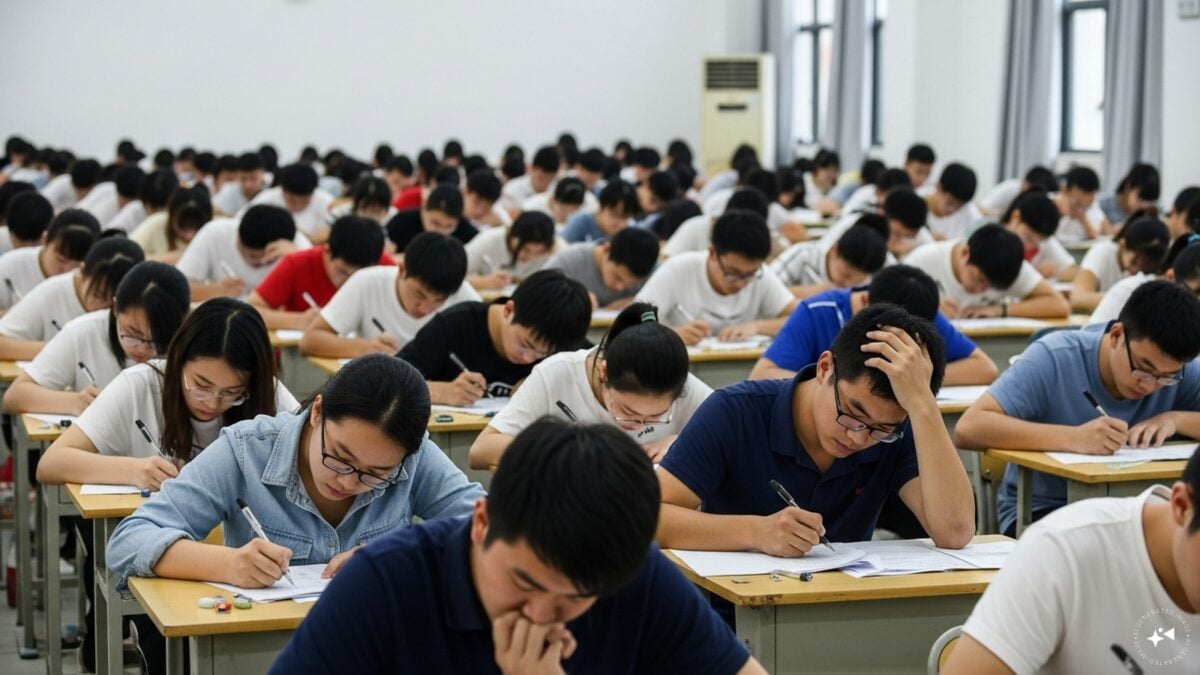
He said technology such as artificial intelligence and pattern-matching tools could later be used to identify clusters of mass copying.The third stage focuses on examination-centre surveillance. CCTV cameras are to be installed at entry gates, control rooms and examination halls. Examinees are to be frisked and screened under camera coverage, and biometric attendance will be recorded after they are seated.Officials said biometric verification is intended to prevent proxy candidates and reduce the risk of answer booklets being lost or replaced.





 English (US) ·