

 1 hour ago
3
1 hour ago
3
ARTICLE AD BOX
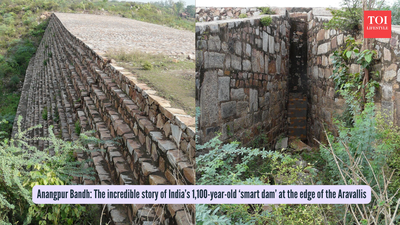
Anangpur Dam, a 1000-year-old marvel in Delhi's backyard, reveals ancient Indian water wisdom. Built by the Tomar Dynasty, this gravity-fed structure harnessed monsoon rains for irrigation and groundwater recharge. It stands as a testament to sustainable engineering without modern technology. Rediscovering such systems offers solutions to Delhi's current water scarcity.
India has always been ahead of its time when it comes to water wisdom, be it ancient town planning, historic stepwells, and tanks that turned arid lands green long before fancy technology arrived.Situated in the Aravalli hills is one such 1,000-year-old marvel that whispers lessons on living with nature across centuries quietly, along with it and not against it.In our ‘concrete jungle era’ of pipelines and pumps, rediscovering these ancient, outstanding human-built tech, that was ahead of its time, feels like striking gold.It's proof our ancestors engineered sustainability without blueprints or electricity, defining settlements in Delhi's rugged backyard.
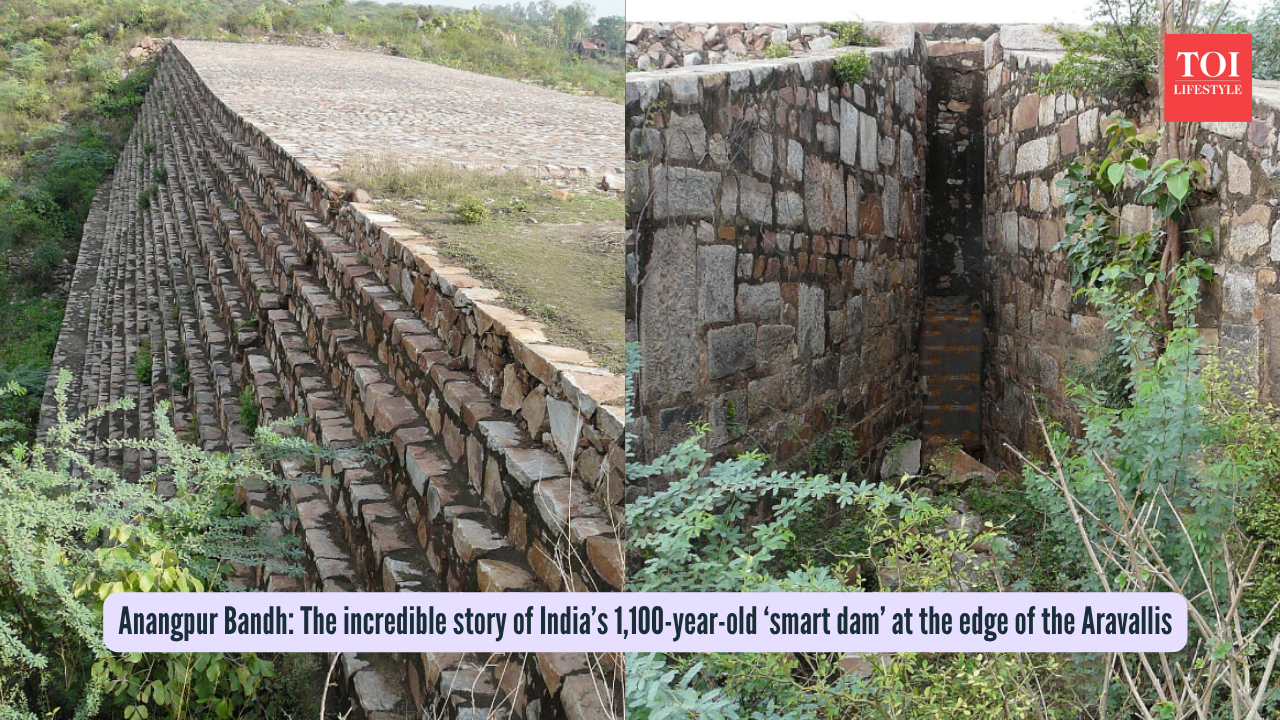
Anangpur Bandh (photo: Wikimedia commons)
1100 years old Anangpur Dam sits at the edge of the Aravallis in Delhi
The Anangpur Dam, nestled near Anangpur village in Faridabad on the Delhi-Haryana edge, dates back over 1,000 years to the Tomar Dynasty, likely commissioned by King Anangpal Tomar I in the 8th century CE. This early ruler established a capital there, building hydraulic wonders amid the Aravallis to tackle water scarcity.Archaeological research and surveys by the ASI reveal its gravity-fed design, which is 19.8 meters high, with western steps climbing 27.43 meters eastward, spanning 101.2 meters.
Stone masonry from local quarries, bound by brick and earth, hugs the natural slope perfectly.
The ancestors researched and built it in tune with nature
No modern blueprints guided it, experts pieced together its genius through stone analysis and water channel studies. Built across a monsoon-fed ravine, it holds runoff, slows flows for sediment settling, stores rainwater, and recharges groundwater. It is believed that it once irrigated fields and supported a thriving settlement.This setup is similar to the concept of watershed management, where hills funnel water into the basin, creating a self-sustaining cycle without pumps or power, a true "zero-energy" system.
The dam is ahead of its time
Tomars predated Delhi's urban boom, laying foundations for later waterworks like hauz tanks and baolis. Unlike flashier sites, Anangpur's subtlety shines, fully rain-reliant, and fostered early communities prone to dry spells. ASI calls it among India's oldest dams, a protected monument blending geology, observation, and hydrology.Yet today, urbanization squeezes it as land values soar to crores nearby. Reviving such systems could ease Delhi's crisis, where groundwater dips and the Yamuna strains.









 English (US) ·