

 1 hour ago
8
1 hour ago
8
ARTICLE AD BOX
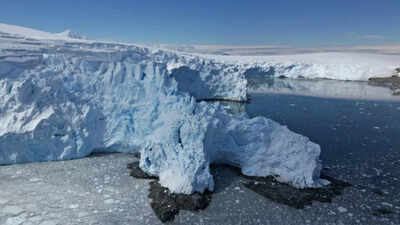
Seems like the clock is ticking on Antarctica’s ice sheet.When we look at Antarctica, most of us see a far-off, icy world where the penguins live — we don’t think it has anything to do with our own lives.
But scientists now warn that what happens there could reshape coastlines, economies, and the lives of hundreds of millions.Of late, research is pointing to a “warning window” — maybe 30 to 50 years — during which humanity can act before dramatic sea level rise becomes pretty much locked in. What’s at stake is the West Antarctic Ice Sheet, a hulking mass that, if it collapses, could unleash up to four meters of sea level rise.The tough part? Once the collapse starts, researchers say it’s unstoppable, even if the world manages to cool things down later. Calls to prevent climate tipping points are getting more urgent. These are changes that, once set in motion, keep going, and humans can’t pull them back.
A giant ice sheet close to the edge: What’s happening?
Per Science Alert, the West Antarctic Ice Sheet is high on the list of things keeping climate scientists awake at night. If it fell apart completely, the seas would rise by about four meters (that’s over 13 feet).
It won’t happen overnight; it’d take centuries. Still, the key decisions could happen soon, maybe within the next generation.A new study in Communications Earth & Environment looked at how this ice mass reacts to ocean warming. Using both clever simulations and geological records from warmer times in Earth’s history, scientists concluded the ice sheet teeters much closer to the tipping point than we guessed. Cross that threshold, and there’s no stopping the melt, even if we rein in global temperatures later.
The loss goes on until the ice sheet has added all those meters to the sea.Why the next few decades really matterIt might sound somewhat ludicrous, but it’s not too late — or at least not yet. The collapse isn’t guaranteed. That’s the good news, that we may still have a few decades to keep warming below the level that would push West Antarctica into fast decline. That’s where this “30 to 50 year” warning comes from. But that doesn’t mean we can be lax about it.
We’re getting an early alert right now, as scientists monitor signs of an irreversible slide in the ice sheet, before the biggest impacts hit.It’s as though Antarctica is handing us a test. The world’s response in the next couple of decades will likely decide whether we face multi-meter sea level rise in the centuries ahead.Now, it’s worth remembering that ice sheets — despite their names — aren’t just big, simple ice cubes.
They’re complicated, with feedback loops. Sometimes, after certain glaciers retreat past a point, warmer seawater floods in under them, cranking up the melting even more. At some stage, the feedback takes over.
Which Antarctic glaciers worry scientists most?
A lot of eyes are on the Amundsen Sea sector. This is where you’ll find Thwaites Glacier (nicknamed the “Doomsday Glacier”) and Pine Island Glacier, both shrinking fast. These glaciers are some of the weakest spots in West Antarctica, already losing ice at troubling rates.
If warm ocean currents keep attacking them, events could unfold quickly, destabilizing big areas of ice far inland.Recent reports also show Antarctic sea ice dropping to new lows. While sea ice and the ice sheet melt in different ways, it’s one more sign that things in Antarctica are changing at a frantic pace.
What happens if the seas rise by four meters?
If the West Antarctic Ice Sheet collapses, we’re looking at world-altering sea level changes. A rise of four meters would drown low-lying regions in every ocean basin — places like New York, Mumbai, Shanghai, and London would face far higher flooding risks.
Tiny island nations could see much of their land vanish. Infrastructure, ports, fresh water supplies, and coastal ecosystems would suffer disruptions “baked in” for generations.And here’s the thing: This wouldn’t play out in one lifetime. It’d roll out over centuries. But once the melting gets set in motion, nothing we do later will stop it. The main risk isn’t next year’s flood — it’s committing future generations to an ever-changing, retreating shoreline that lasts hundreds of years.
A prior warning, not a definite prediction
Scientists are careful to say that this isn’t a prediction — it’s a big, flashing warning. Four meters isn’t a certainty. But new discoveries suggest the West Antarctic Ice Sheet is way more fragile than we thought, and that the climate decisions we make in the next few decades will shape the story for centuries.Antarctica is doing more than responding to climate change; it’s sounding an alarm. The world gets this warning shot, right now. The choice is whether we take that warning seriously or wait until centuries of consequences unfold.









 English (US) ·