

 6 days ago
5
6 days ago
5
ARTICLE AD BOX
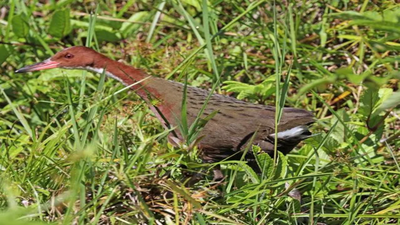
A white-throated rail (Dryolimnas cuvieri cuvieri) photographed at Ranomafana National Park, Madagascar. Image Credit: Wikimedia Commons
A species of bird that died out because of rising seas 136,000 years ago seems to have achieved one of the greatest comebacks in evolutionary history.Fossils from Aldabra Atoll in the Indian Ocean suggest that a species of flightless rail went extinct when the islands were submerged by rising sea levels.
However, once the water levels decreased, the atoll was recolonised by a related flying rail that later evolved flightlessness again.The findings, published in the Zoological Journal of the Linnean Society and available through ResearchGate by paleontologists Julian Hume of the Natural History Museum and David Martill of the University of Portsmouth, provide what the authors describe as rare fossil proof of repeatable evolution in birds.
According to the paper, fossils from two different time periods on Aldabra show that a member of the rail family became flightless independently on two occasions.A disaster that destroyed all the wildlife of an islandCurrently, Aldabra is considered one of the islands of the Seychelles that is most famous because of its giant tortoises. There is also the Aldabra rail, which is known to be the only remaining flightless bird from the Indian Ocean.However, the island has never had an easy past.
Based on the geological research, Aldabra underwent an episode of inundation during the Late Pleistocene when the rising sea level covered the entire atoll underwater. As it is stated in the article by Hume and Martill, the above-mentioned flooding has led to the extinction of all terrestrial wildlife inhabiting the area.Other extinct creatures included not only rails but also other animals such as petrels, ducks, and reptiles.
After the disappearance of the atoll under the water, flightless birds would not have been able to survive there.A return visit from a known species of birdIt is what comes afterward that makes the story remarkable. As the water levels fell and the island resurfaced, the place became recolonised by various species of animals coming from somewhere else, including white-throated rails, which are birds that can fly and currently inhabit the island of Madagascar.From the findings of the study, fossils collected from younger deposits show how these birds once again adapted to living in the predator-free islands. They developed similar physical features to those seen in the earlier flightless rail species that lived there. The fossils indicated that the bones of the wings and legs had become shorter and sturdier. This shows that the birds had been adapting back to being flightless.This shows that the evolution of flightlessness took place twice on Aldabra from one ancestor.In science, this is called 'iterative evolution'. This means that traits evolve again and again from the same lineage under similar environmental conditions. It is not that evolution takes a completely new course in its journey after extinction, but comparable environmental conditions can make descendants evolve in similar directions.
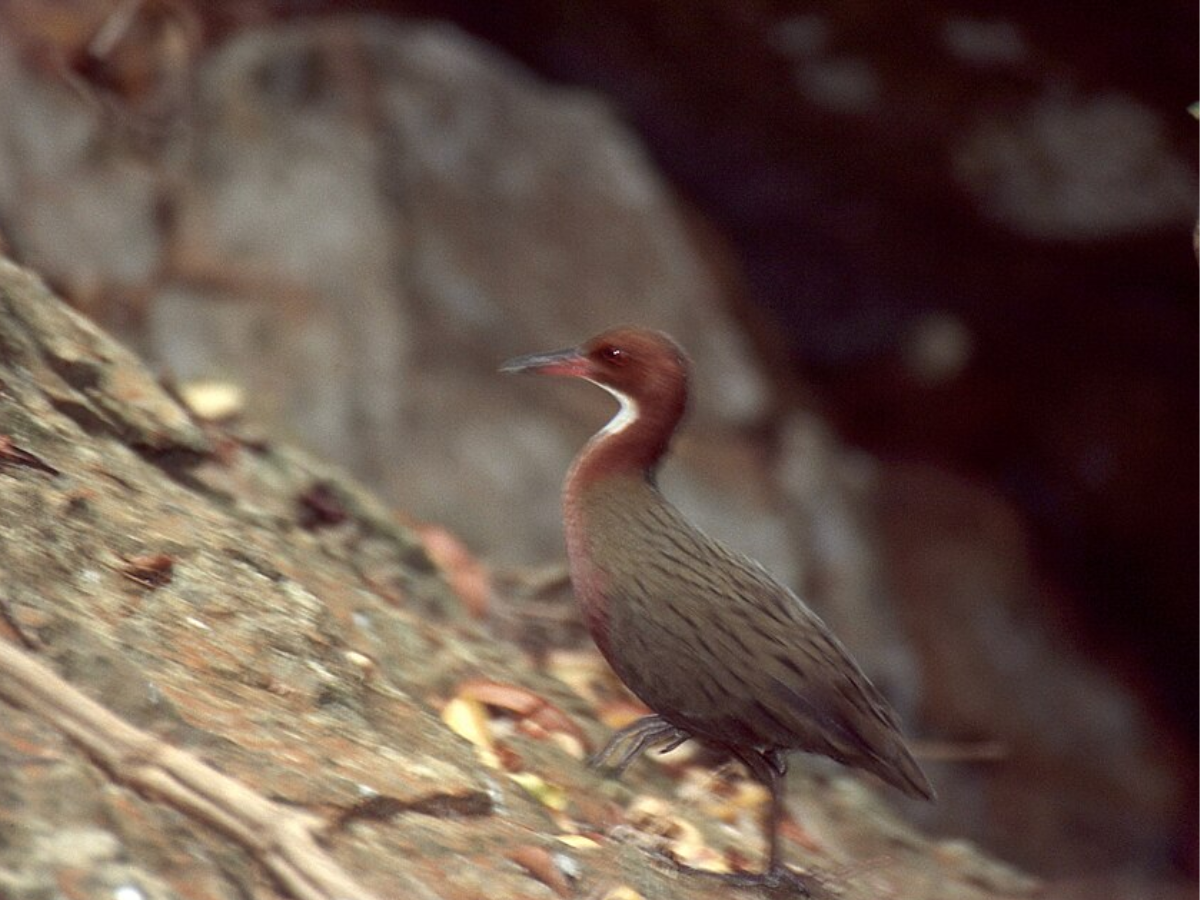
White-throated Rail. Image Credit: Wikimedia Commons
Aldabra was just such a place for this to happenIt did not have any mammalian predators, meaning that the birds did not need to fly away from danger. Developing flight muscles is energetically costly, and if there is little benefit to retaining them, birds on safe islands may eventually lose the ability to fly.Rails are particularly known for this tendency.As per the research, rails are a group of birds that have managed to evolve flightlessness multiple times after moving to isolated islands around the world.
But it is extremely difficult to find such cases happening more than once in one place.Reasons why scientists find the discovery fascinatingThe reason why the discovery is fascinating is not because of the species' apparent resurrection, but rather the insight it provides into the capacity of evolution to be repetitive. According to the researchers, the fossils of the Aldabra rails show how identical evolutionary results can be generated even after an extinction period in which the environmental setup starts anew due to identical environmental pressures.To put it in simpler terms, whenever a flightless railbird found its way to Aldabra, the circumstances kept evolving in a similar pattern.The recent evolution of the Aldabra rail is thus not simply about a bird surviving in the island setting. It is about evolution taking place all over again after several thousand years.









 English (US) ·