

 2 days ago
6
2 days ago
6
ARTICLE AD BOX
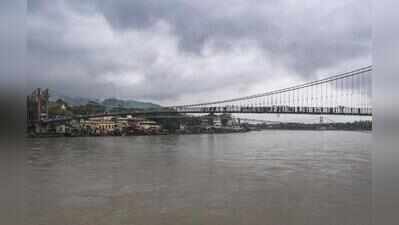
Dark clouds hover over Ram Jhula after rainfall, in Rishikesh
Dehradun: A well-marked low-pressure area interacting with a western disturbance is expected to trigger widespread rainfall across Uttarakhand over the next four days, with the heavy showers likely on July 9 and 10, according to the India Meteorological Department (IMD).
People, particularly those living in landslide-prone areas or travelling through the hills, are advised to remain alert and follow official weather advisories.The IMD has issued an orange alert for Thursday, forecasting heavy to very heavy rainfall at isolated places in Dehradun, Tehri Garhwal, Pauri Garhwal, Haridwar, Nainital, Udham Singh Nagar and Champawat districts. Thunderstorms accompanied by lightning and intense to very intense spells of rain are also likely in these areas.Officials said the prevailing weather pattern could lead to prolonged rainfall, increasing the risk of landslides, flash floods, and other rain-related incidents in vulnerable districts. Authorities are closely monitoring the situation.The regional meteorological centre in Dehradun on Wednesday said that rainfall activity will intensify across most parts of the state from July 8 to July 11. Heavy rain is likely at isolated places, with the wet spell expected to peak over the next two days.
The forecast comes just a week after the delayed southwest monsoon covered most of Uttarakhand, significantly increasing rainfall.According to the IMD, the current weather system is being driven by a well-marked low-pressure area over northwest Madhya Pradesh and adjoining southwest Uttar Pradesh, which is interacting with a western disturbance over north India. The combination is expected to strengthen monsoon activity over the Himalayan region.“Under the combined influence of these systems, widespread rainfall is very likely across most parts of Uttarakhand between July 8 and July 11, with peak activity on July 9 and 10,” said Rohit Thapliyal, senior scientist at the regional meteorological centre in Dehradun.









 English (US) ·