

 1 week ago
12
1 week ago
12
ARTICLE AD BOX
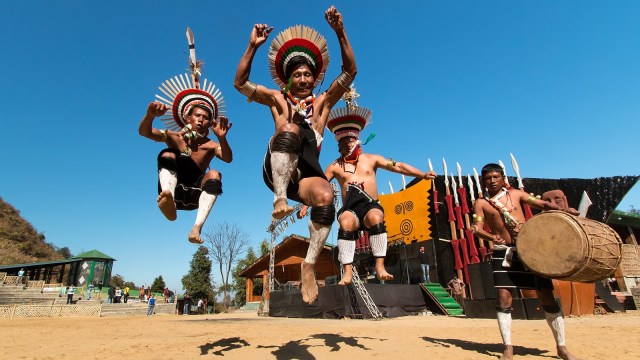 The 26th edition of the Hornbill Festival, which began Monday and is being organised with a budget of Rs 7 crore by the tourism department, is the first since the re-imposition.
Nagaland’s flagship cultural event, the Hornbill Festival, began Monday amid renewed pushback by the state government against the Centre’s re-imposition of the Protected Area Regime.
The Protected Area Regime was imposed in three states bordering Myanmar – Nagaland, Manipur and Mizoram – in December last year, introducing a set of restrictions on the entry of foreign nationals. This regime had earlier been in place in these states, along with several other border states such as Arunachal Pradesh and Sikkim, but had been relaxed here since 2011 to boost tourism.
However, it was re-introduced in December last year following volatility in Manipur and in neighbouring Myanmar, which Nagaland has been opposing on the ground that it poses a major obstacle to its tourism economy.
The 26th edition of the Hornbill Festival, which began Monday and is being organised with a budget of Rs 7 crore by the tourism department, is the first since the re-imposition. The event has seen the Nagaland government – the only one among the three concerned states opposing it – step up its resistance. Following several appeals from Nagaland’s Naga People’s Front–BJP coalition government – including a letter from Chief Minister Neiphiu Rio to Union Home Minister Amit Shah – it was announced two days before the festival that the Centre had decided to relax the PAP system for its duration.
Under the protected area system, a foreign national is not normally allowed to enter a protected area and must obtain a special Protected Area Permit from the Ministry of Home Affairs.
In his letter to the Home Minister on November 28, Chief Minister Rio urged the Centre to clear the festival’s foreign delegates from its six partner countries. He also reiterated his government’s appeal for a complete lifting of the PAP regime from Nagaland, saying it “continues to pose procedural challenges to tourists, adversely impacting both the state’s economy and its image”.
During his address on Nagaland’s 63rd Statehood Day Monday — also the festival’s first day — Rio repeated the appeal for the system’s complete withdrawal.
Story continues below this ad
“Our state is one of the most peaceful states in the country without any serious incidents of law and order situation and no major security challenges… Keeping in view the peaceful situation in the state, we took up with the central government for the relaxing of the imposition of the PAP regime, conveying that it is unwarranted and which may also be acting as a deterrent to many visitors planning to come to our state, including investors,” he said.
Thanking the Centre for relaxing it during the festival, he added: “But it is not enough. I further request the government of India to consider lifting the PAP in Nagaland to boost tourism and [help] the business community to invest in our state.”
The Nagaland government has been actively promoting tourism in the state, and sees the Hornbill Festival as one of its major draws. According to data from the tourism department, Nagaland recorded a footfall of 1,25,516 domestic tourists and 5,623 foreign tourists in 2024, of which 56,217 and 2,527, respectively, were during the Hornbill Festival. In 2023, these numbers were 99,270 domestic tourists and 4,725 foreign tourists during the year, including 37,089 and 2,108 during the festival.
While the Nagaland government has opposed the PAP throughout the year, the then N. Biren Singh-led BJP government in Manipur had welcomed the move when it was re-introduced last December. The Zoram People’s Movement government in Mizoram has not opposed the system either, with Chief Minister Lalduhoma telling the state assembly earlier this year that the state had been used by foreigners as a “transit route” to Myanmar.





 English (US) ·