

 1 hour ago
11
1 hour ago
11
ARTICLE AD BOX
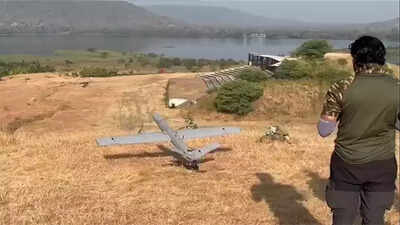
Indian Army places order of 450 NAGASTRA-1R loitering munitions from SDAL
Unmanned drones have evolved from being tactical battlefield assets into strategic weapons that can alter the course of conflicts and reshape military doctrines. Their ability to strike deep into enemy territory, disrupt economies, and project power at relatively low cost has made them central to modern warfare.
Ukraine’s recent drone strikes on Russia illustrate this transformation. In the last few days, Ukraine launched its largest drone assault yet, sending hundreds of drones to overwhelm Russian defenses.Moscow’s biggest oil refinery was hit twice in one week, igniting massive fires and forcing the closure of airports. These strikes are not just symbolic; they directly undermine Russia’s war economy by cutting into oil revenues and demonstrating that even heavily defended cities are vulnerable.
The psychological impact on civilians and the economic disruption highlight how drones have become instruments of strategic coercion rather than mere battlefield tools.
The task once relegated to bombers has now been taken over by drones.Iran’s use of drones also demonstrates another dimension of this shift. By deploying Shahed drones, which are inexpensive yet capable of traveling up to 2,000 kilometers, Iran has been able to project power across the Middle East. Recent strikes targeted Israel, Gulf states and even the UK’s RAF Akrotiri base in Cyprus, located 1,100km away from the Iranian border, demonstrating the long-range strike capability.
While the physical damage was limited, the symbolic message was clear. This ability to strike across borders without risking pilots or expensive missiles allows Iran to maintain pressure on its adversaries. Drones have enabled Tehran to challenge technologically superior opponents through sheer volume of these cheap drones, complicating air defense strategies.India is also working to create drones as a weapon of choice to strike targets deep inside enemy . The Indian Army recently inducted over a hundred indigenous kamikaze drones, known as Peacekeeper or Agniveg, which are capable of high-speed precision strikes against command centers and radar installations.
The armed forces already operate the Hrpy, Harop and SkyThe Indian Air Force has also launched programs to co-develop long-range kamikaze drones with domestic industry, ensuring that the systems are free of foreign dependencies, particularly Chinese components.
Indigenous systems such as Sheshnag with a stated range of 1,000km re under development. These relativelyTaken together, these developments show why drones are now considered strategic weapons. They can reach far beyond frontlines, disrupt economies by targeting energy infrastructure. Their relatively low cost compared to missiles allows for mass deployment, making such attacks difficult to defend against. India is embedding drones into its military doctrine, not only for battlefield effectiveness.








 English (US) ·