

 1 hour ago
4
1 hour ago
4
ARTICLE AD BOX
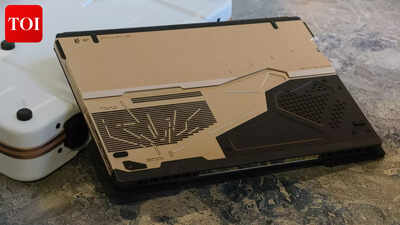
The Asus ROG Flow Z13 Kojima Productions Edition is what happens when a limited edition is handed to an artist instead of a marketing team. Shinkawa drew this machine—every machined cut, every stencilled label, every surface that looks different depending on which light you're standing in—and you feel that at every turn. The hardware is genuinely capable, the display holds up, and the price is steep enough to make you think twice. Think twice anyway. Nothing else feels like this.
There's a version of this review where I spend the first few paragraphs explaining what the ROG Flow Z13 is, how AMD’s Strix Halo changed the portable gaming conversation, and why a gaming tablet without a dedicated GPU can still hold its own against machines with a full RTX 4060 mobile inside.
I'll get to all of that. But none of it is actually why this thing exists.The Asus ROG Flow Z13 Kojima Productions Edition—the KJP—exists because Hideo Kojima's studio turned ten years old, and Asus decided the best way to mark that was to hand the hardware over to Yoji Shinkawa and let him design an actual computer. Not skin one. Not slap a logo on one. Design one.Shinkawa is Kojima Productions' art director, the man behind the visual language of Metal Gear Solid and Death Stranding.
His work has a signature you recognise instantly: mechanical forms with organic weight, bold strokes meeting precise detail, things that feel like they've been used even when they're brand new. The Z13 KJP is what happens when that sensibility gets CNC-milled into aluminium.It costs Rs 3,79,990. It is absolutely not for everyone. It might be for you.
Yes, we're talking about the design again—because you would too
I've already written a lot about this design. The brief, the backstory, the unboxing, the flight-tag keychain that has nowhere to go on the case so you end up putting it on your bag anyway—where it looks right, to be fair.
If you've been following along, you know all of it.But here's the thing about a design this considered: it doesn't really sit still. The longer you spend with the Z13 KJP, the more it shows you. What reads as a clean gold chassis in photos turns out to have different personalities depending on where you are and what light you're sitting under. What looks like surface decoration turns out to be machined into the aluminium at depths you can feel with a fingernail.
First impressions, even good ones, only get you so far.
So we're doing this again.
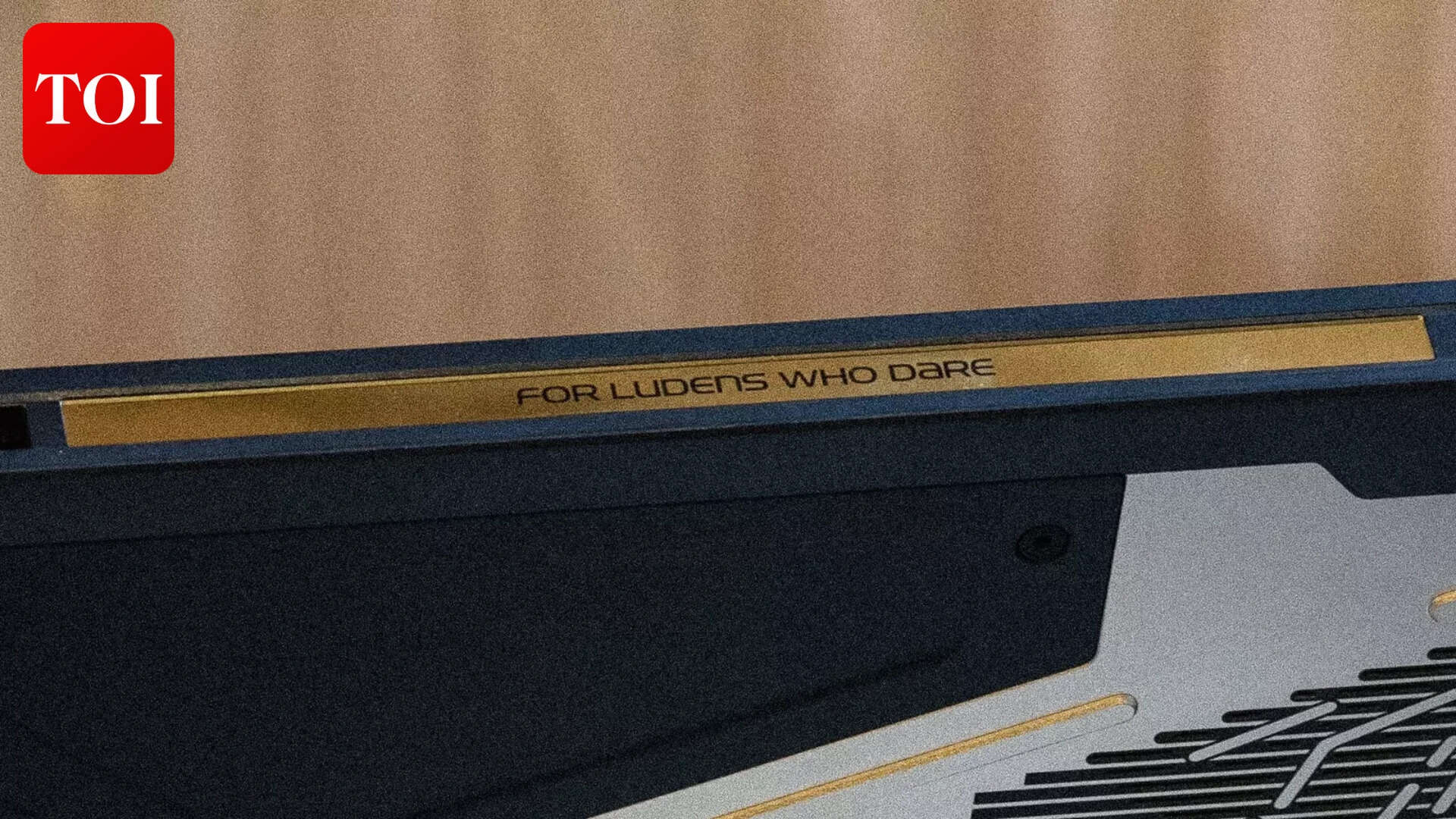
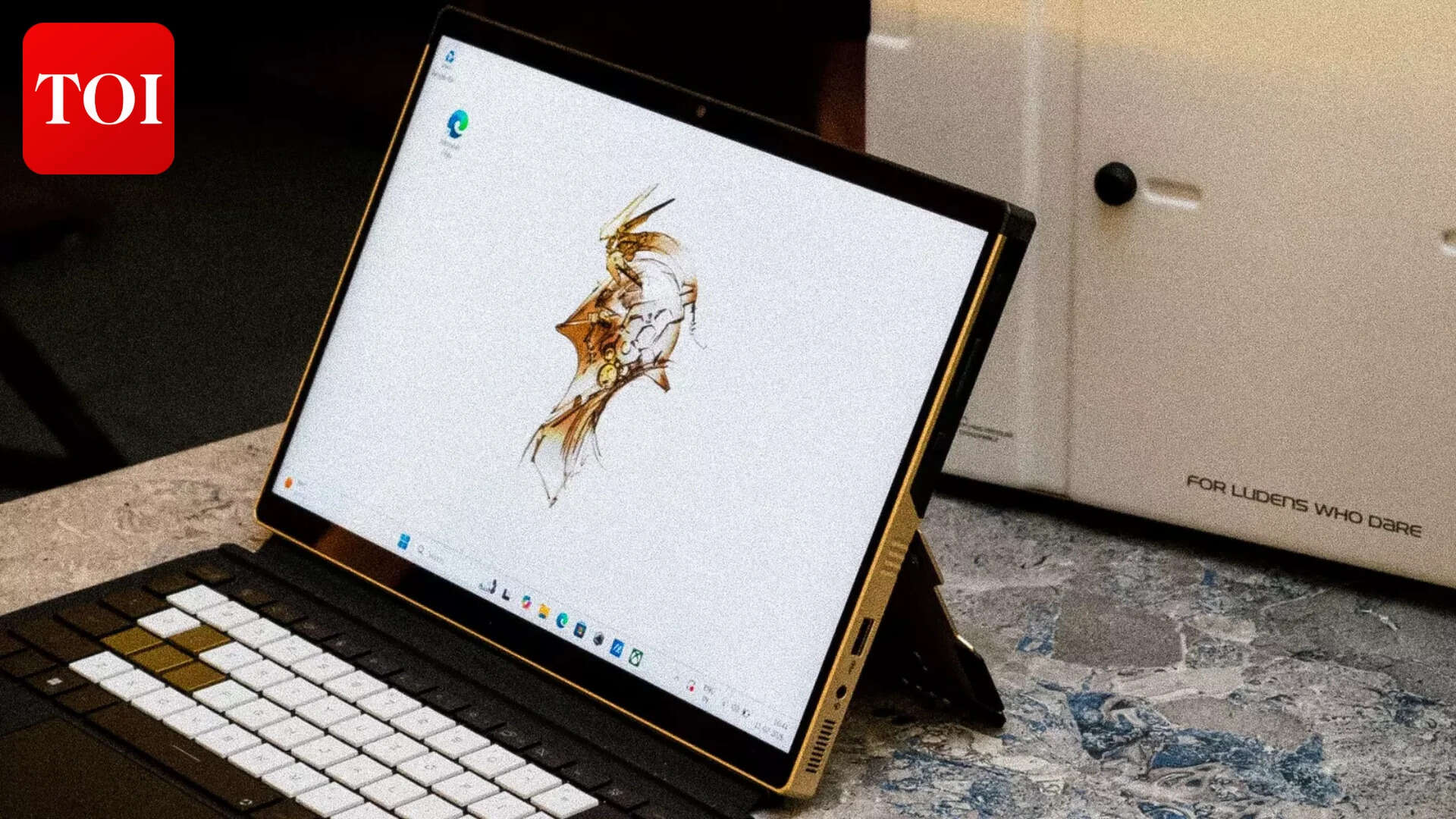
The colour is a good place to start because it keeps surprising people. Asus calls it "Decennium Gold," and it shares almost nothing with what gaming hardware typically does with gold. There's no brassiness to it, no aggression. Under cool overhead light it reads like a weathered industrial alloy—muted, serious, the kind of colour you'd find on a piece of equipment that does something important.
Under warm light it deepens slightly, just enough to feel intentional, and it never tips into gaudy.
Shinkawa chose it because it belonged to the object he was imagining, and you can feel the difference between a colour chosen for a reason and one chosen for a mood board.The rear panel is where the design gets genuinely interesting. The aluminium is CNC-machined—angular cutouts carved physically into the body, referencing the segmented plating on Ludens' EVA suit.
Not printed, not etched onto a flat surface, but recessed in, with tolerances you can trace with your finger. The edges are bevelled just enough not to dig into your palm, but sharp enough to throw real shadow lines as the device moves.
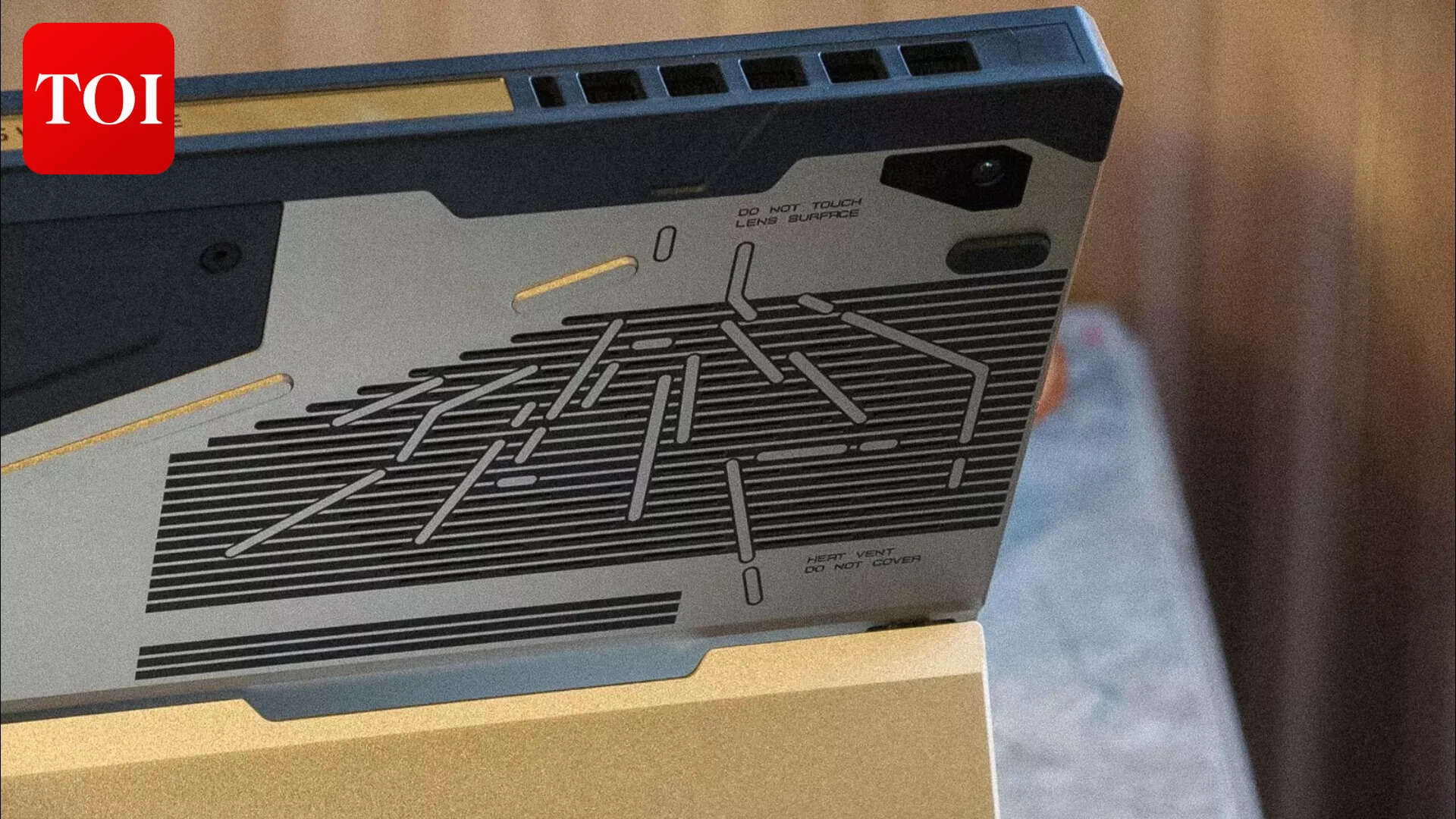
In flat light the geometry reads one way; tilt it toward a window and it reads completely differently. It doesn't have a flattering angle—it just looks good in all of them, which is a harder thing to pull off than it sounds.Running alongside the machined metal, one fan vent is covered in a carbon fibre panel and the other is laser-etched into a dotted geometric pattern that sits somewhere between a mountain topography map and a radar sweep. Neither one interrupts anything. They feel like they were always going to be there, which is the mark of integration done well.The micro typography scattered across the chassis is one of my favourite things about this device, and I keep noticing new bits of it.
"Do not touch lens surface" near the rear camera. "Li polymer battery pack here" over the battery. "Ensure lock is tight" near the kickstand hinge. Deadpan, specific, formatted exactly like safety markings on actual field equipment. It's worldbuilding through industrial design—and what keeps it from tipping into self-parody is that it never winks at you.
It just is what it is.
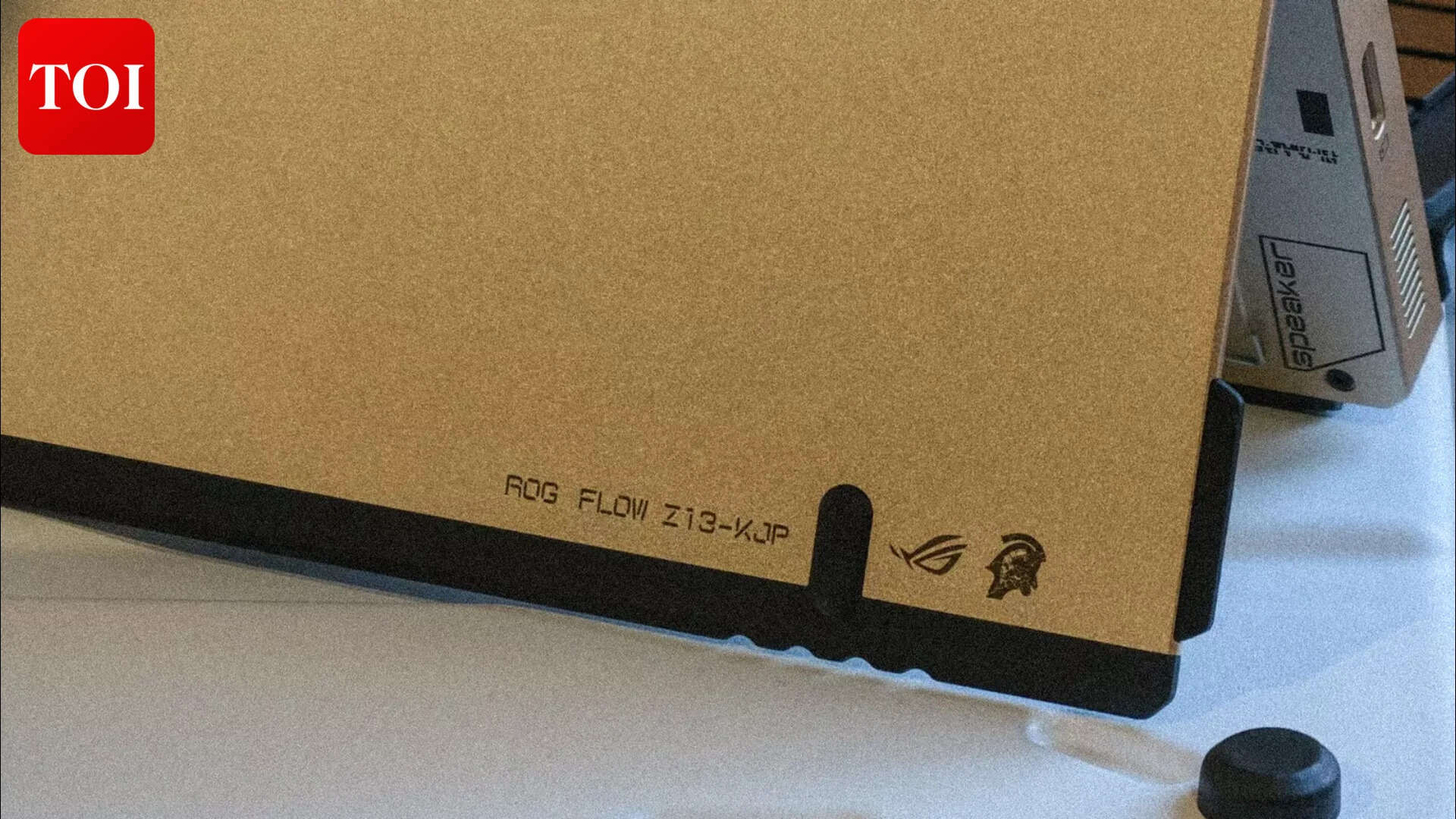
Something that took a little longer to notice: the carbon fibre panel holds up to fingerprints considerably better than the aluminium sections.
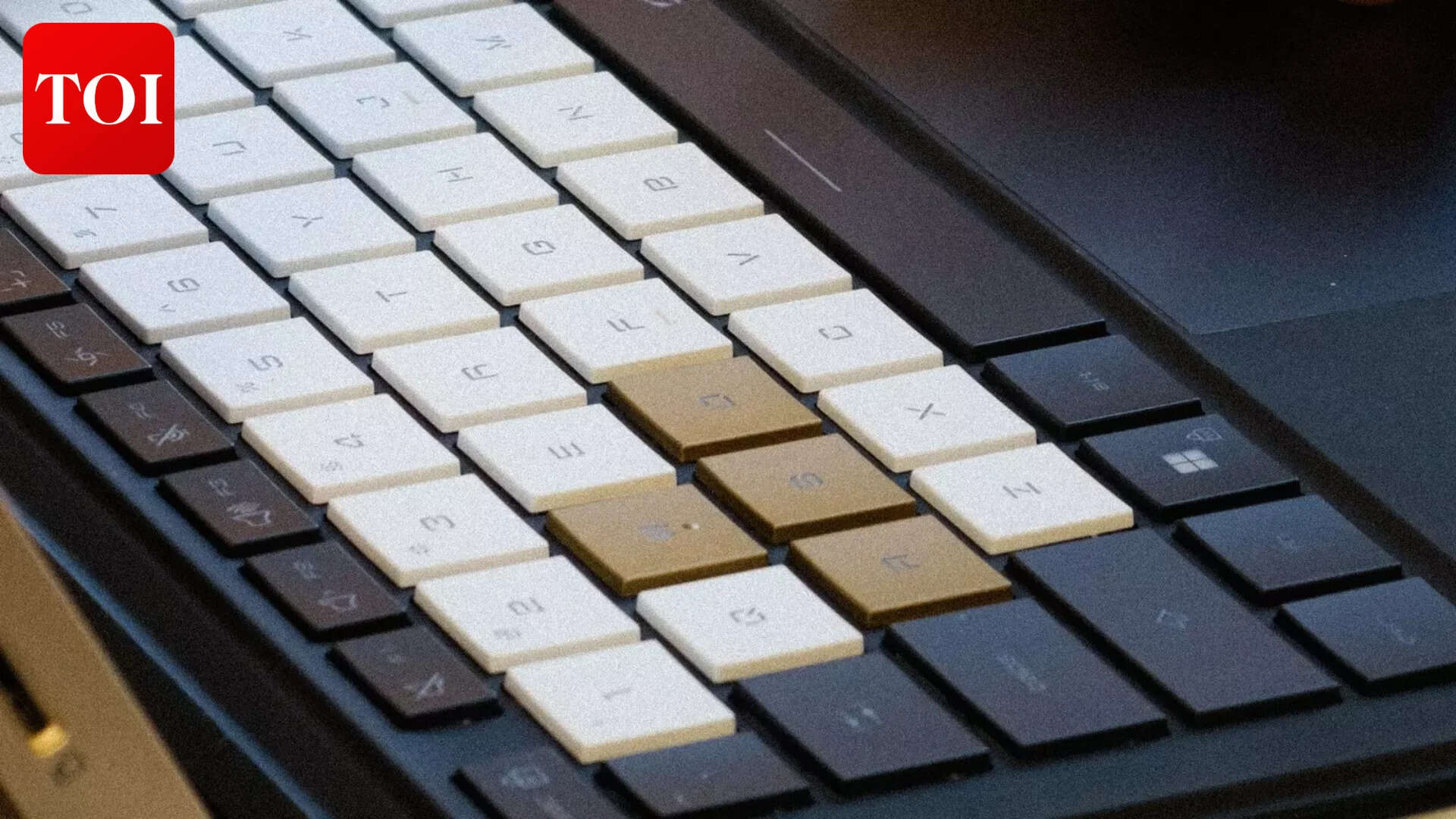
The woven texture absorbs oils differently, so after a long session the metal shows contact marks under direct light while the carbon fibre stays visually clean. It's a small thing, but on a device at this price, small things either pull their weight or they don't. This one does.The keyboard folio carries the theme without overdoing it—custom keycaps in white and gold on WASD, standard black on the outer ring, in a stencil-style typeface that gives the whole thing a quietly militarised feel.
The faux-leather palm rest is a genuine step up from the stock version.
The folio is just the start of it, really. Asus has a matching peripheral set on sale—the ROG Delta II-KJP headset, the Keris II Origin-KJP mouse, and the Scabbard II XXL deskmat. Each one carries Shinkawa-designed elements, and together they build a workspace that actually looks like it was planned rather than assembled from whatever was available in the catalogue.
But, then, you can't really get them here. Which is a shame, because the Z13 KJP is the kind of device that makes you want to commit to the whole bit.And when you're done committing, the device has somewhere to go—though "done committing" might be generous, because the carrying case modelled after the attaché case mounted on Ludens' back doesn't really let you off the hook either. Same Decennium Gold colourway, same schematic typography, designed to feel like a continuation of the same object rather than something tossed in to justify the price.
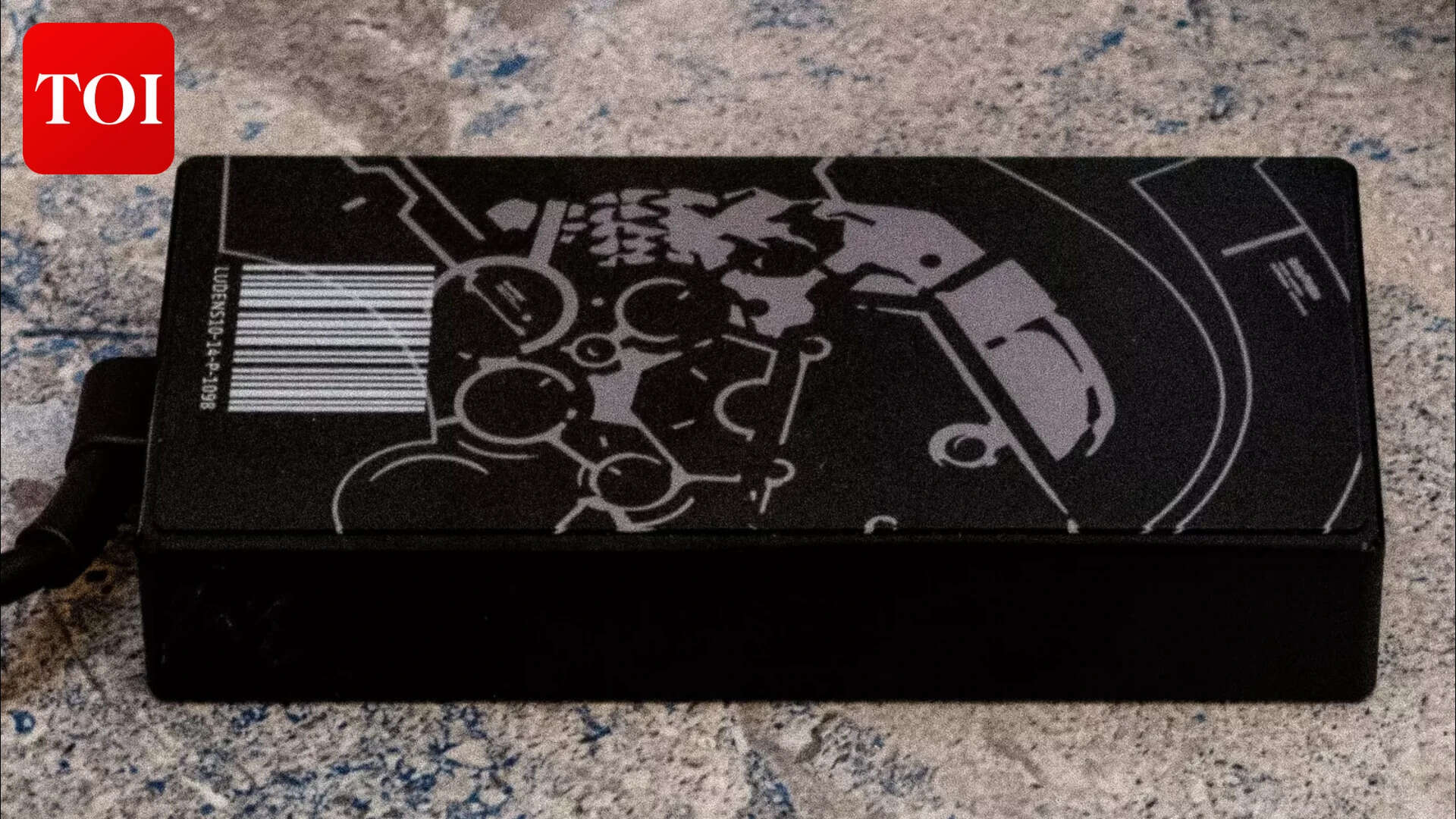
The Z13 KJP has a place to live that's as considered as the device itself, which is either a wonderful detail or a sign that you've spent too much money, depending on how you look at it.Even the bits you'd normally ignore got the treatment. The power adapter wears the Kojima Productions skull logo in Shinkawa's brushstroke style. The box comes loaded with stickers—holographic, see-through, black and white—enough to extend the aesthetic to whatever else you own.
And it doesn't stop there. Boot the machine up for the first time and you're greeted not by a Windows loading screen but a Kojima Productions logo animation, followed by a sound stinger that will genuinely startle you if you weren't expecting it—and you won't be. It's a small touch, but it's the kind that accumulates. The fiction never breaks.
That screen is the easy part to love
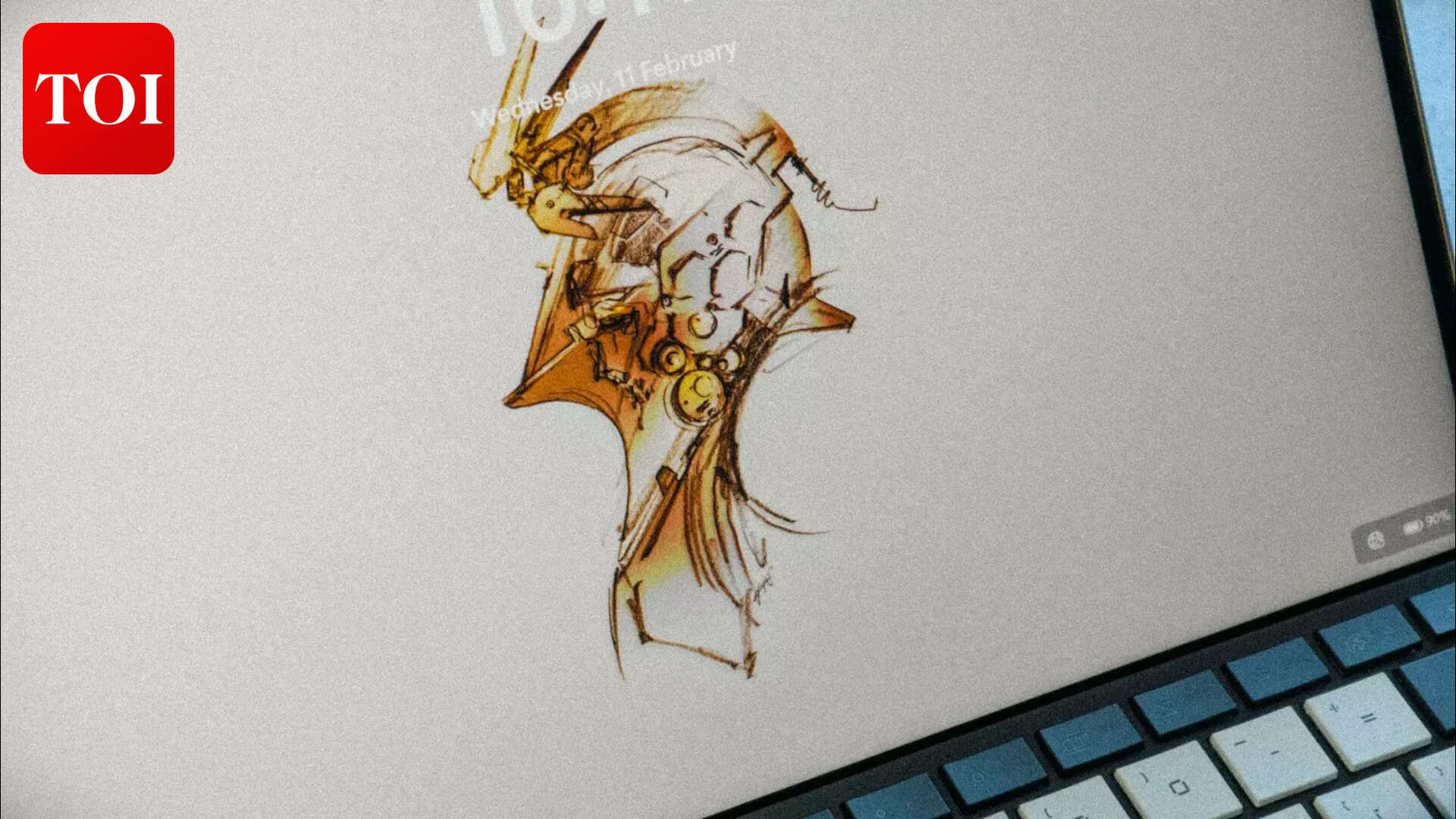
The 13.4-inch ROG Nebula display runs at 2560 x 1600, 16:10, 180Hz, 500 nits, full DCI-P3 coverage, Gorilla Glass DXC for glare.
Touch and stylus both work. On paper, it reads like a strong panel. In practice, it holds up to that.Colour reproduction is honest—not pushed or oversaturated to compensate for panel quality, just accurate output that stays consistent across gaming, editing, and video. HDR lands cleanly without the bloom you get from cheaper IPS panels. At 1600p and 180Hz, gaming looks sharp and motion stays controlled. The 16:10 ratio matters more in daily use than it sounds like it would—there's real vertical breathing room for documents and tabs, and you stop noticing the aspect ratio precisely because it's not fighting you.
The OLED question, which will come up if you're spending this kind of money, has an answer. Asus addressed it directly: the main components sit behind the display, and OLED's heat sensitivity makes that arrangement complicated in a chassis this compact. IPS let them preserve the form factor, the 180Hz, and the battery life together. It's a coherent engineering argument and I buy it. That said, in a dark room the contrast gap between IPS and OLED is real, and at this price, you feel the absence.
Not enough to derail the display, but enough to mention.The speakers are a different story. Two 2W drivers, Dolby Atmos, Hi-Res Audio certification—and the output is flat, a little thin, the kind of sound that doesn't offend but doesn't do anything either. EQ helps at the margins. For anything beyond background audio while you're working, the headphone jack is genuinely the answer, and it works well. Just budget for a pair of headphones and move on.
The hardware underneath is as serious as the design on top
The AMD Ryzen AI Max+ 395—Strix Halo—is why this device can exist in the shape it does. For a long time, integrated graphics were what you lived with when there was no room for a discrete card. The Radeon 8060S has genuinely changed that conversation.Death Stranding 2—which felt appropriate to play on this machine, all things considered—sits at around 60 FPS on High with low ray tracing, and it looks great doing it. The game's wide open landscapes and moody lighting hold up well on this panel, and there's something quietly satisfying about playing a Kojima game on a Kojima-designed device.(Death Stranding 2 comes bundled with the device, redeemable via Armoury Crate on Steam.)Cyberpunk 2077 on similar settings runs at 29–35 FPS. That's not a number you'd want for a relaxed playthrough, but it's a number that's almost absurd on a portable device running entirely on integrated graphics with nothing connected but a USB-C charger. Baldur's Gate 3 on High settings is a more comfortable story—sitting at a steady 55–65 FPS, smooth enough that you stop thinking about the hardware and start thinking about the game.
Lighter titles have considerably more room to stretch—strategy games and older titles push well past 100 FPS with everything maxed, which is where the device feels most effortless. Heavy AAA games need settings management, but that's true of any handheld gaming device. The difference is the ceiling: it's in a different place than integrated graphics had any right to put it, and once you make peace with that, the Z13 stops feeling like a compromise.For titles that support AMD FSR and Fluid Motion Frames, there's additional headroom to recover frame rates without needing to be inside Nvidia's ecosystem to do it. And for cloud gaming, the device is a natural fit—stream over a solid connection and the local hardware stops being the constraint entirely. At full 1600p over GeForce Now, with 180Hz to actually use what the stream is delivering, it's one of the better cloud gaming experiences I've had on any portable device.The memory situation is worth understanding because it's a little different from a conventional setup. The 128GB of LPDDR5X at 8,000 MT/s draws from a unified pool shared between the CPU and GPU, and you can configure how much of it acts as VRAM. No current game gets close to using what this machine can allocate—the practical effect is simply that VRAM never becomes the thing that slows you down. Where the headroom makes more obvious sense is local LLM inference, video editing, 3D rendering—the creative workstation work that this hardware points toward just as strongly as gaming does.
This is genuinely a machine for people who make things as much as people who play them.There's 1TB of fast NVMe storage in there too, and it's user-replaceable, which feels like the right call on a machine you'd actually want to hold onto.eGPU support runs through either USB4 port at full bandwidth, including the ROG XG Mobile, if you ever want more at a desk. You don't need it the way older Z13 owners did, but it's there.Battery lands at around eight to nine hours of general use and browsing.
Gaming pulls that down to one to two hours depending on load and brightness, which is the honest reality of running Strix Halo flat out on a 70Wh cell. The 100W USB-C charging via PD 3.0 recovers ground quickly though—around 50% in 30 minutes—and any high-wattage GaN charger works in place of the included brick. Given that the brick is substantial and leaving it behind makes a real difference in bag weight, that flexibility is worth knowing about early.Ports keep being a pleasant surprise. HDMI 2.1, two USB4 ports, a USB-A 3.2 Gen 2, a microSD slot tucked under the kickstand, a 3.5mm jack—all of this on a 1.25 kg tablet. Most machines at this size and price give you two USB-C ports and the unspoken expectation that dongles are your problem. The Z13 KJP doesn't do that to you.
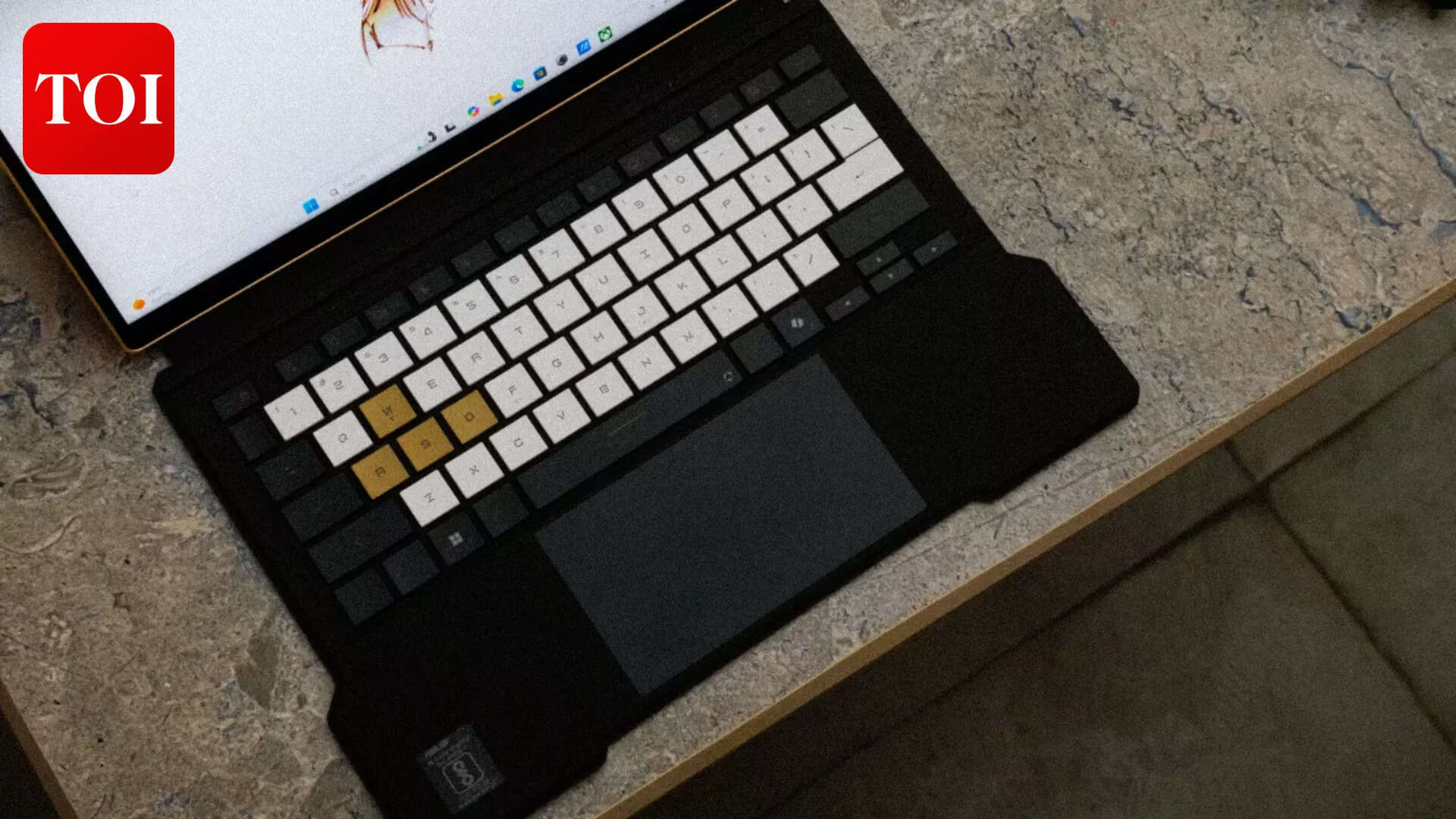
Day-to-day it holds together well. The keyboard folio types better than its thinness suggests—there's genuine travel there, enough to feel comfortable over long sessions—and the magnetic POGO connection is solid enough that you stop thinking about it, which is the ideal outcome.
Detach the keyboard and it becomes a legitimately good media tablet, comfortable in landscape on the kickstand or propped in portrait for something more vertical.
Connect it to a monitor via HDMI with a Bluetooth controller and you have a setup that makes you seriously question how much of a conventional gaming laptop you were hauling around unnecessarily.Weight is the one honest caveat. At 1.72 kg with the keyboard it isn't heavy, but the density is concentrated into a compact footprint and you feel that difference.
Handheld use past fifteen minutes or so starts to remind you of how much hardware is packed in there. A backpack distributes it fine. A shoulder bag will let you know it's present.The Z13 KJP isn't a complicated device to read. It's a capable machine wearing a design that nothing else in consumer electronics currently matches, at a price that makes sense only if both of those things matter to you roughly equally.
Expensive and niche—but uniquely, unapologetically both
The hardware case is real and straightforward. The Ryzen AI Max+ 395 moved the goalposts on portable gaming performance when the standard Z13 launched, and nothing about that has changed here.
The display is excellent, the port selection is better than it has any right to be on a tablet, and the 2-in-1 form factor is more useful in daily life than most people expect until they actually live with it for a while.But the design is the reason this device exists. Shinkawa didn't consult on it—he drew it. The Decennium Gold, the machined armour cuts, the carbon fibre panel, the typography that reads like spacecraft safety labels—none of it feels like licensed artwork applied to a product after the fact.
It feels like a product designed from the inside out around a specific creative vision. That's rare in consumer electronics.
It's rare in most things.If the Kojima collaboration does nothing for you, the standard ROG Flow Z13 has identical hardware at a considerably lower price. That's the clear call.But if how a computer is designed actually matters to you—really designed, by an artist with an intention that you can trace through every surface detail—the Z13 KJP earns its ask in a way that's genuinely hard to argue with. Most limited editions look best in the announcement photos. This one looks better in person, and better still the longer you sit with it.That's not nothing. At any price, that's not nothing. If you still need the case made—well, Shinkawa already designed it.









 English (US) ·