

 52 minutes ago
3
52 minutes ago
3
ARTICLE AD BOX
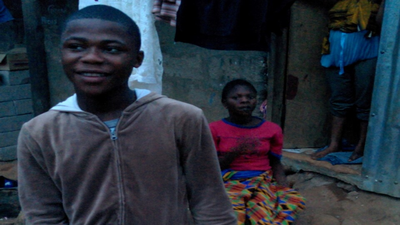
Image of Kelvin Doe| Image Credit: Wikimedia Commons
Kelvin Doe, at the age of just fifteen, had become a viral name in the area of Freetown, Sierra Leone, for his ability to create electronic devices from waste materials. As reported, Doe had been collecting discarded electronics from garbage dumps for many years, learning on his own how to convert them into batteries, generators, radios, and transmitters.
The most unique part of his story, apart from his young age, is that it took place within a poor environment.According to MIT’s archive, Doe began scavenging electronic waste at the age of 10. Using recycled parts, he built batteries to power lights, hand-powered generators, and a multi-channel audio mixer. The institute described him as a “self-taught engineering whiz” whose inventions emerged from persistence and trial-and-error rather than formal technical training.Building a radio station from discarded partsAnother interesting aspect of Doe's story was that he did not limit himself to creating isolated devices. Reportedly, he even established his own community radio station, broadcasting under the name DJ Focus, combining music with information on current events and debates in the area. This success allowed his experiments to become valuable to the society around him. His inventions were no longer simple demonstrations of skill; instead, they were means of communication within his community.
The shown radio station was built from scrap materials, along with batteries and a generator.The story resonates because it shows that creativity emerges in the face of scarcity. It is not uncommon in low-resource environments to find used gadgets being regarded not as waste but as sources of useful parts. Doe developed his inventions by considering this fact. When he saw broken equipment, he did not see waste but materials for experimenting.The wider reality of electronic wasteDoe’s achievements also sit within a much larger global issue. According to the World Health Organization, electronic waste is now the world’s fastest-growing solid waste stream, yet only a small proportion is formally recycled. The organisation warns that unsafe handling of e-waste can expose people to toxic substances such as lead and mercury, with children especially vulnerable to the health risks.Research also adds another layer to the story. In addition to an analysis of Kelvin Doe’s activities, a systematic review of informal e-waste recycling in Africa found that the process may pose environmental hazards to the surrounding community and the individual's health.Informal e-waste recycling, as noted by researchers, poses serious air, soil, water, and dust pollution to some African regions. It further shows how there is a struggle of economic need against environmental health.

By the age of 15, Doe had been constructing batteries, generators, transmitters, as well as a community radio station by using salvaged electronic parts gathered from bins in Freetown, Sierra Leone | Image Credit: Wikimedia Commons
Why Kelvin Doe’s story continues to matterWhat gives Doe’s story lasting power is the contrast at its center. On one side is a teenager collecting spare parts from waste piles in Freetown. On the other hand, there is a young inventor building functioning generators, transmitters, and a radio station capable of serving a community.The scale of the achievement feels surprising precisely because the materials were so ordinary.In addition, the story does not turn out to be entirely upbeat in light of the broader context of electronic waste problems. While the discarded technology used in experiments is an important part of Doe’s accomplishments, it is also symptomatic of problems within the environment and the health of the global population.







 English (US) ·