

 19 hours ago
6
19 hours ago
6
ARTICLE AD BOX
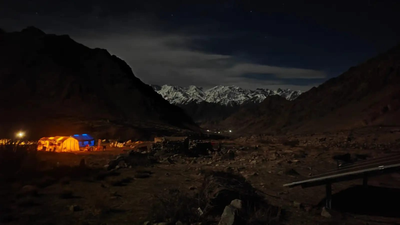
BENGALURU: In the thin, biting air of Leh, where oxygen is scarce and isolation is real, the Indian Space Research Organisation (Isro) and Institute of Aerospace Medicine (IAM) are turning their focus to a less visible part of spaceflight: human behaviour.Mission MITRA (Mapping of Interoperable Traits and Response Assessment), underway from April 2-9 in Ladakh, is designed to simulate the stresses astronauts face in space. “Crew safety and performance are the most critical elements of all human spaceflight missions,” Isro said.At roughly 3,500 metres above sea level, Leh offers a natural analogue. “The environmental conditions of hypoxia, low temperature and isolation act as a natural analogue for spaceflight operations,” the agency noted.Unlike rocket tests or hardware trials, MITRA examines how people respond under pressure. The study is being conducted jointly with the IAM, which brings expertise in aerospace physiology and psychology.“The ability of crew to communicate effectively, adapt to stress, maintain psychological resilience and support one another determines the success and safety of any mission,” Isro said.Participants are being assessed on multiple fronts: physiological adaptation to altitude, psychological resilience, and operational decision-making.
The goal is to map “team inter-operability between crew and ground control teams and effectiveness of decision making under environmental and operational stress,” according to the agency.Mission logistics and facility management are being handled by Bengaluru-based Protoplanet Pvt Ltd, reflecting the growing role of private players in India’s space ecosystem.Analogue missions like MITRA allow researchers to observe real human responses without leaving Earth.
For India, this is among the first structured efforts focused on team dynamics in extreme conditions.The findings are expected to feed directly into the Gaganyaan programme. “The scientific data generated on crew performance and human factors will contribute directly to the Gaganyaan programme and future long-duration missions,” Isro said.However, Isro and private players that have conducted analogue missions in the past haven't publicly discussed their findings, leaving no scope for professional peer review of claims. As India hopes to moves closer to human spaceflight — much delayed as per Isro and Govt of India timelines announced publicly — Mission MITRA is a shift from engineering readiness to human readiness: understanding how crews endure, decide and work together when the margin for error is minimal.








 English (US) ·