

 1 hour ago
5
1 hour ago
5
ARTICLE AD BOX
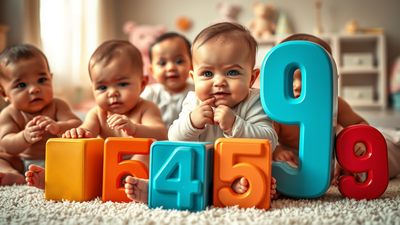
New research reveals infants possess an innate ability to perceive numbers from birth, challenging the long-held belief that complex cognitive skills develop much later.
When we look into a hospital postnatal ward and see a group of sleeping infants, we often picture a scene of complete innocence. We picture tiny, bundle-wrapped babies who are entirely dependent on their parents, their clean-slate minds gradually waiting to absorb the sights and sounds of the busy world around them.
For generations, childhood psychology has often portrayed newborns as empty vessels when it comes to structured, complex thought. The common belief is that sophisticated cognitive abilities, especially analytical skills like mathematics and arithmetic, can only develop much later in childhood after a toddler has fully mastered language, learned to speak, and received formal schooling.But a closer look into the silent, rapid cognitive activity of the infant brain introduces a completely different narrative to our modern understanding of human development.
Long before a baby can ever mimic its first word, construct a simple sentence, or stack wooden alphabet blocks, their mind is already sorting the world into distinct patterns. Instead of entering the world completely blank, infants appear to have an early ability to track quantities and patterns from their first hours of life.
What looks like a quiet, purely reactive newborn sleeping in a crib is actually a highly active mind already built with the baseline biological equipment required to perceive mathematical properties.
This profound cognitive reality was thoroughly documented in a study published on bioRxiv, titled Neural evidence for an abstract sense of number in humans at birth. Led by cognitive scientists including Marco Buiatti, Elena Eccher and Manuela Piazza, the paper reports brain-recording evidence for an early sense of number at birth. By measuring the subtle changes in brain waves when infants were exposed to matching or clashing patterns across different senses, the researchers presented compelling data which indicates that a basic, abstract sense of number is operating in the human mind long before language ever takes root.Reading the silent patterns of the newborn mindTo fully understand why this discovery has fundamentally shifted our view of early human development, it helps to look at how scientists cracked the code of the infant mind. Because you cannot ask a newborn baby to count objects or point to a specific pattern, researchers had to design a highly sophisticated experiment that could monitor the brain's internal activity without causing any discomfort.
The research team focused their work on twenty-one healthy full-term newborns who were only zero to three days old, tracking their neural responses using a specialised high-density sensor net that gently recorded natural electrical activity across one hundred and twenty-five points on the scalp.The detailed scientific analysis shared in the bioRxiv paper explains that the infants were first familiarised with distinct auditory sequences, such as a repeating series of four or twelve syllables.
After listening to these sounds, the babies were shown visual arrays of dots that either perfectly matched the number of sounds they had just heard or completely clashed with them. Even though these infants had an incredibly brief attention span, the advanced brain recordings captured clear, robust neural responses to the changing visual displays.
Crucially, when the number of dots on the screen matched the number of syllables the babies had heard, their brain activity showed a significant reduction in response amplitude.This fascinating drop in neural signals is what cognitive neuroscientists refer to as a cross-modal repetition-suppression mechanism. When the human brain encounters a piece of information that perfectly matches what it expects based on a previous experience, it processes that information more efficiently, requiring less overall neural energy. The neural drop suggests that newborns may extract quantity across senses rather than responding only to random noise.
Instead, they may extract a quantity signal from their surroundings, allowing their brains to match the number four heard in an audio clip with the number four seen on a visual display.

Scientists observed newborns' brain activity, showing they can match auditory number patterns with visual ones. This suggests a fundamental, abstract sense of quantity is hardwired, forming a crucial part of our perceptual toolkit from the very beginning.
Unlocking the built-in toolkit of human perceptionThe practical insights gained from these newborn brain recordings have sparked a vital conversation about how we understand the natural architecture of human intelligence. For decades, educators and scientists debated whether our mathematical ability was something we slowly built up entirely from social learning and language, or if it was a core part of our evolutionary inheritance.
By capturing neural evidence of cross-modal matching within the first 72 hours of life, the study supports the idea that numerical sensitivity may be present very early.According to the insights highlighted in the study, this early numerical sensitivity forms a vital part of the innate toolkit that helps us navigate our surroundings. The data demonstrates that this internal system works independently of any specific physical feature of the stimuli, as the effect remained identical regardless of whether the babies were tracking the lower number of four or the higher number of twelve.
This suggests that our brains may have a supramodal system for processing basic quantities across different senses before cultural or educational training.This research highlights the complexity of the newborn mind. By suggesting that an abstract sense of number may be present at birth, the study indicates that infants are more perceptive than they might appear from the outside. Moving forward with this neurological knowledge encourages a deeper appreciation for the ancient, biological systems that shape our early consciousness, demonstrating that our lifelong journey with numbers is not just a skill we learn in school, but a fundamental part of who we are from our very first breath.









 English (US) ·