

 1 hour ago
5
1 hour ago
5
ARTICLE AD BOX
3 min readBhopalApr 26, 2026 07:09 AM IST
 Officials have said the tigress and the remaining cubs are being “closely monitored”, but have not detailed the frequency of tracking prior to the deaths or whether any distress indicators such as reduced movement, poor body condition, or declining prey encounters were flagged.
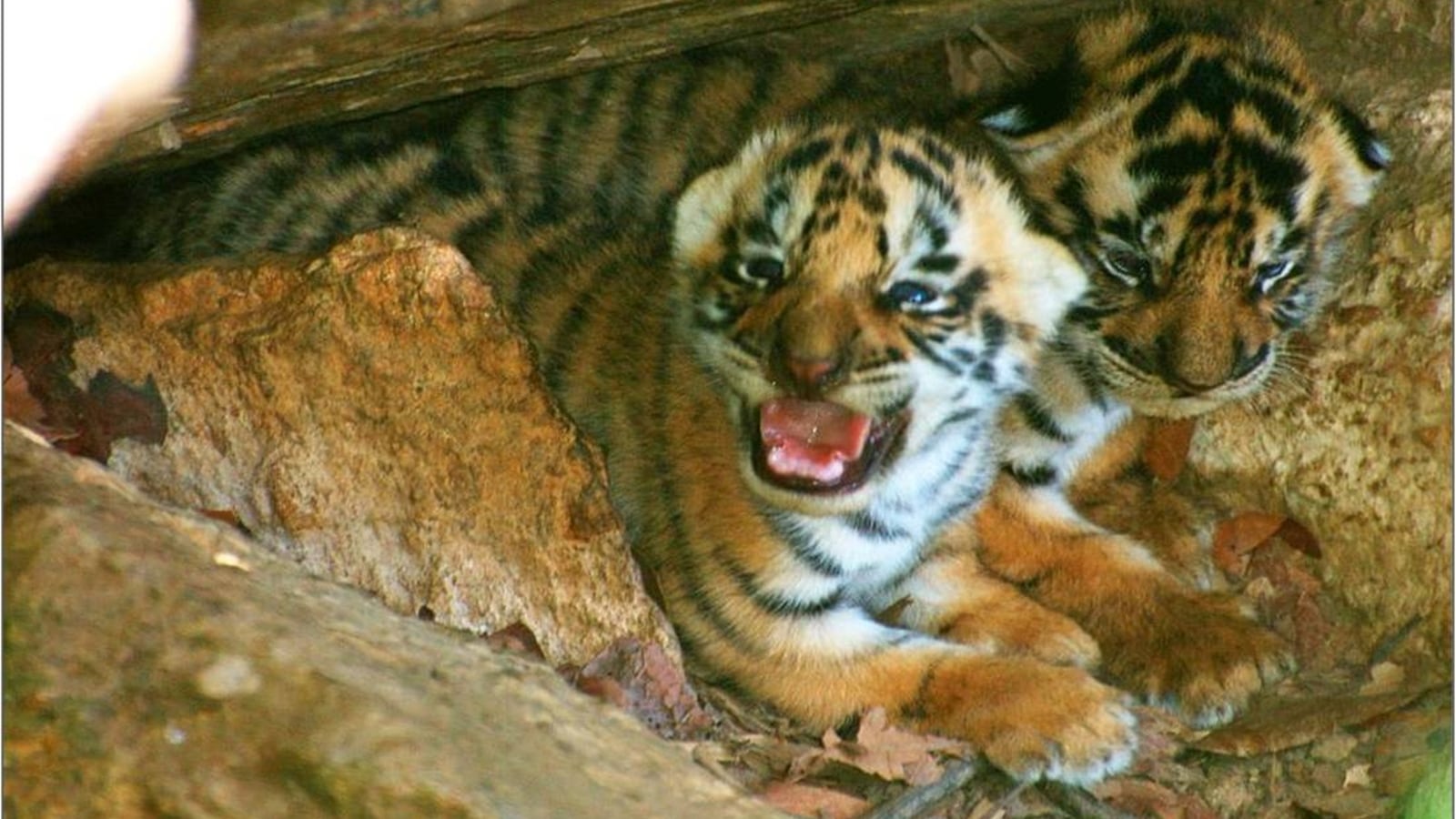
Two tiger cubs from the same litter have died within days inside Kanha Tiger Reserve, raising questions over monitoring protocols for breeding tigresses in one of India’s most intensively protected habitats.
The latest cub, estimated to be between one and one-and-a-half years old, was found dead in the Sargi area of the reserve’s core zone Thursday evening. Forest officials said a post-mortem has been conducted and the report is awaited. Another cub from the same tigress had died three days earlier. The tigress had given birth to four cubs; two now remain.
Deputy Director Amitha B confirmed to The Indian Express that two cubs had died recently. “We will conduct a post mortem to ascertain the cause of death,” she said.
While cub mortality in the wild is not uncommon, particularly in the first year, the loss of two sub-adult tigers in quick succession inside a core area designed for minimal disturbance shifts scrutiny to field surveillance and early warning systems. At this age, cubs are typically transitioning to independent feeding but remain dependent on the mother’s hunting success and territorial stability.
Officials have said the tigress and the remaining cubs are being “closely monitored”, but have not detailed the frequency of tracking prior to the deaths or whether any distress indicators such as reduced movement, poor body condition, or declining prey encounters were flagged.
Under standard practice followed by the wildlife officials across reserves, a tigress with cubs triggers heightened surveillance. This is meant to include near-daily monitoring through ground tracking and camera traps, mapping of movement ranges, and regular assessment of prey density within the immediate territory. Any deviation like prolonged absence of the mother, restricted movement, or signs of injury is expected to trigger rapid field verification.
When a cub death occurs, protocol requires immediate securing of the site, forensic documentation, and a time-bound post-mortem conducted by a veterinary team in the presence of officials to establish cause of death. Tissue and viscera samples are to be preserved for toxicology if poisoning or disease is suspected. Parallelly, the remaining litter and the mother are to be placed under intensified observation, often involving round-the-clock tracking to prevent further losses.

Anand Mohan J is an award-winning Senior Correspondent for The Indian Express, currently leading the bureau’s coverage of Madhya Pradesh. With a career spanning over eight years, he has established himself as a trusted voice at the intersection of law, internal security, and public policy. Based in Bhopal, Anand is widely recognized for his authoritative reporting on Maoist insurgency in Central India. In late 2025, he provided exclusive, ground-level coverage of the historic surrender of the final Maoist cadres in Madhya Pradesh, detailing the backchannel negotiations and the "vacuum of command" that led to the state being declared Maoist-free. Expertise and Reporting Beats Anand’s investigative work is characterized by a "Journalism of Courage" approach, holding institutions accountable through deep-dive analysis of several key sectors: National Security & Counter-Insurgency: He is a primary chronicler of the decline of Naxalism in the Central Indian corridor, documenting the tactical shifts of security forces and the rehabilitation of surrendered cadres. Judiciary & Legal Accountability: Drawing on over four years of experience covering Delhi’s trial courts and the Madhya Pradesh High Court, Anand deconstructs complex legal rulings. He has exposed critical institutional lapses, including custodial safety violations and the misuse of the National Security Act (NSA). Wildlife Conservation (Project Cheetah): Anand is a leading reporter on Project Cheetah at Kuno National Park. He has provided extensive coverage of the biological and administrative hurdles of rewilding Namibian and South African cheetahs, as well as high-profile cases of wildlife trafficking. Public Health & Social Safety: His recent investigative work has uncovered systemic negligence in public services, such as contaminated blood transfusions causing HIV infections in thalassemia patients and the human cost of the fertilizer crisis affecting rural farmers. Professional Background Tenure: Joined The Indian Express in 2017. Locations: Transitioned from the high-pressure Delhi City beat (covering courts, police, and labor issues) to his current role as a regional lead in Madhya Pradesh. Notable Investigations: * Exposed the "digital arrest" scams targeting entrepreneurs. Investigated the Bandhavgarh elephant deaths and the impact of kodo millet fungus on local wildlife. Documented the transition of power and welfare schemes (like Ladli Behna) in Madhya Pradesh governance. Digital & Professional Presence Author Profile: Anand Mohan J at Indian Express Twitter handle: @mohanreports ... Read More
Stay updated with the latest - Click here to follow us on Instagram
© The Indian Express Pvt Ltd







 English (US) ·