

 1 hour ago
6
1 hour ago
6
ARTICLE AD BOX
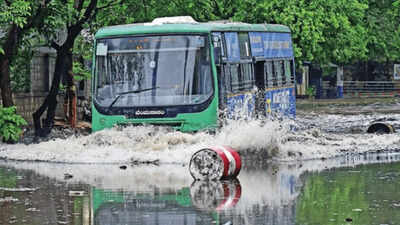
BCCC allocates Rs 75 lakh for pothole and drain maintenance for each ward
BENGALURU: When rain falls on a Bengaluru footpath, it usually goes nowhere useful — pooling at junctions, flooding drains, washing away the patchwork of freshly laid asphalt. The Bengaluru Central City Corporation (BCCC) wants to change that, one pavement at a time.“A rainwater-absorbing footpath will be designed using asphalt without sand, making it porous enough for water to seep through the pavement into an underlying stone drainage system. This allows rainwater to quickly recharge groundwater levels, making it a sustainable solution that can withstand climate change,” BCCC commissioner Rajendra Cholan, said.That single detail — the deliberate removal of sand from asphalt mix — captures the logic threading through the corporation’s 2026–27 budget: that Bengaluru’s infrastructure crisis is also a climate crisis, and that civic spending must begin to treat it as such.
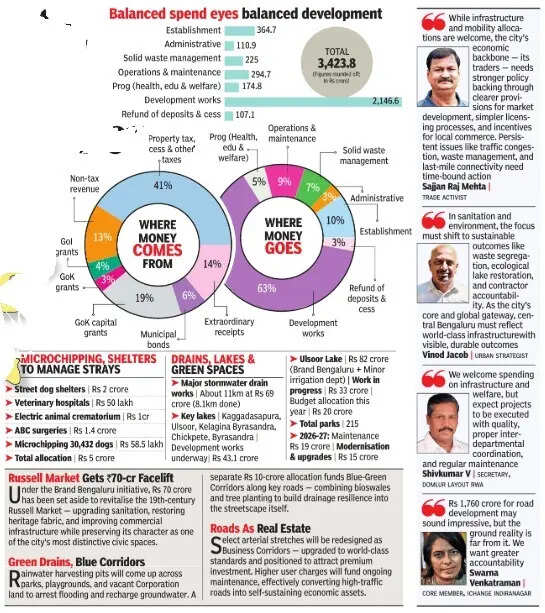
The Rs 1,760 crore earmarked for public works, spans road resurfacing, stormwater drain completion, pedestrian pathway construction, LED conversion, and the creation of blue-green corridors. But running beneath the line-item specifics is a recognisable shift in emphasis, from repair toward redesign, from reactive fixes toward structural resilience.
Bengaluru’s Rs 1,760 crore infra plan targets flooding woes
Road infrastructure anchors the allocation. The Corporation manages 265km of arterial roads and 1,346 -km of ward roads, and the budget targets both ends of the network simultaneously.
A Rs 217.5-crore state grant will fund 145 km of arterial and sub-arterial development by May 2026, while Rs 200 crore under the Chief Minister’s Infrastructure Development Programme covers 115 km of ward roads and the construction of 10 community buildings.At the hyperlocal level, Rs 141.7 crore has been distributed across the Corporation’s 63 wards. “We have ensured each of these wards has Rs 2.2 crore for complete development,” Cholan said.Each ward’s allocation breaks down into Rs 1.5 crore for development works, Rs 75 lakh for pothole and drain maintenance, with emergency road funds of Rs 25 lakh disbursed directly to assistant executive engineers, bypassing the usual approval chain.Flood mitigation has moved from the margins to a central pillar. With 8.1km of the planned 10.9km stormwater drain network already completed, the Corporation is now scaling up under a World Bank-assisted Water Security and Disaster Management Programme, a structural pivot from emergency response to long-term drainage planning.Pedestrian safety gets its own dedicated framework. The ‘Suraksha’ scheme will scientifically redesign 12 major junctions; ‘Hejje Hejjege Surakshe’ targets 50km of footpath upgrades and 15km of new walkways, backed by Rs 50 crore. Nine new skywalks have been tendered alongside 24 already operational.“With the establishment of the Urban Design Cell, bringing together expertise in transport, planning, and design, long-standing issues of fragmented urban governance and poor project integration could be addressed,” said GBA chief commissioner Maheshwar Rao.









 English (US) ·