

 1 week ago
6
1 week ago
6
ARTICLE AD BOX
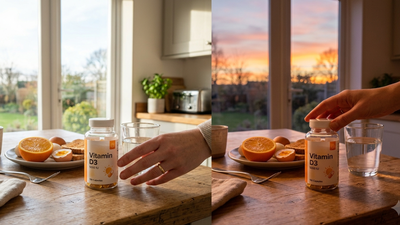
You've probably stood in front of your pill bottle at least once, wondering if you're doing this wrong. Morning? Night? With food? On an empty stomach? Here's the honest answer before we get into the details: timing matters less than you think, but it's not completely irrelevant either.
So, does timing actually matter?
According to clinicians at the Cleveland Clinic, there's no single "best" hour on the clock for taking vitamin D. Multiple studies looking at morning versus evening dosing haven't found a clear winner. So if you've been stressing over whether 8 a.m. beats 8 p.m., you can relax a little. What actually shows up in the research is something less exciting but more useful, consistency and food pairing matter far more than the exact minute you swallow the pill.That said, "doesn't matter much" isn't the same as "doesn't matter at all." There are a couple of factors worth knowing, because they'll change how well your body actually uses the vitamin D you're taking.
Why fat matters more than the clock
Vitamin D is fat-soluble, not water-soluble. That means your body needs dietary fat around to absorb it properly, the same way it needs fat to absorb vitamins A, E, and K. Take it on an empty stomach and a chunk of that dose may just pass through without doing much for you. Research published through the Journal of Bone and Mineral Research found that taking vitamin D with the largest meal of the day led to higher blood levels of 25-hydroxyvitamin D, which is the marker doctors actually test for.
So whether that big meal happens to be breakfast, lunch, or dinner in your house, that's your cue. Eggs, avocado, nuts, olive oil, salmon, anything with a bit of healthy fat will do the job.
Morning habit, better odds
There's a practical reason so many doctors default to recommending mornings, and it has nothing to do with biology. It's memory. Cleveland Clinic rheumatologists point out that putting your vitamin D bottle next to the coffee maker or the cereal box is one of the simplest ways to make sure you actually take it every day, instead of forgetting by 9 p.m.
and skipping it entirely. Consistency, it turns out, beats precision.
A supplement you take reliably five out of seven days loses to one you take at the "wrong" time every single day.
What about taking it at night?
Nighttime dosing isn't dangerous for most healthy adults, and if a bigger dinner is your main fatty meal, evening might genuinely work better for your absorption than a rushed, fat-free breakfast. There's some chatter online about vitamin D messing with melatonin and disrupting sleep. A 2021 research review did note a possible link between vitamin D and melatonin regulation, but the evidence is thin and inconsistent, not something you should build a whole routine around.
If you take it at night and sleep fine, there's no real reason to switch it up.
The one thing that actually moves the needle
If there's a single takeaway here, it's this: stop overthinking the clock and start paying attention to your plate and your habits. Pick a meal you eat every day without fail, one that has a bit of fat in it, and anchor your vitamin D there. If you're dealing with ongoing fatigue, bone pain, or you just suspect you're low, a simple 25-hydroxyvitamin D blood test will tell you far more than any debate about morning versus night ever could, so it's worth a conversation with your doctor before adjusting doses on your own.This article is for informational purposes and isn't a substitute for medical advice. Talk to your doctor before starting or changing any supplement routine.









 English (US) ·