

 4 days ago
6
4 days ago
6
ARTICLE AD BOX
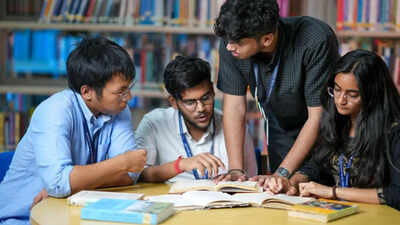
As higher education evolves alongside shifting industry demands, universities across India are increasingly reworking their academic models to focus on employability, interdisciplinary exposure, and real-world application.
Traditional degree structures are being supplemented with skill-based learning, digital integration, and opportunities that extend beyond the classroom.This shift reflects a broader recognition that academic knowledge alone may not be sufficient in a rapidly changing job market. Institutions are now embedding modules that focus on communication, critical thinking, and adaptability, while also introducing emerging disciplines such as artificial intelligence into mainstream curricula.At the same time, there is a growing emphasis on flexibility in learning pathways. Multidisciplinary options, online degree programmes, and self-paced courses are allowing students to tailor their education based on individual interests as well as evolving career requirements.With this changing landscape, CHRIST university, founded under the CMI congregation1, whose philosophy includes social reform and service, stands to prove its vision- Excellence and Service.
Established over five decades ago, the institution today caters to more than 35,000 students, supported by a large faculty and administrative base.
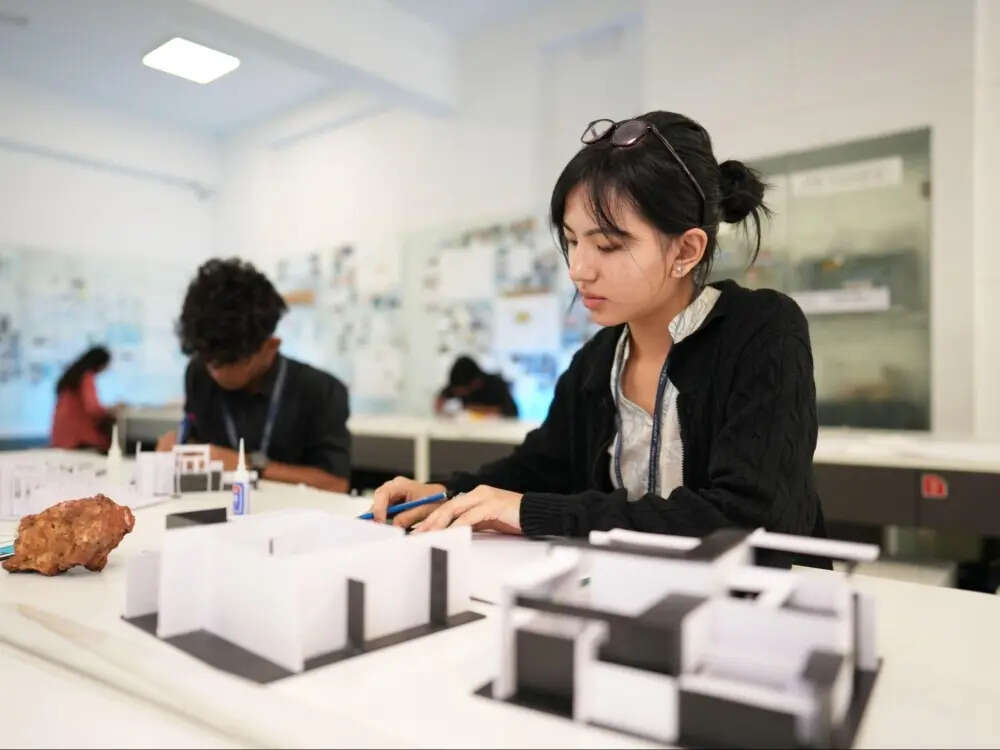
Expanding learning beyond curriculumThe changing landscape of education and the job spectrum has inspired the university to take initiatives that go beyond the curriculum requirements of knowledge and skill and equips learners with a wide array of skill sets to make them future ready.
Programmes such as the Future Leaders initiative focus on areas including communication, decision-making, and problem-solving, alongside academic coursework. Students are also provided courses on Artificial Intelligence to help them bridge the gap between knowledge gained and its application required in the real world context. These additional courses are integrated into the regular curriculum and seamlessly flow into the day to day routine of the learners.
In addition, the University offers an array of Multi-disciplinary courses in order to allow students to pursue courses of their interests and passion, thereby striking a balance between satisfying personal choices and career demands.
A focus on holistic developmentAlongside academic and technical training, there is an increasing focus on personal and social development within university education.The students are provided with modules on personal, interpersonal and societal skills to improve their perspectives about the world and the self.
Rooted in its value-based philosophy, the university integrates academic excellence with ethical formation, an essential component in personal growth and development. This approach reflects a wider shift towards “whole-person” education, where ethical awareness and personal development are seen as complementary to academic achievement.Integrating social engagement into educationCommunity engagement is also becoming a more formalised component of university life.
Through organised initiatives, students, faculty, and staff participate in outreach and extension activities aimed at supporting underserved communities.Such programmes are designed to combine experiential learning with social responsibility, offering students exposure to real-world challenges while contributing to broader societal goals. Recognition at national platforms, including honours at forums such as the National CSR Summit 2026, highlights the growing importance of these initiatives within institutional frameworks.Digital access and research opportunitiesThe expansion of online education has further influenced how universities deliver learning. Undergraduate and postgraduate programmes are increasingly being offered through digital platforms, with options for students to pursue parallel qualifications or short-term certifications. Also, the university allows students to pursue additional online degrees along with a full time degree that students have taken up.
The online learning platform also offers several short term courses to enable additional skill development. The self-paced modules allow students to experiment on developing various skills gradually. The university also boasts of major research labs and centres that allow contemporary research engagements in various fields; two of its most prominent ones are the Bloomberg lab and Quantum technology centre.

Building a multi-campus student ecosystemThe development of multiple campuses has allowed for the diversification of programmes and learning environments. Bangalore Central Campus features advanced academic facilities, major auditoriums, and extensive sports infrastructure, while the Kengeri, Bannerghatta, Pune (Lavasa), and Yeshwanthpur campuses provide specialised programmes in serene yet well-connected environments and are complemented by specialised centres in other locations, offering a mix of academic, residential, and extracurricular infrastructure.Beyond academics, universities are also investing in student support systems, including accessibility initiatives, healthcare services, and financial assistance. Extracurricular activities, sports, and inter-university events continue to play a role in shaping student experiences outside formal education. Across all campuses, the university ensures inclusive access for Divyangjan students, healthcare support, diverse dining options, and financial assistance initiatives.
With over 23 centres and cells for academic and professional development, the university continues its legacy of academic excellence, holistic formation, and meaningful social engagement.As higher education continues to adapt to economic and technological shifts, institutions are increasingly combining academic instruction with skill development, research exposure, and community engagement. This integrated approach reflects a broader transition towards preparing students not just for employment, but for navigating complex and evolving professional landscapes.Reference:
Disclaimer: The article has been produced on behalf of Christ University by the Times Internet's Spotlight team.









 English (US) ·