

 1 hour ago
3
1 hour ago
3
ARTICLE AD BOX
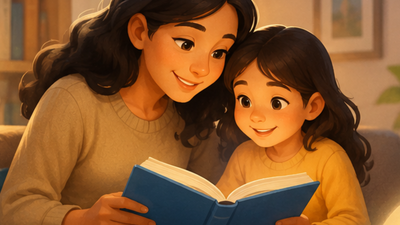
The modern reader is no longer fiercely loyal to just one medium. The contemporary reading habit is inherently fluid. (Representative Image)
For decades, purists have warned of the impending "death of the book," predicting that screens would inevitably swallow the written word whole. Yet, as India celebrates National Reading Day on June 19—matching concurrent celebrations in the UK for its National Year of Reading—the narrative is not one of decline, but of a vibrant, multi-dimensional evolution.To understand how our engagement with literature, research, and libraries has shifted in this socio-technological landscape, TOI spoke with Debanjan Chakrabarti, Director, British Council, East and North East India. Far from witnessing an obituary for physical print, Chakrabarti paints a picture of unprecedented convergence, where digital avatars and centuries-old paper traditions don’t just collide—they collaborate.The Rise of the 'blended' reader"The death of the book has been predicted for the last twenty years, but the publishing industry is still thriving," Chakrabarti notes. "It’s thriving because it’s blending."The modern reader is no longer fiercely loyal to just one medium. The contemporary reading habit is inherently fluid. It is now common practice for an individual to listen to an audiobook during a morning workout, skim a digital copy on a smartphone during a commute, and curl up with a physical book at night to enjoy the tactile pleasure and the nostalgic smell of the pages.
This multiplicity of platforms has redefined comprehension. Chakrabarti terms this a rich, multi-media reinforcement: "Suppose you’re reading about a Shakespeare play. You can immediately go back and watch a particular performance... That makes comprehension much easier. I really enjoy that—reading a book and then, if related material is freely available, exploring that as well."This evolution stretches even into spaces traditionally seen as counter-intuitive to text: video games.
Under the UK’s reading campaign theme "Go All In," the British Council is highlighting that reading is, at its core, about deciphering codes. Richly narrative video games (evoking classics like Prince of Persia) require players to constantly read and navigate complex storylines, proving that the digital ecosystem is expanding literacy, not shrinking it.From Catalogue Indexes to Global Nodes: The Library's MetamorphosisThe shift within libraries has been equally monumental. Long gone are the days of physical card catalogues.
Today, institutional spaces function as hyper-connected cultural hubs.The British Council’s digital library membership has recently scaled from 160,000 to over 200,000 members, completely democratizing access. A member living in the remotest corner of India can instantly access: Over 100,000 fiction titles (with crime fiction and comedy, featuring authors like Agatha Christie and P.G. Wodehouse, dominating lists).
7,000 newspapers and journals. Premium academic gateways like EBSCO and JSTOR, which remain the library's highest stock turnover assets due to the steep independent cost of research journals.Global knowledge, local reachTo bridge the digital divide, innovative interoperability partnerships have emerged. A collaboration with the Karnataka state government allows citizens to walk into any public library in the state network, scan a QR code on a "digital wall," and instantly unlock the British Council Digital Library.
A similar freemium partnership exists with the National Digital Library of India (NDLI), an IIT Kharagpur initiative.Beyond books: Safe spaces and citizen valuesHowever, a library’s evolution isn't merely digital. In physical spaces like the historic Kolkata and Delhi hubs (running since 1948), the focus has pivoted toward community curation. Through initiatives like "Culture Fridays," hosting independent filmmakers, and screening global events like the BFI’s Five Films For Freedom LGBTQIA film festival, libraries are redefining their 21st-century mandate."The library provides a community-sharing space—a safe space—where such content can be shared and discussed," Chakrabarti emphasizes. "Therefore, I think libraries have an important role to play in creating citizenship values, especially within democratic societies. And that is over and above content."Texting, AI, and the future of the wordWhen asked about the common anxiety that digital platforms are destroying language, Chakrabarti references the famous hypothesis of linguist David Crystal, refusing to look down on SMS or emoji language.
Instead, he views them as a modern return to hieroglyphics."Digital devices and online platforms have accelerated change, and we can now watch it happen in real time," Chakrabarti says. "In some ways, these are time-travel devices. They compress time before our eyes."Looking forward, the horizon involves grand preservation and emerging tech. Under the bilateral India-UK Programme of Cultural Cooperation, major apex bodies like the British Library and the National Library of India are collaborating on massive manuscript digitisation projects, alongside ground-level movements like Gyan Bharatam, which archives ancient scripts (Pali, Brahmi) from remote villages.As for Artificial Intelligence? Chakrabarti remains cautiously optimistic. While acknowledging that current AI models suffer from Global North biases, he expects the landscape to decentralize as adoption expands across India and the Global South."The first lesson would be not to treat AI as an enemy or as 'the other,' but as an ally in helping people read and write," he concludes. On this National Reading Day, the message is clear: whether via a leather-bound classic, a smartphone screen, an audiobook, or a QR code on a village wall—the human instinct to read, share, and connect remains entirely unquenchable.






 English (US) ·