

 38 minutes ago
5
38 minutes ago
5
ARTICLE AD BOX
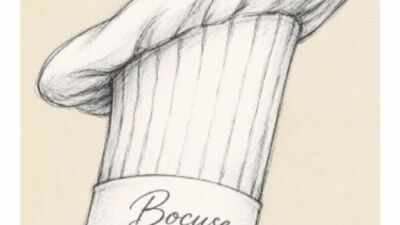
Bocuse’s boys stole the spotlight…
Food as theatre. Chef as entrepreneur. The restaurant, a performance. None made it more dramatic, or eclectic, than Paul Bocuse, creator, innovator, artist of what was dubbed by a journalist duo ‘nouvelle cuisine’, a cultural revolution of food in 1960s-70s France, a remove from haute cuisine’s opulent fare.
In The Secret History of French Cooking , Luke Barr traces not just the well known history of modern food, but its hidden half – the parts that perhaps click in place only with hindsight.How chefs became centrepieces in the dining hall. Backlash. Popularity. The heady mix of new cooking, new ingredients, cigarette smoke, and jazz, the talk of metaphysics, art, politics, fashion and celebrity – a restaurant the cauldron of culture in post-war France.
And, running through it all, the drumbeat of male chauvinism. Exclusion of women as chefs – men were master chefs, women were cooks. Womenrun restaurants, and their feminism, thrived, but in Bocuse’s conception, men were modern, scientific, forward-looking, women, old-fashioned.In 1960s, Bocuse assembled a group, the Bande à Bocuse: chefs who used classical French technique to build dishes no one had imagined – experimental and tasty.
Diners loved it. Sacrilege, cried food critics, especially the celebrated Robert Courtine. In counter, two journalists, Gault & Millau, launched their own magazine and challenged Michelin rankings, and dubbed Bocuse band’s cooking, ‘nouvelle cuisine’.

Mindfield
In a parallel world, created only because no kitchen would hire women, even for apprenticeships, women chefs were innovating too, in the same 1960s France that was inspiring their male counterparts.
But they were acutely aware of how differently they were perceived. Denied training, they were all homeand self-taught. They all ran successful restaurants. Yet, Gault & Millau types bypassed them. Because women were to stick to France’s traditional women-run restaurants, “mothers” or “meres” of regional dishes.The charismatic Bocuse wore his sexism loud but light – “Women have no imagination when it comes to cooking”.
As Bande à Bocuse went from strength to strength, the new generation of women chefs formed an association, ARC, “to battle phallocratic toques”. Bocuse took note – really, how could women wear toques? Said the kitchen lib – “So sorry to have pained you by daring to wear the white toque, the phallic symbol of your science, your authority, your virility.
” And on it went – Bocuse relentlessly trying to show them as inferior.
Women returning fire.Zoom out, and what you have is two movements breaking ground in opposite ways. Bande à Bocuse were classically trained, exclusive, Maîtres Cuisiniers (master chefs), mediasavvy, and treated cooking as brandbuilding – their movement pulled chefs “from the basement into the light”, even after copycats diluted it by 1980s.ARC’s journey, in contrast, was inclusive and unpretentious, denied glamour, without press or publicity.
ARC hired women, and added chefs from across cuisines – Hungarian to Vietnamese to Moroccan – and expanded into England, Luxembourg, etc. ARC’s biggest supporter was Courtine, whose past as a Nazi collaborator came to light much later. Even when their backer, ARC founders had a niggle – of allying with an archconservative (his culinary opinions were born of his politics) – and they were neither “meres” nor “nouvelle”.
Their styles resisted labels. “Cuisine de femme”, as champion Olympe Nahmias put it, was “whatever she wanted it to be”. Recognition came with a Michelin, and in 1989, a place in Bocuse’s own Bocuse d’Or. It took over three decades, and some.









 English (US) ·