

 1 hour ago
4
1 hour ago
4
ARTICLE AD BOX
A child who cannot reach the monkey bars is usually expected to step aside and watch. Jessica Cox did not seem built for that script. From an early age, she kept finding ways to turn everyday obstacles into quiet acts of determination.
Born without arms, she grew up learning to do ordinary things in an extraordinary way: with her feet, with patience and with a stubborn refusal to let other people define the shape of her life. Years later, that same instinct would carry her into a cockpit, where she would make aviation history. Scroll down to read more...
Growing up differently
Jessica Cox was born in 1983 in Sierra Vista, Arizona, and she has said her arms never developed before birth.
As a child, she tried prosthetics for years but eventually decided at 14 to stop using them and rely on her feet instead. That decision was less a dramatic reinvention than a practical one: she learned, over time, that adaptation could be a form of freedom. That choice shaped everything that came after. Long before people began calling her inspirational, Cox was simply figuring out how to live a life that worked. She learned to drive, type, and handle daily tasks in ways most people never have to imagine.
Later, she would describe that process as a matter of seeing difference not as a dead end, but as a starting point.
The flight that changed everything
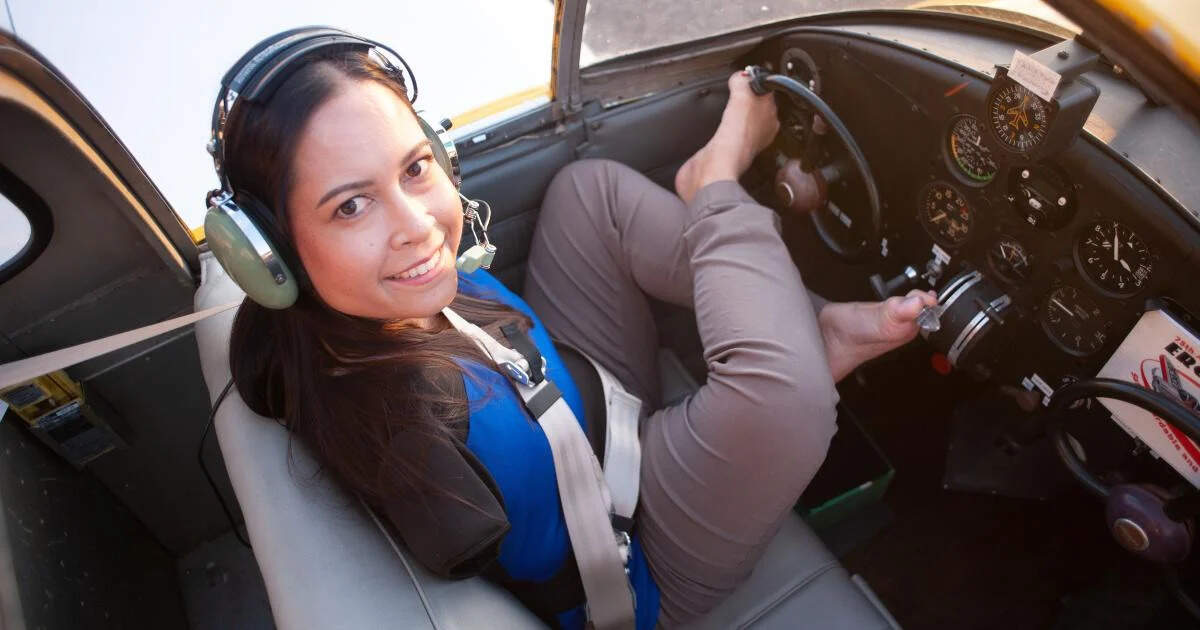
Cox’s leap into aviation did not begin with swagger. By her own account, she was once afraid of flying. But the first time she sat in a small plane and felt the wheels lift off the ground, something clicked. She trained for three years before earning her pilot’s certificate on 10 October 2008, becoming the world’s first licensed armless pilot.
Guinness World Records also notes that she flies a light-sport Ercoupe, using one foot on the controls and the other on the throttle.
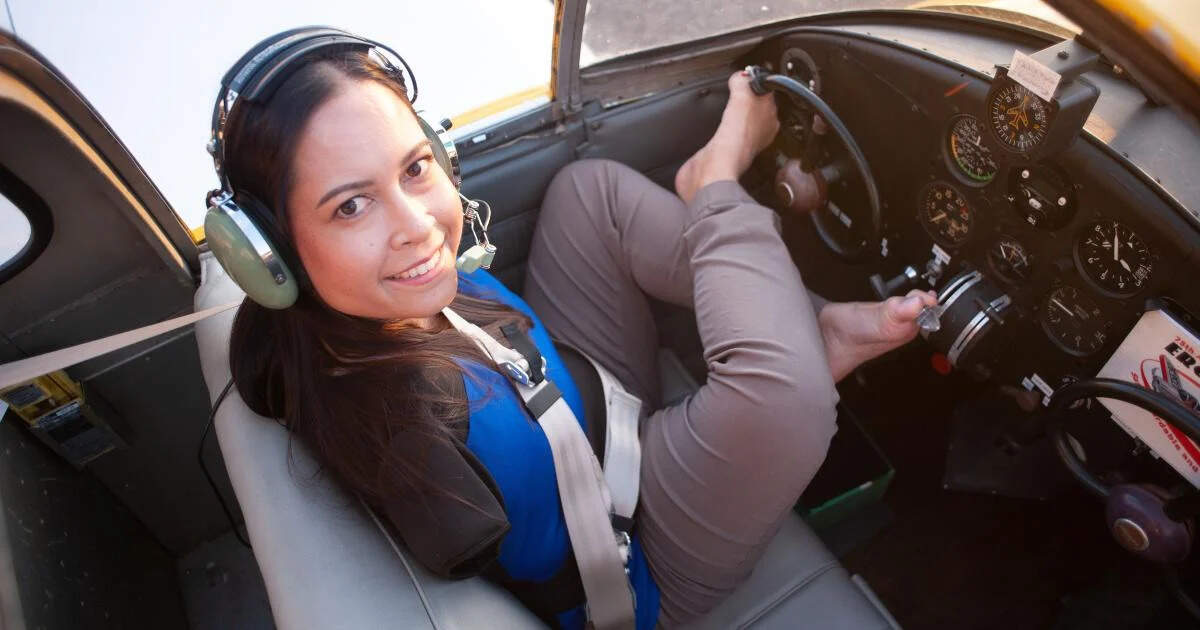
That detail matters because the achievement was not symbolic. It was technical, disciplined and hard-won. The plane she trained in was unusually suited to her needs, but even then the work required intense adjustment and focus. She was not simply “overcoming” disability in a sentimental sense; she was solving a real engineering problem in real time, using persistence as her tool.
More than a headline-making pilot
Aviation may be the headline, but it is only one chapter in Cox’s life. She has also become a black belt in taekwondo, a motivational speaker and the founder of the Rightfooted Foundation International, which focuses on helping children born with bilateral limb differences build independent lives. Her website says the foundation works to change perceptions of disability while promoting accessibility and inclusion.She has also turned her story into a broader message about adaptability. In her talks and interviews, Cox repeatedly returns to the same idea: disability is not the same thing as inability. That is more than a slogan for her. It is the pattern that runs through her life, from the way she learned to move around the world as a child to the way she now speaks to audiences across countries and industries.
The human side of resilience
What makes Cox’s story resonate is not just the scale of her achievements, but the ordinary human texture beneath them.
She did not wake up one day fearless. She had to grow into confidence the way most people do: by trying, failing, adjusting and trying again. Travel + Leisure’s 2025 profile shows her speaking candidly about the frustrations of a world designed for hands first, and about the long process of deciding to live as herself rather than as other people expected her to live.
That honesty is part of why her story lands so well. Cox is not presented as someone untouched by limitation.
She is someone who met limitation early, studied it closely and then learned how to outgrow its reach. In that sense, her life offers something sturdier than inspiration alone. It offers a working model for resilience: accept the reality, then build around it.
A story still in motion
Cox’s story is not frozen in the past. In 2025 and 2026, several reports and local Arizona television described her working on “The Impossible Airplane,” a foot-controlled aircraft being developed with the Experimental Aircraft Association.
The goal is bigger than a technical novelty: Cox has said she wants the plane to help her travel farther, more comfortably and eventually, she hopes, circle the world in a small aircraft as a visible statement of possibility.That is why Jessica Cox remains more than a record holder. She is a reminder that ingenuity is often born where life looks least accommodating. She learned to use her feet because she had to, then discovered that necessity could become a gift. Her story does not ask for pity or applause. It asks for a wider definition of what a human life can be when it refuses to stop at the first obstacle.





 English (US) ·