

 1 hour ago
3
1 hour ago
3
ARTICLE AD BOX

The conversation around Indians moving to the United States is always active. On LinkedIn and Instagram, you often see posts about culture shock, managing daily chores, and adjusting to a new system.
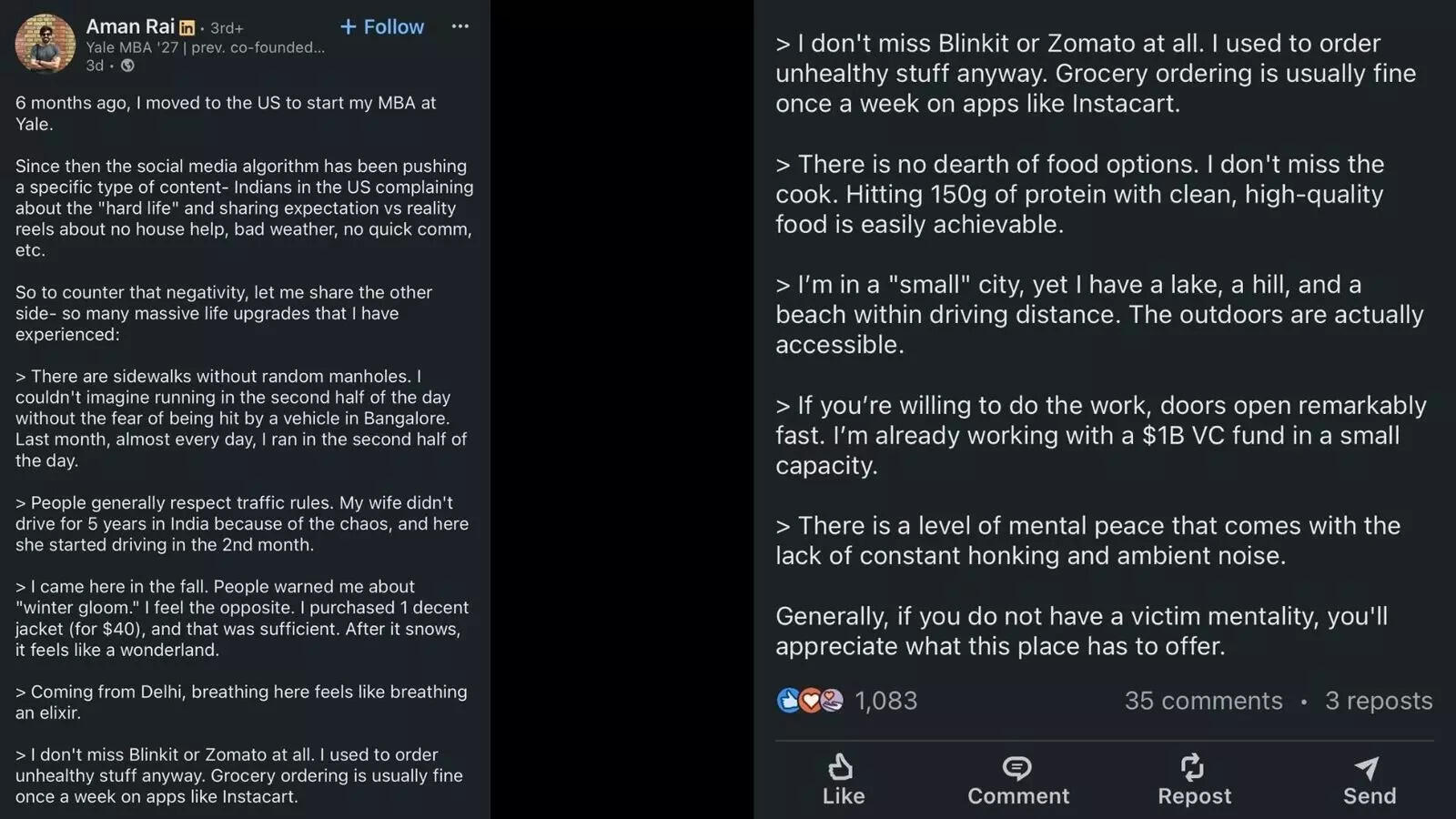
But now, a post by an IIT Delhi graduate studying at Yale University has added a fresh perspective to this ongoing discussion.Aman Rai, who moved to the US six months ago to pursue his MBA at Yale University, decided to share what his experience has been like so far. He said that after shifting, his social media feed began showing a certain pattern.“Since then, the social media algorithm has been pushing a specific type of content- Indians in the US complaining about the 'hard life' and sharing expectation vs.
reality reels about no house help, bad weather, no quick comm, etc.,” he wrote.Rai said he wanted to speak about what he has personally felt instead of repeating the same narrative. According to him, the move has brought several positive changes.
Cleaner air, clearer difference
One of the first things he mentioned was the air quality. Coming from Delhi, he said the difference was clear.“Coming from Delhi, breathing here feels like breathing an elixir,” he wrote.
For him, this change has had a direct impact on daily comfort and overall well-being.
Roads, sidewalks and a sense of safety
Rai also highlighted the infrastructure. He appreciated the presence of proper sidewalks and the feeling of safety in public spaces.“There are sidewalks without random manholes. I couldn't imagine running in the second half of the day without the fear of being hit by a vehicle in Bangalore,” he said.He added that his wife felt confident enough to start driving within two months of reaching the US.
In his view, this showed how secure and structured the system felt.
Simple living and food choices
Talking about lifestyle, Rai shared that he now prefers cooking at home and placing grocery orders once a week instead of relying on quick delivery services.“I don't miss Blinkit or Zomato at all. I used to order unhealthy stuff anyway. Grocery ordering is usually fine once a week on apps like Instacart,” he added.He also mentioned that he values access to clean, good-quality food and being closer to nature.
Professional exposure and growth
On the work front, Rai revealed that he has started working with a $1B VC fund. He credited the US environment for providing opportunities and a supportive space for career growth.This part of his post caught the attention of many young professionals who see international education as a gateway to new opportunities.
A quieter routine
Another point he spoke about was mental peace. Rai said life feels calmer without constant honking and background noise.
According to him, this quieter setting has made a difference in his daily routine.
Social media responds
The post received thousands of links and sparked several reactions.One user commented, “Resonate with the doors opening fast bit. I've noticed people are generous with their time for coffee chats, career advice, and mentoring. Love the paying-it-forward culture,” pointing to the professional support system many experience abroad.Another wrote, “I did my master's in the US, and I think it's amazing. But for most people, I also think it's more about what you want out of life and where you want to spend it vs just a better career or lifestyle,” sharing a balanced view.A third comment read, “People just want to be victims. They live in highly developed Western cities, yet create content about how difficult their lives are just to gain reach. They seek validation from those who can't move there and use their 'struggles' to fulfill a need for attention.”
The larger NRI life debate
Aman Rai’s post has once again brought attention to the larger discussion about NRI life in the US. While some focus on the challenges of living abroad, others speak about improvements in lifestyle and career.Disclaimer: The views expressed in the social media post are those of the individual and do not reflect the position of this publication. The article is based on publicly shared content and user reactions online.Thumb image: Canva (for representative purposes only)









 English (US) ·