

 1 hour ago
3
1 hour ago
3
ARTICLE AD BOX
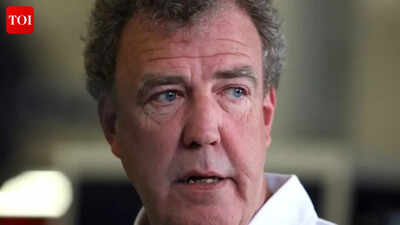
For someone who’s spent his career pushing the limits — zooming supercars down runways on ‘Top Gear’, tackling wild terrains on ‘The Grand Tour’, then fighting with muddy fields and moody cows on ‘Clarkson's Farm’ — Jeremy Clarkson never really seemed vulnerable. He’s always leaned into that stubborn, nearly reckless, larger-than-life persona.So, hearing him say he’s facing cancer on the new season of ‘Clarkson’s Farm’ landed like a punch for viewers and fans everywhere.
Jeremy Clarkson’s revelation: What did the ‘Top Gear’ star share?
Per Page Six, the British TV legend, 66, shared his diagnosis of prostate cancer during the final two episodes of ‘Clarkson’s Farm’ Season 5. In Season 5’s last episodes, Clarkson didn’t sugarcoat it. Right in the middle of a conversation with Kaleb and Charlie, he said, “I’ve got cancer.” Kaleb couldn't believe it.
“No, you haven’t. Where?” he asked. Clarkson, with typical gruffness, brushed off the question: “Where it is is of no concern of anybody.
I’ve known since May.”That’s where he vanished to recently: doctor’s appointments, a biopsy, and, as he put it, an “aggressive” but very early-stage cancer. He told the crew he’d wanted to get through the harvest before starting treatment, but, well, farming rarely waits for medical schedules.
His voice cracked just a bit as he laid out the timeline: surgery in two or three weeks, a quick “in and out” operation, but then a recovery that might keep him off tractors for a while.While Kaleb tried to keep his own emotions in check, telling Clarkson to call “if you need anything.” Before driving off with Lisa Hogan, Clarkson got another handshake and another “Don’t worry about the farm.”There was a quiet moment later where he summed up his year: started with heart disease, ending with cancer.
But Clarkson’d rather not dwell on “all the bad things,” but “focus on things that have happened that are good.”When Kaleb asked about the treatments, Clarkson explained, “there’ll be a blood test and then we’ll know,” adding, “Not for another few weeks. Come on cheer up, it probably did work.”The TV legend signed on with a lot of optimism and hope: “What I wanted to say was if this is all successful I’ll see you for Season 6, and if it isn’t, I won’t,” adding, “Take care everyone.”
What is prostate cancer? And how aggressive is it?
Although Clarkson didn’t confirm it on the show, Page Six reported that the legend is suffering from prostate cancer. He described it as “aggressive” but caught early. Now comes the opbvious question: Is aggressive prostate cancer as scary as it sounds? How do you know if you’ve got it? And what does treatment look like?For the unversed, prostate cancer hits the small gland sitting just below a man’s bladder — the gland that helps make seminal fluid.
It’s one of the cancers men face most often. Sometimes, it grows so slowly you might never know you have it. But other times, like in Jeremy’s case, it can be aggressive, which means the cells look very abnormal, grow fast, and can spread quickly if not treated.The good news for Clarkson is this: catching prostate cancer early makes a massive difference. Early-stage cases have some of the best treatment outcomes in all of cancer care.
Early signs
What’s one of the trickiest parts of prostate cancer is how it creeps up almost without signs. One might feel perfectly fine and healthy, and have no symptoms for years. When signs do show up, they might be:
- Trouble starting to pee or a weak stream
- Going to the bathroom more, especially at night
- Feeling like your bladder isn’t emptying
- Blood in your urine or semen
- Erectile difficulties
- Ache or weird discomfort in your pelvis
If the cancer spreads, then bone pain, weight loss, or ongoing tiredness can develop. But a lot of the time, men only find out about prostate cancer because of a routine medical check or screening, not because they actually feel unwell.
Who’s at risk?
For prostate cancer, age is a big risk factor — it most often shows up after 50, and especially after 65. Family history matters, too. If your dad or brother had prostate cancer, your odds go up. Some genetic mutations can also play a role.Moreover, black men seem to get prostate cancer at higher rates, and more aggressive forms at that. Lifestyle matters, but it’s complicated: being overweight, sitting all day, eating lots of processed and fatty foods might push your risk up, but there’s no single smoking gun.
It’s a messy web of genes, biological quirks, and life choices.
What about treatments (and management)?
For treatment, there’s no one-size-fits-all answer. It depends on how far the cancer has spread, if at all, the patient’s age, health, and what they actually want. For cancers caught early and considered aggressive, the first move is often surgery to remove the prostate, which is what Clarkson is facing.Radiation therapy is another common tool, which is sometimes combined with or applied in place of surgery. Then there’s hormone therapy: because prostate cancer relies on testosterone to grow, lowering those hormone levels can slow or stop things. For cases that have spread, doctors will pull out more stops: hormone therapy, chemo, targeted drugs, even immunotherapy.However, the encouraging part is that treatments have gotten way better in the last twenty years. Doctors have a bigger toolkit than ever, and survival rates have shot up.









 English (US) ·