

 1 hour ago
5
1 hour ago
5
ARTICLE AD BOX
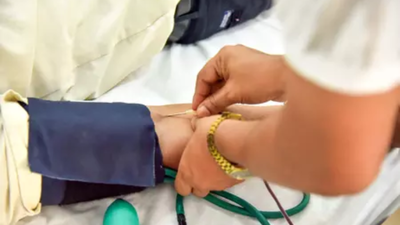
As the Union Budget 2026-27 approaches, new academic research has renewed calls for a sharper increase in public healthcare expenditure. The research warns that economic and social change is pushing medical costs higher and deepening inequality in access to treatment.The study, Impact of Determinants of Healthcare Expenditure in India: The ARDL Bounds Testing Approach, published in the International Journal of Advanced Research in December, examines national data spanning over three decades, from 1991 to 2023, reported PTI. It analyses the drivers of healthcare expenditure, covering both overall per-capita spending and household out-of-pocket (OOP) payments.The study states that per capita income, secondary education enrolment, urbanisation, inflation, life expectancy and per capita health spending have a significant long-term influence on both overall healthcare expenditure and household out-of-pocket (OOP) payments.It finds that life expectancy and education are associated with lower per capita total health expenditure, while inflation, income growth and urbanisation show a negative relationship with per capita OOP spending. The study states that these results highlight the dual nature of India’s health financing system and point to the need for policy interventions that strengthen public funding in order to reduce financial pressure on households.
The research points to a structural challenge within India’s healthcare financing model limited public investment coupled with a heavy dependence on private, out-of-pocket payments. This imbalance, the study argues, leaves rural households and economically weaker sections especially exposed to high medical costs, treatment delays and financial distress.“Without stronger public financing, the burden of illness continues to fall most heavily on those least able to afford it,” the paper states.Industry leaders said the evidence strengthens the case for policy reform. Amit Mookim, Board Director and CEO of Immuneel Therapeutics, said, “As India advances its ambition to become a global hub for next-generation biotherapies, the Union Budget 2026-27 can play a defining role in improving access, affordability, and innovation in cell and gene therapy.”He highlighted the need for GST rationalisation on manufacturing inputs, import-duty relief, insurance coverage for one-time curative therapies such as CAR-T, and regulatory clarity aligned with global standards.Mayank Singhal, Vice Chairperson and Managing Director of PI Industries, said the budget could help accelerate India’s transition into a global innovation hub through stronger R&D support, AI-driven research platforms and incentives for integrated drug discovery. He also underlined the importance of predictable fiscal and regulatory policies to boost competitiveness in innovative drug development.






 English (US) ·