

 1 hour ago
6
1 hour ago
6
ARTICLE AD BOX
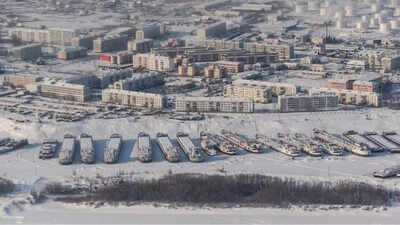
In eastern Siberia, one of the world’s coldest cities is built on a foundation that is slowly changing. Yakutsk stands on permafrost, ground that has remained frozen for thousands of years and long provided a stable base for homes, roads, and public infrastructure.
That assumption is now under strain. Rising temperatures are warming the frozen soil beneath the city, increasing seasonal thaw and weakening ground stability. Engineers, scientists, and residents are watching closely as buildings require reinforcement, roads deform, and the ground beneath everyday life becomes less predictable.
A city engineered for permanent cold
Yakutsk lies in the Sakha Republic, where winter temperatures regularly fall below −40°C.
Because permafrost can melt if heated, buildings were never placed directly on the ground. Instead, they were constructed on piles or stilts driven deep into frozen soil, allowing cold air to circulate beneath structures and keep the ground solid. This approach has been used for decades across Siberia and other Arctic regions and remains essential to preventing rapid thaw under buildings.Permafrost does not melt evenly. As temperatures rise, ice within the soil gradually thaws, causing the ground to lose strength and settle unevenly.
In Yakutsk, this process has led to visible stress in some structures. Engineers report increased maintenance needs, foundation adjustments, and, in limited cases, buildings being deemed unsafe for continued use. Roads and underground utilities are also affected as shifting ground places strain on pipes and surfaces designed for stable conditions.
Homes under growing pressure
Residents in affected areas have reported cracking walls, sloping floors, and doors that no longer align properly.
City authorities regularly inspect buildings and reinforce foundations where possible, but long-term solutions are costly and complex. Relocation is rarely simple. Yakutsk is a regional economic and cultural hub, and moving away would mean losing access to employment, education, and services that are scarce elsewhere in northern Siberia.
What thawing permafrost releases
Permafrost preserves organic material, including plant matter and microorganisms, sometimes for tens of thousands of years.
As it thaws, scientists are studying how the release of ancient bacteria, greenhouse gases, and other materials could affect ecosystems and public health. While documented cases of disease linked directly to thawing permafrost are rare, researchers treat the region as an important site for understanding future environmental risks across the Arctic.
Why people remain
Despite the challenges, Yakutsk continues to grow. For many residents, adapting to changing ground conditions feels more realistic than leaving a city that anchors their livelihoods and communities.
New construction methods, monitoring systems, and engineering strategies are being tested to extend the city’s lifespan under warming conditions.
A warning beneath the surface
Yakutsk is not alone. Across the Arctic, towns and cities built on permafrost face similar pressures as temperatures rise. What makes Yakutsk stand out is its size and visibility. The city offers a clear, present-day example of how climate change affects not just weather and ice, but the ground beneath people’s homes. Built on frozen earth rather than solid land, it shows how deeply environmental change can reshape human settlements.









 English (US) ·