

 1 week ago
7
1 week ago
7
ARTICLE AD BOX
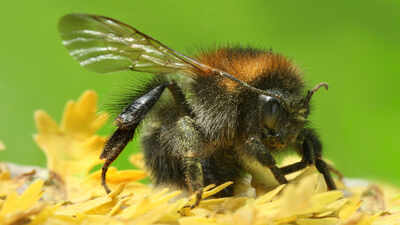
Bumblebees near Helsinki have rapidly diversified over 19 years, with warmer-climate species increasingly present. A study reveals that rising regional temperatures, not urban expansion, are driving these significant shifts in insect communities. Image Credit: Wikimedia Commons
When strolling through an urban park or gardening in a backyard on a sunny summer day, we often imagine the familiar scenario of insects flying from one flower to another. We imagine soft-bodied insects flying from one flower to another while gathering pollen.
Environmental narratives for many years have often depicted such insects as delicate beings whose existence in a particular place is heavily influenced by urban development. It is commonly thought that the expansion of roads, shopping malls, and residential units threatens their survival.But a closer look at insect populations in northern Europe tells a different story of rapid biological change and shifting environmental drivers.
Rather than a simple story of urban decline, insect communities on the edges of expanding cities are changing quickly in both variety and composition. Instead of being crowded out by suburban sprawl, these insects are shifting in response to broader changes in climate.
What looks to a casual observer like an ordinary backyard insect encounter may reflect a broader ecological shift that is changing how researchers think about city development and climate.
This striking ecological discovery was recently detailed in a study published in the journal Urban Ecosystems, titled Urbanization and temporal shifts in a farmland bumblebee community. The researchers repeated the same farmland transect survey in 2024 that had been run in 2005, comparing 193 revisited transects across the Helsinki metropolitan fringe after urban land cover within 1 km had risen from 20% to 30%. Based on the analysis of the identification and distribution of insect populations over almost twenty years, the authors demonstrated that regional temperatures have more weight in determining which insects colonise the region than the transformation of an area from rural to urban.
It was discovered that species richness increased and the community structure shifted towards thermophilic bumblebees, but neither tongue length nor habitat preference accounted for this change.The rise of southern speciesIn order to properly understand the reasons why this process has led to such a drastic shift in our comprehension of insect ecology, we should consider how the various pollinator groups react to the changes in their environment.
The northern regions, traditionally being colder, had species of insects that have adapted to the climate over millennia. The data published in the Urban Ecosystems article shows that there was a significant change in temperature preference among bumblebees, with a relative increase in the number of warm-dwelling insects over nineteen years.This shifting baseline means that common generalist pollinators from warmer southern regions are expanding northward into areas once dominated by cold-adapted native insects.
The buff-tailed bumblebee showed a marked increase and became one of the more common species in the region over the nineteen-year timeline. Because these incoming southern varieties are adaptable, they may be able to exploit changing floral resources in suburbs and altered rural lands.However, no difference was found between bee abundance and species richness in relation to physical distances from the nearest residential areas or the presence of noisy roadways bordering field edges.
Although the destruction of open meadow habitats by suburbanization influences the habitat, the trend of increasing diversity and warm-adapted bee species is strikingly persistent in fast-developing suburbs as well as unaltered rural environments, implying that atmospheric conditions rather than local development processes will be the driving force for these networks in the future.
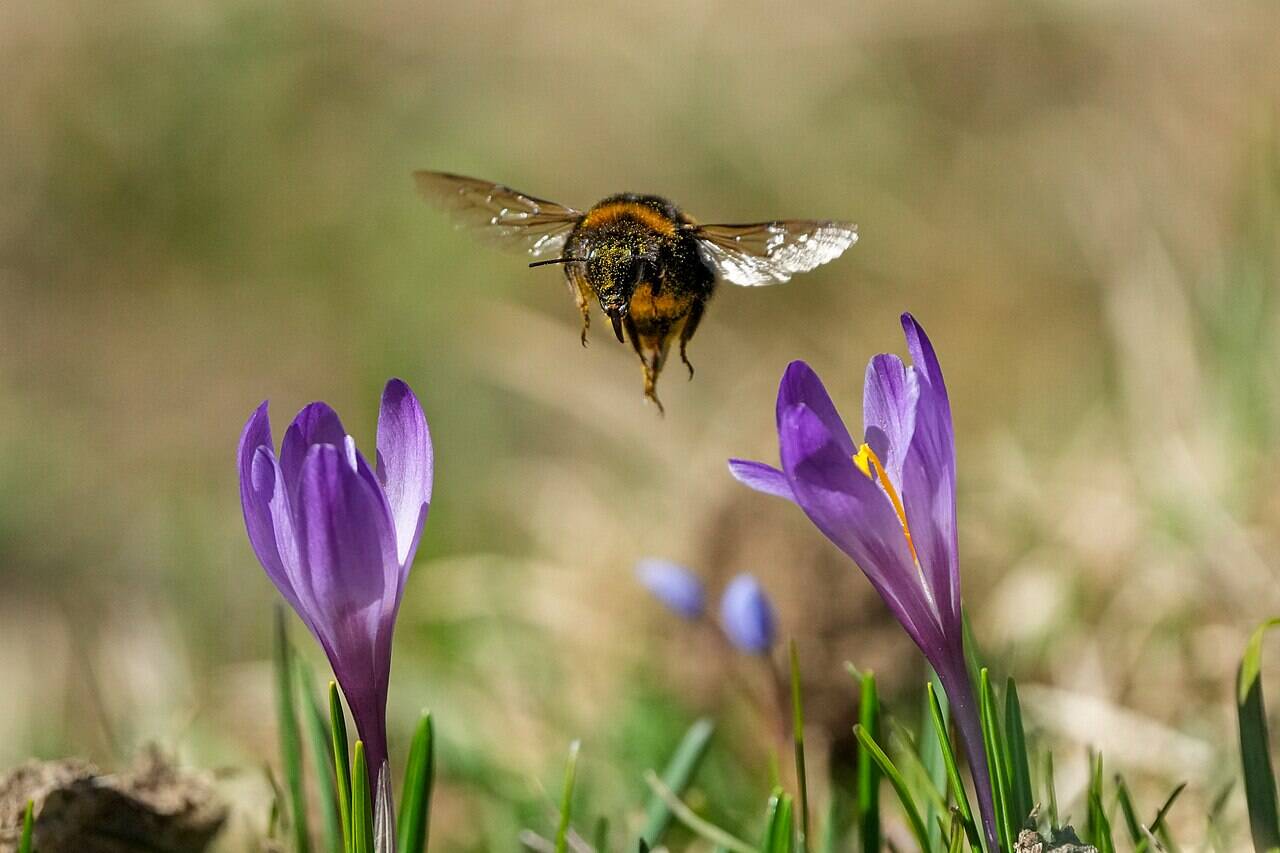
This suggests that conservation efforts must prioritize climate resilience and diverse native flowering plants to support these changing pollinator networks. Image Credit: Wikimedia Commons
Urban greening amid global atmospheric trendsThe lessons learned from this study conducted over nineteen years provide an important lesson for conservation and urbanisation.
By showing that atmospheric conditions rather than the urban growth process have a major influence on pollinator networks, the researchers emphasise that habitat protection may not be sufficient. Protecting our natural allies needs to move beyond local efforts to larger considerations.According to the strategic conclusions in the study, recognising the dominant role of climate does not mean that local conservation efforts are pointless, but rather that they must become more intentional.
The data showed that insect abundance and species richness on field margins were positively associated with the local abundance of flowering plants, regardless of nearby urbanisation. To support these changing insect populations, modern town planning should focus on resilient public green spaces with a wide variety of native flowers throughout spring and summer.The study provides insight into the nature of ecological change by revealing how insect communities may undergo changes within less than two decades due to temperature alterations. The fact that the effects of climate change have altered insect communities in our own gardens inspires holistic environmental management.









 English (US) ·