

 1 day ago
6
1 day ago
6
ARTICLE AD BOX

In today’s fast-paced work culture, the distinction between burnout and depression often becomes clouded. Burnout arises from sustained workplace pressures and tends to alleviate with a change of scenery or job. On the other hand, depression is a profound medical issue that seeps into every corner of one’s life, necessitating professional support.
Modern work culture praises hustle. Long hours look like ambition. Skipped holidays feel normal. But somewhere between targets and team calls, many professionals begin to feel drained, detached, and low.And that is where confusion starts. Is it burnout? Or is it depression?The two overlap in symptoms, yet they are not the same. Mixing them up can delay the right support. Understanding the difference is not about labels. It is about getting the right kind of help at the right time.Dr Vinit Banga, Director-Neurology, Fortis Hospital, Faridabad, explains, “Professionals often refer to both burnout and depression as if they are synonymous, although they are not identical.
Both states are characterized by a lack of motivation, as well as emotional exhaustion.”
What exactly is burnout?
World Health Organisation defines burnout as an occupational phenomenon. In 2019, it included burnout in the International Classification of Diseases (ICD-11) as a syndrome that results from chronic workplace stress that has not been successfully managed.Burnout has three core signs:
- Feeling exhausted or drained most days
- Feeling mentally distant from work
- Reduced professional performance
Burnout is directly tied to work. It shows up in relation to job demands, pressure, lack of control, or toxic work culture.
Dr Banga added, “Burnout is a state that is job-related. It occurs as a result of prolonged exposure to job demands, deadlines, lack of control, or lack of recognition. An individual experiencing burnout feels mentally exhausted, lacks enthusiasm for their job, and feels ineffective in their job. Nevertheless, these feelings are circumstantial in nature. This means that if an individual leaves their environment, their moods will change for the better with time.
Burnout is limited to one's motivation in relation to their job, as opposed to depression, which is a total state of mind.”A government-backed review by the National Institute for Occupational Safety and Health (NIOSH), part of the Centers for Disease Control and Prevention, highlights that long work hours, high job strain, and poor workplace support increase the risk of stress-related health problems. Burnout is about the job. When the job changes or improves, symptoms often reduce.

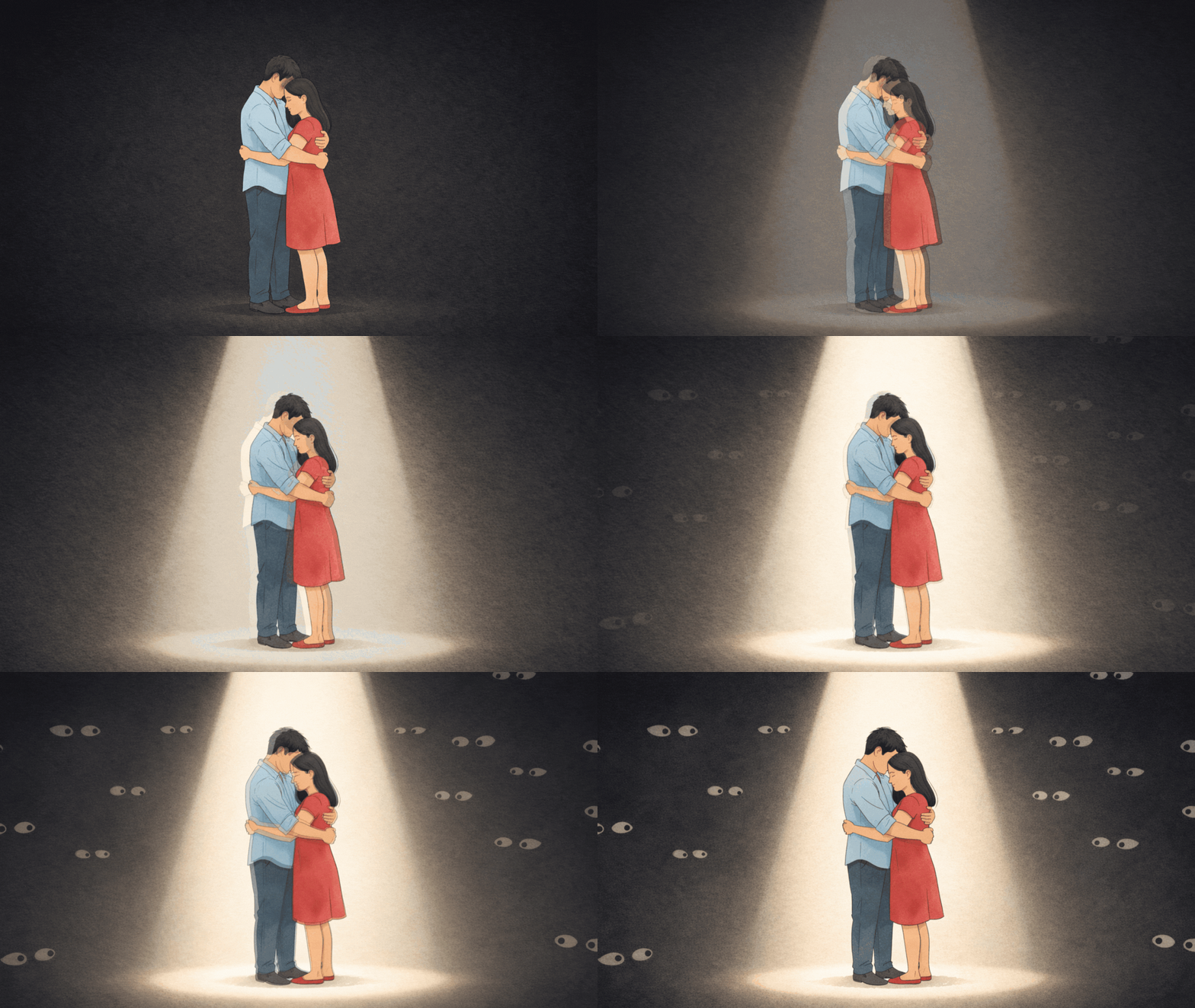
Professionals normalise distress. High achievers tend to link their worth to productivity
What is depression?
Depression is a medical condition. It affects mood, thinking, sleep, appetite, and daily functioning. It is not limited to work.The National Institute of Mental Health describes major depressive disorder as a condition marked by persistent sadness, loss of interest in activities, changes in sleep or appetite, low energy, and feelings of worthlessness lasting at least two weeks.Dr Banga said, “Depression is a mental illness that affects a person’s general emotional condition.
Depression is not only related to one’s work environment but is a mental illness that can also affect one’s relationship or even physical condition. Depression can be defined as a mental illness that can be characterized by symptoms such as sadness, loss of interest in activities that one used to enjoy, changes in sleeping patterns, changes in appetite, feelings of worthlessness, or difficulty concentrating.
Depression is not treated by taking a break from one’s job or environment.”Depression does not switch off after office hours. It follows a person home. It can affect relationships, hobbies, and even basic self-care.Unlike burnout, depression can exist without any job-related stress.
Why professionals confuse the two
Both burnout and depression can look similar on the surface.
- Constant tiredness
- Low motivation
- Irritability
- Trouble concentrating
- Feeling overwhelmed
A senior executive may say, “Work has sucked the life out of me.” A young manager may feel numb during meetings. These could be signs of burnout. But if the same numbness extends to family time, weekends, and things once loved, depression might be involved.Professionals normalise distress. High achievers tend to link their worth to productivity. So when they feel low, they assume they just need a break.But burnout improves with rest and change in the work environment. Depression does not.
Key differences that matter
1. ScopeBurnout is work-specific. Depression affects every area of life.2. Root causeBurnout comes from chronic workplace stress. Depression can arise from biological, psychological, and social factors.3. Emotional toneBurnout often feels like frustration and cynicism. Depression often feels like hopelessness and deep sadness.4. Recovery patternA vacation may ease burnout. It rarely cures depression.A 2019 review published by Frontiers discusses how burnout and depression share symptoms but remain distinct constructs, especially in clinical diagnosis.Why the confusion can be riskyIf burnout is mistaken for depression, someone may feel unnecessarily labelled.
If depression is dismissed as burnout, a serious condition may go untreated.Untreated depression increases the risk of chronic health issues, including heart disease and diabetes. According to the National Institute of Mental Health, depression also increases the risk of suicide.On the other hand, untreated burnout can lead to sleep problems, high blood pressure, and substance misuse. The Centers for Disease Control and Prevention links chronic stress to long-term health harm.Both deserve attention. But the solutions differ.

burnout improves with rest and change in the work environment
Are they treated differently?
Yes.Burnout management often includes:
- Reducing workload
- Setting boundaries
- Improving workplace support
- Taking structured breaks
- Coaching or counselling focused on work stress
Sometimes the solution is organisational, not personal.Depression treatment may include:
- Psychotherapy, such as cognitive behavioural therapy
- Medication, if prescribed by a psychiatrist
- Lifestyle changes
- Social support
Depression treatment is medical and psychological. It requires professional diagnosis. If symptoms persist beyond work stress, affect sleep, appetite, and daily functioning, medical evaluation becomes important.
What professionals can realistically do
First, pause and observe patterns. Does the mood lift on weekends? Does energy return after time away? If yes, burnout is more likely.
If not, deeper assessment may be needed.Second, speak early. Silence protects stigma, not health. Many workplaces now offer employee assistance programs.Third, build a non-work identity. Hobbies, friendships, and family time create balance. When identity depends only on performance, any dip feels catastrophic.Finally, organisations must act. Clear expectations, realistic targets, and psychological safety reduce burnout risk.
The solution cannot rest only on individuals.Professionals wear strength like armour. But exhaustion is not weakness. Sadness is not failure.Burnout asks for structural change. Depression asks for medical care and compassion. Both ask for honesty.Knowing the difference is not about overthinking feelings. It is about listening to them carefully.Medical experts consultedThis article includes expert inputs shared with TOI Health by:Dr Vinit Banga, Director-Neurology, Fortis Hospital, Faridabad.Inputs were used to explain the key differences between burnout and depression, why the symptoms are often confused among working professionals, and why recognising the distinction is important for seeking the right kind of support and treatment.







 English (US) ·