

 1 day ago
6
1 day ago
6
ARTICLE AD BOX
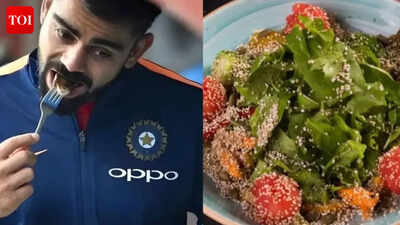
For millions of cricket fans and fitness enthusiasts, Virat Kohli's fitness has become almost as legendary as his batting.The legendary cricketer is 37 now, and yet, you wouldn’t guess it watching him on the field.
While most players his age start to slow down, Kohli’s still sprinting for quick singles, chasing every ball, and keeping up with teammates a decade younger.How exactly is he keeping up with them?Turns out, this kind of longevity wasn’t gifted to him. It took serious change and more than a little sacrifice. At one point, he loved what every self-respecting North Indian does: butter chicken, chicken tikka, those gravy-loaded dishes you daydream about in office meetings.
Fancy food had to go when staying healthy and fast became non-negotiable for him.People started bringing up his diet all over again after Kohli talked about how switching up what he eats helped him with some health issues, including a cervical spine problem.Naturally, everyone’s been asking: was it really his diet that fixed things?From Kohli’s own words and what fitness experts say, it’s not that simple. Eating differently didn’t magically “cure” him.
But it played a huge role, alongside training and rehab, in his ability to bounce back, fight off inflammation, and keep performing like he’s got something to prove.
The cervical spinal issue that forced a reset
A few years back, Kohli admitted he’d been struggling with his cervical spine, which is the set of seven vertebrae in your neck that let you nod, turn, and actually hold your head up. Pushing your body as hard as he did, year after year, touring endlessly and training non-stop, starts to take a toll.
It finally got bad enough that he had numbness and pain, and it messed with both his daily life and his play.That was a wake-up call for Kohli.He didn’t just stick to physio and basic rehab. He built a new life around recovery: fixing his sleep, watching his water intake, balancing workouts, and, yes, overhauling his diet.Bidding goodbye to butter chicken, chicken tikka, and all those mouth-watering dishesThe part people talk about most? The food.Kohli wasn’t always a poster boy for salads and quinoa bowls. He used to be your classic North Indian foodie: the Delhi guy who was very much into rich gravies, things dripping with butter, deep-fried treats, no guilt. That gradually changed when he realized something had to give if he wanted a long career.His wife, acclaimed actress and producer Anushka Sharma’s influence that wasn’t small either.Eventually, Kohli started phasing out processed stuff. No more fried junk, thick curries, or over-spiced meals that are tough to digest.
Instead, he switched to simple, nutrient-rich foods. These days, he eats mostly vegetarian. He switched to plant-based nearly a decade back to help with both his neck and some stomach trouble.
Settling with the new ‘radical’ diet
Now, about 90% of his meals are free from animal proteins and dairy. His staples: vegetables, lentils, kidney beans, tofu, and lots of greens. Most of it is steamed or boiled, flavoured only with salt, pepper, and lime. Out went the heavy masalas, oily curries, and anything that could mess with recovery.Was it hard? For someone who practically grew up on butter chicken? Of course. But once he felt the difference (decreased inflammation, faster recovery, and proper digestion), he knew the pain was worth it.
Why does the diet work: Recovery and inflammation
Elite athletes learn this quickly: you can train all you want, but if your food isn’t working for you, you’ll pay for it, especially later in your career.However, to be clear, no scientist will tell you that skipping butter chicken “cures” cervical spine problems.
But what you eat seriously impacts inflammation, tissue repair, and how quickly you bounce back after a tough session.A diet rich in veggies, lean proteins (or, in Kohli’s case, plant proteins), good fats, and vitamins keeps your system running smoothly. For someone whose body absorbs hits and stress every week, even small improvements matter.Cutting down on inflammation and eating clean doesn’t fix every injury, but it can stop little aches from turning into big problems.
Kohli’s new way of eating didn’t replace physio or strength work, but it made all the other stuff more effective.
A bigger shift than just food
Kohli’s transformation wasn’t just about what was on his plate. Over the last decade, he’s basically set the standard for fitness in Indian cricket. Teammates and staff have said he dragged them all up with him: better training, better routines, higher expectations.His daily routine is strict and carefully balanced. He plans his workouts, mobility work, hydration, and sleep just as carefully as his meals.
There’s no one secret. It’s every little thing, added up.
Adapting with age
What sets Kohli apart is how early he accepted that being fit at 37 isn’t the same as being fit at 27. The older you get, the more recovery matters. Injuries take longer to heal, and coasting on raw talent doesn’t cut it anymore.Sports science, better nutrition, smarter rehab — all these are why you see athletes lasting longer now. Kohli got on board early. He built new habits, set new standards, and prioritized staying healthy above all else.
Instead of burning out, he’s still right there at the top.
The learning scope
What Virat Kohli’s story does is it makes a point for the fact that if you’re hoping for a miracle food or miracle fix, there’s none of that readily available — there’s no “one point solution” either. Kohli’s career extension is about small, smart choices repeated daily. Skipping butter chicken wasn’t a trend; it was a decision to protect his body and his future.That’s what keeps him on the field — still running, still competing, still hungry, and still winning. The same rules apply to anyone: stack up enough good habits, chip away at bad ones, and you just might surprise yourself with what’s possible, no matter your age.







 English (US) ·