

 1 week ago
6
1 week ago
6
ARTICLE AD BOX

Can common kitchen knife cause tetanus
When it comes to one of the most common and frequently used kitchen tools across the world, it has to be the knife. From chopping, cutting, to slicing and mincing, it is used in every cuisine is often exposed to water and other sorts of liquids, which increases the risk of reactions with the metal used.
While brands are taking extra care of the material and its treatment, the most common concern in every home is, can you get an injury due to knife? Let us accept it- kitchen accidents are very common and when a slip of the hand happens over a cutting board and a shiny, stainless-steel kitchen knife nicks a finger, many people wash it off, apply a bandage, and think nothing more of it. Scroll down to read the details.
What does the science say
According to a report by the University of Virginia, medical science feels that a pristine knife is inherently less risky, but can cause tetanus under some circumstances.
Explaining the same, it says that it is important to understand the microbiology of the bacteria.
What does the the World Health Organization say

What does the the World Health Organization say
According to WHO, tetanus is an acute infectious disease caused by spores of the bacterium Clostridium tetani. The spores are found everywhere in the environment, particularly in soil, ash, intestinal tracts/feces of animals and humans, and on the surfaces of skin and rusty tools like nails, needles, barbed wire, etc. Being very resistant to heat and most antiseptics, the spores can survive for years.
What the WHO says about minor household wounds
According to WHO, Clostridium tetani spores are resilient pathogens found everywhere in our environment, including soil, dust, ash, and human or animal feces. And because these pores are highly resistant to heat and common antiseptics, they can effortlessly hitch a ride into your kitchen on everyday unwashed grocery items like root vegetables, dirt-dusted potatoes, or environmental house dust. And talking about accidental kitchen cuts, WHO notes that the severity or cleanliness of the object doesn't exclude you from danger.
It is said that even if a stainless steel knife looks clean and sterile, and if cuts through unwashed produce or touches a surface holding microscopic dust particles, it increases the risk of causing tetanus in case of an accidental injury. It is also said that people often leave minor injuries unattended, while, deep puncture wounds provide the ideal oxygen-deprived (anaerobic) environment for spore germination, even a tight, superficial slice from a kitchen knife can seal shut quickly, creating a miniature pocket devoid of oxygen where the bacteria can synthesize its lethal toxin.
What does the FSSAI advisory state

What does the FSSAI advisory state
Food Safety and Standards Authority of India (FSSAI) has prescribed hygienic and sanitary requirements to be followed by Food Business Operators (FBOs) under Schedule 4 of the Food Safety and Standards (Licensing and Registration of Food Businesses) Regulations, 2011Schedule 4 of the aforesaid Regulations requires that equipment, utensils and food-contact surfaces used in food handling, preparation, processing, packaging and storage shall be made of food-grade, non-toxic, corrosion-resistant materials and shall be maintained in a hygienic condition so as to prevent food contamination.
The Regulations further require that such equipment and utensils be adequately cleaned and disinfected at appropriate intervals.It has been brought to the notice of FSSAI that certain food businesses are using rusted, corroded, chipped, painted, damaged or otherwise unsuitable knives, blades and other cutting equipments during food handling, preparation, processing, cutting, slicing and packaging operations
What happens if you use rusted knives
According to the advisory, the use of rusted, corroded, chipped, painted, damaged, inadequately cleaned or nonfood-grade knives, blades and cutting equipments may result in physical, chemical and microbiological contamination of food and is not in conformity with the sanitary and hygienic requirements prescribed under Schedule 4 of the Food Safety and Standards (Licensing and Registration of Food Businesses) Regulations, 2011
How to deep-disinfect kitchen knives after every use
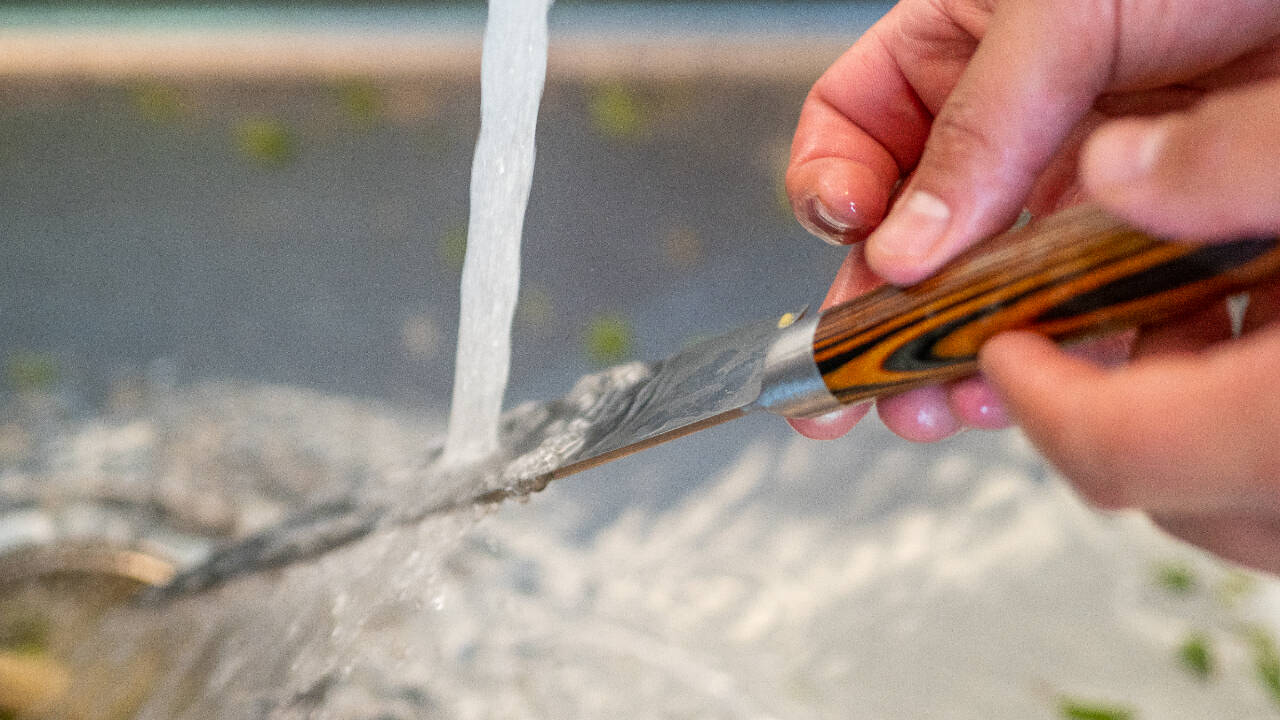
According to experts, because Clostridium tetani spores are heavily shielded by an outer protein coat, just cold water wash is not enough. To make it completely bacteria-free and avoid cross contamination, it is important to follow the 3-step disinfection routine.
Step 1: The high-heat wash
In this step, you wash the knife immediately after use with warm, soapy water. And make sure that you don't leave the knife in the sink amidst full of dirty water, which promotes bacterial breeding.
Also, while washing make sure you use a brush o clear out microscopic food particles from the bolster and handle joints.
Step 2: The sanitizing rinse
In the second step, the idea is to kill surface pathogens, and for that you need to submerge or rinse the blade with an EPA-approved kitchen sanitizer, or use a food-safe solution of 1 tablespoon of unscented liquid chlorine bleach per gallon of water.
Step 3: Dry storage
In the last step, it is about the storage of cleaned knives. Never store a wet knife in a wooden knife block. It is proven that trapped moisture in the wooden blocks can foster mold and anaerobic bacterial colony growth. Make sure you dry the knives with a clean microfiber cloth and then store them on an open magnetic strip or a well-ventilated tray.









 English (US) ·