

 3 days ago
10
3 days ago
10
ARTICLE AD BOX
Last Updated:February 09, 2026, 12:29 IST
Also called congestion pricing or congestion charge, the tax is a fee charged to vehicles for using busy roads or entering crowded city areas during peak hours


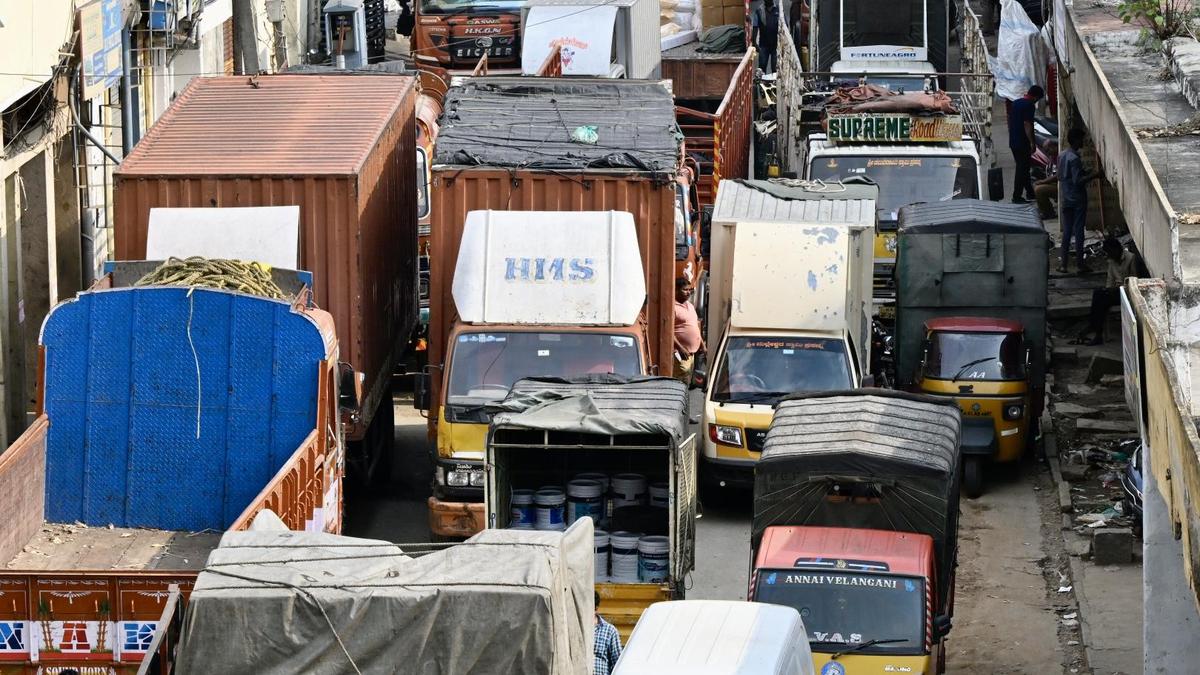
Usually, cities identify high-traffic areas---city centres or major corridors---and drivers have to pay a fee if they enter or drive within these zones during busy hours (like morning and evening rush). (AI-Generated Image)
It’s Monday morning, and you leave for work much earlier than what Google Maps suggests to beat the traffic blues. But unfortunately for you, you’re not the only one who had the brainwave. Just minutes into your journey, you’re already cursing the jaywalking pedestrians, the stray cow munching on a plastic bag, zig-zagging two-wheelers and cars that probably think they’re on an F1 track.
It’s in these moments that you wonder if there could be a way to streamline the traffic, reduce the number of vehicles on the road and get clean air. A Mumbai councillor has come up with a not-so-novel panacea to all traffic woes, suggesting a congestion tax in the financial capital’s Central Business Districts (CBD).
In a detailed letter to BMC Commissioner Bhushan Gagrani, BJP’s Makarand Narvekar has argued that unchecked private vehicle use has worsened congestion in high-density commercial areas, particularly in South Mumbai. He suggested that private vehicles entering identified high-traffic zones, especially those carrying only a single occupant, should be charged a congestion fee during peak hours.
According to his proposal, vehicles entering notified CBD areas during peak hours, between 8am and 11am, and again from 5pm to 8pm, could be charged Rs 50 to Rs 100 per entry. The areas can be identified using existing CCTV surveillance and Automatic Number Plate Recognition (ANPR) cameras already installed across the city.
But what exactly is congestion tax, have any countries implemented it and does it really work? News18 does a deep dive
The Concept Of Congestion Tax
Also called congestion pricing or congestion charge, the tax is a fee charged to vehicles for using busy roads or entering crowded city areas during peak hours. The idea is to reduce traffic, cut pollution, and make cities move faster.
Usually, cities identify high-traffic areas—city centres or major corridors—and drivers have to pay a fee if they enter or drive within these zones during busy hours (like morning and evening rush). Since the idea is to keep the traffic moving, cameras, number-plate recognition, GPS, or electronic tags are used to track vehicles and no toll booths or barriers are planned. Drivers pay online, via apps, or through prepaid passes and are liable to pay fines if they skip coughing up the congestion tax.
In his proposal, Narvekar too has said that the congestion fee be collected automatically through FASTag-based systems to avoid manual intervention and traffic bottlenecks at entry points.
Why Do Cities Use It?
The biggest change a congestion tax seeks to bring about is in public behaviour as when driving costs more at peak times, people are forced to shift to public transport, carpooling, or off-peak travel. This has an unintended benefit—cleaner air as fewer vehicles mean lower emissions.
Since the roads are less clogged, buses, ambulances, and essential services move quicker. Apart from this, the money collected is usually reinvested into metro systems, buses, cycling lanes, and road upgrades.
In Mumbai’s case too, the councillor has suggested that the revenue generated from the tax, estimated at Rs 200 to Rs 300 crore annually, could be used to fund air quality improvement measures and strengthen public transport infrastructure.
Have Other Indian Cities Also Mulled It?
Yes, other metros have also thought about levying the charge but none has enforced it yet.
Delhi: According to the Times of India, Delhi’s transport department had explored introducing a congestion tax (sometimes called congestion pricing) on vehicles entering the city during peak hours to curb traffic and pollution, modeled on systems in cities like London, Singapore and New York. The plan envisioned charges at major border points (about 13 entry points) during morning (for instance, 8am-10am) and evening peak times, with exemptions for two-wheelers, electric and other low-pollution vehicles. One major hurdle, however, has been that the Motor Vehicles Act doesn’t currently have clear provisions to allow a congestion tax, meaning legal changes or new legislation would likely be needed before it could go live.
Bengaluru: Bengaluru has serious traffic issues, and authorities have been considering a congestion tax for solo drivers entering busy stretches like the Outer Ring Road during peak hours. While experts say such a tax could incentivise carpooling and boost public transport use, they also warn that public transit systems need strengthening before a levy is fair or effective.
How About Other Countries?
A decades-old idea, congestion pricing has real-world implementations. One of the oldest systems is being followed in London. Vehicles entering central London pay a fee during the day, with enforcement agencies using automatic plate recognition to identify vehicles. The improvements have been manifold, with reduction in traffic and improved funding for public transport.
Dating further back is Singapore, which pioneered the concept in the 1970s with an Area Licensing Scheme and later Electronic Road Pricing (ERP). The fees is adjusted in real time based on traffic conditions.
In 2025, New York City introduced a $9 daily charge to enter Manhattan’s central business district, aiming to reduce congestion and raise funds for transit. Early results show fewer cars, faster traffic, and more public transit use.
Why Has Congestion Tax Not Taken Off In India?
According to the Times of India, the biggest reason is the lack of strong public transport alternatives. Experts say congestion pricing works best when people have viable alternatives to driving. For instance, London’s congestion charge succeeded partly because of its dense, reliable Tube and bus network, while Singapore’s system works because of an extensive MRT system that offers a real alternative to cars.
In contrast, many Indian cities do not yet have robust and reliable public transit. The metro network in several cities is still expanding, and buses have seen declining ridership. Apart from this, suburban rail systems are delayed or underdeveloped. What adds to commuters’ woes is that last-mile connectivity remains weak in most cities, leaving them with no good option but to use private vehicles. In the absence of strong alternatives, a congestion tax would feel more like a punishment than a fair incentive to change behaviour.
There are also legal and policy gaps. For instance, in some cases, existing laws don’t clearly allow congestion pricing. For example, in Delhi, officials noted that the Motor Vehicles Act doesn’t include specific provisions for charging vehicles to enter certain zones, meaning new legal frameworks or amendments would be required before implementation, as per Business Standard. That adds complexity and slows policymaking, because the government would have to build a legal foundation before any measure can be tested or implemented.
Congestion taxes are controversial, even in cities with strong transport systems. In India, governments are wary of public backlash as people see the fee as just another burden without obvious benefits. Many drivers also argue they already pay high taxes and fees, and additional charges would unfairly penalise them. Also, leaders often prioritise building roads, flyovers, or other visible infrastructure projects (which are more politically popular) over controversial pricing policies.
An ORF paper by Ramanath Jha also argues that in the absence of clear congestion zones, reliable technology for automatic charging (e.g., GPS or camera systems), and strong inter-departmental coordination, it will be difficult to implement such charges.
Instead, the article recommends that to make congestion pricing feasible and acceptable in India, the need of the hour is to build strong public transport first, such as reliable buses, metros, and non-motorised options, before charging drivers.
Apart from this, systems should be designed using electronic road pricing, GPS, and automatic vehicle identification so that there is no major disruption to traffic flow. There should also be widespread public consultation and communication of the long-term benefits (reduced congestion, cleaner air, shorter travel times), which can help build acceptance. Jha also says charging plans should embed fairness, such as tiered fees, exemptions, and reinvestment of revenue in public transport improvements.
Handpicked stories, in your inbox
A newsletter with the best of our journalism
First Published:
February 09, 2026, 12:29 IST
News explainers Can Congestion Tax Fix Mumbai's Traffic? Here's What The Fee Means & Why India Struggles With It
Disclaimer: Comments reflect users’ views, not News18’s. Please keep discussions respectful and constructive. Abusive, defamatory, or illegal comments will be removed. News18 may disable any comment at its discretion. By posting, you agree to our Terms of Use and Privacy Policy.
Read More






 English (US) ·