

 51 minutes ago
7
51 minutes ago
7
ARTICLE AD BOX
This image is used for reperesentation purpose only (AI-generated)
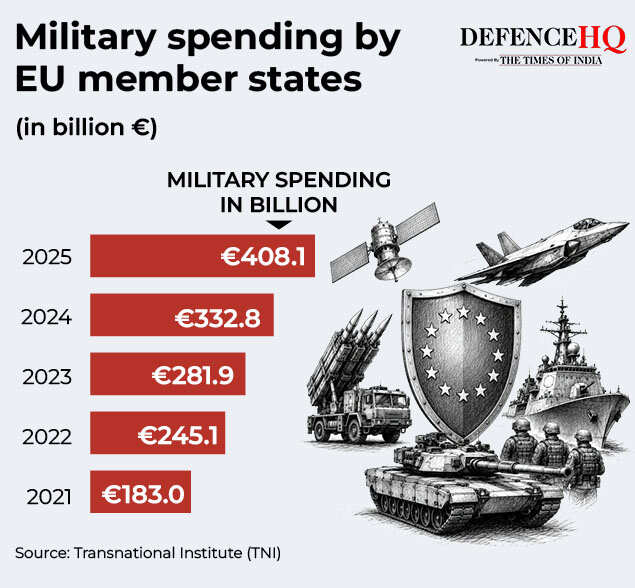
For decades after the Cold War, much of Europe relied on the United States as the cornerstone of its security while steadily reducing military spending. That era is now ending. The continent is embarking on its biggest military build-up in generations, with Nato allies committing to raise defence spending to 5% of GDP by 2035 and the European Union unveiling an ambitious €800 billion plan to strengthen its defence capabilities.Under Nato's new target, allies will spend 3.5% of GDP on core military requirements and up to 1.5% on broader security investments such as infrastructure, cyber defence and resilience.
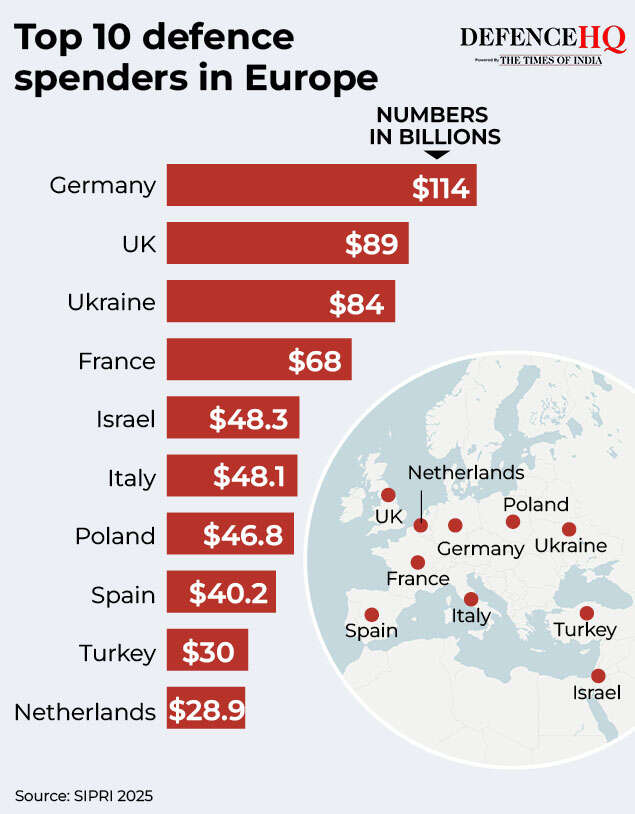
A series of geopolitical developments is driving the shift. Russia's invasion of Ukraine has transformed Moscow from a strategic concern into what Nato describes as a direct threat to Allied security. At the same time, growing uncertainty over the long-term reliability of US security guarantees—sharpened by President Donald Trump's calls for Europe to shoulder more of its own defence burden and his administration's changing approach towards Ukraine and Nato—has accelerated efforts to build a stronger European security architecture. The EU has also set a target of achieving full defence readiness by 2030. But Europe's rearmament is about far more than bigger military budgets. It marks a fundamental shift in how the continent intends to defend itself, finance its security, strengthen its defence industry and reduce decades of dependence on the United States.
Why is Europe suddenly spending so much on defence?
Europe's spending surge is rooted in a fundamental shift in its security outlook after Russia's full-scale invasion of Ukraine in February 2022.
What began as a response to the war has evolved into a broader reassessment of Europe’s long-term security, with Nato warning that the continent faces its most dangerous security environment since the Cold War.
The alliance now calls Russia the “most significant and direct threat” to allied security, accusing Moscow of trying to reshape the Euro‑Atlantic order through military expansion, aggressive rhetoric and hybrid tactics. Nato points to Russia’s rebuilding and modernising of its armed forces alongside cyber attacks, disinformation, electronic interference, sabotage of critical infrastructure and other activities aimed at destabilising Europe. It also highlights an increasingly assertive Russian military posture, including repeated airspace violations and provocative actions near Nato’s eastern flank including the Baltic states, Slovakia and Poland.European governments increasingly view Russia as a long-term security challenge, warning that even if the war in Ukraine ends, Moscow could rebuild its military capabilities in the coming years, making it essential for Europe to prepare for future contingencies.Nato has responded by reinforcing its eastern flank, expanding multinational deployments and adopting new regional defence plans.For many governments, the conclusion is now that Europe must rebuild military capabilities, strengthen industrial production and prepare for prolonged geopolitical competition.
Trump changed Europe's security calculations
Russia's invasion of Ukraine forced Europe to rethink its security priorities. Donald Trump's return to the White House in 2024 further raised questions about the future of the transatlantic security relationship.Throughout his presidency, Trump has repeatedly argued that European allies have relied too heavily on the United States for their defence while failing to spend enough on their own militaries. He renewed pressure on Nato members to sharply increase defence spending, calling for allies to eventually invest 5% of their GDP. “I think they should be at 5%, not 2%,” Trump said during a press conference at his Mar-a-Lago residence in Florida.His administration also temporarily suspended military aid to Ukraine earlier this year as it pushed Kyiv towards peace negotiations, reinforcing concerns across Europe about the extent of future American support.
Those concerns deepened after Vice President JD Vance's speech at the Munich Security Conference, where he urged European leaders to take greater responsibility for their own security and questioned some of Europe's political and strategic choices.The remarks were widely interpreted as another signal that Washington expected Europe to shoulder a far larger share of the burden for its defence.While unveiling the EU's rearmament plan, European Commission President Ursula von der Leyen warned that ‘a new era is upon us,’ saying Europe faces ‘a clear and present danger’ and must be prepared to step up its defence.Presenting the EU's defence readiness roadmap, EU foreign policy chief Kaja Kallas cautioned that ‘danger will not disappear, even if the war in Ukraine will end’. The shift reflects a broader strategic calculation: Europe can no longer assume that its security will always depend on American military guarantees. Instead, it is seeking to build stronger military capabilities, expand its own defence industry and become better prepared to act independently when necessary.
800 billion Euros in question: Where will the money come from?
Unlike the Covid-19 recovery fund, the European Union is not creating a single 800 billion Euros defence fund. Instead, the figure combines several financing measures designed to help member states rapidly increase military spending.
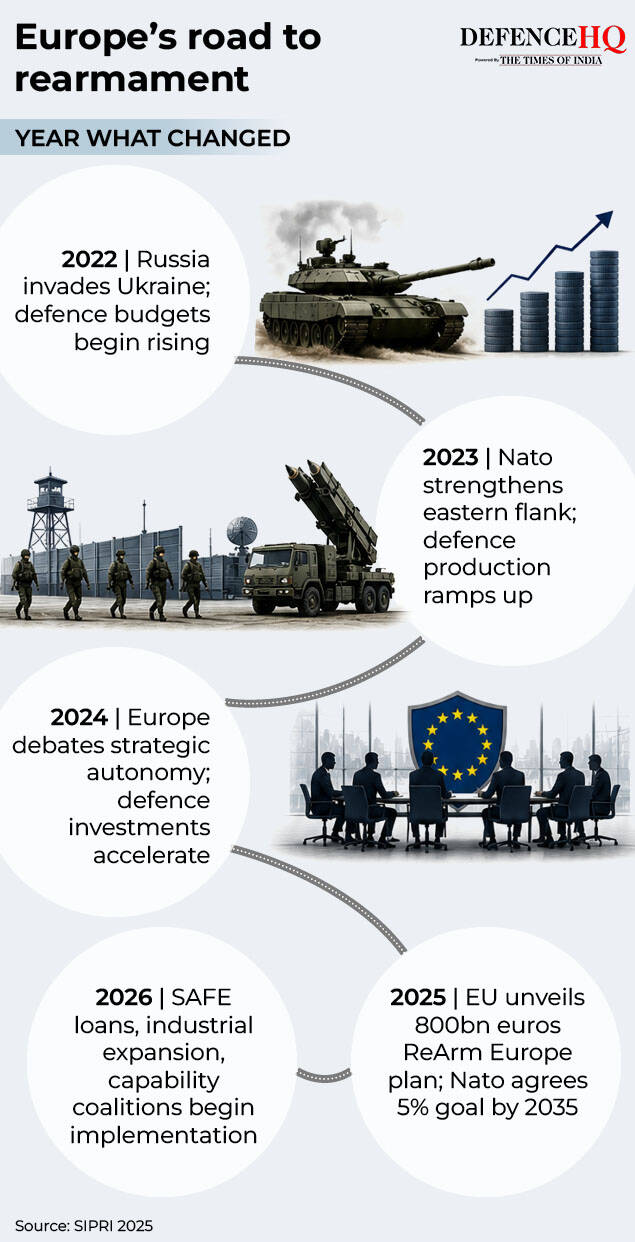
SAFE loans (150 billion Euros): The centrepiece is the Security Action for Europe (SAFE) programme, under which the European Commission will borrow 150 billion Euros and provide member states with defence loans of up to 45 years. The scheme promotes joint procurement, requires at least 65% European content in funded equipment and allows Ukraine to participate in eligible projects.Relaxing fiscal rules: Brussels has proposed exempting higher defence spending from EU budget rules for four years, allowing countries to increase military expenditure by up to 1.5% of GDP annually. If fully used, the measure could unlock around 650 billion euros in additional defence spending.Redirecting existing EU funds: The Commission is also allowing member states to use part of the EU's existing cohesion funds originally meant to reduce regional economic disparities for projects that strengthen security and defence.This could include investments in transport infrastructure such as roads, bridges and rail links that improve military mobility, as well as dual-use infrastructure like civil shelters and other resilience projects.Greater role for the EIB: The European Investment Bank is expected to expand lending for defence projects, helping governments access cheaper financing.Unlocking private capital: Through the proposed Savings and Investment Union (SIU), the EU also aims to channel private savings into defence and strategic industries to support long-term investment.Alongside national military spending, the European Commission has proposed increasing the EU's own defence budget under its long-term budget framework from about €29 billion in 2021–27 to €131 billion for 2028–34.
Europe wants to buy European
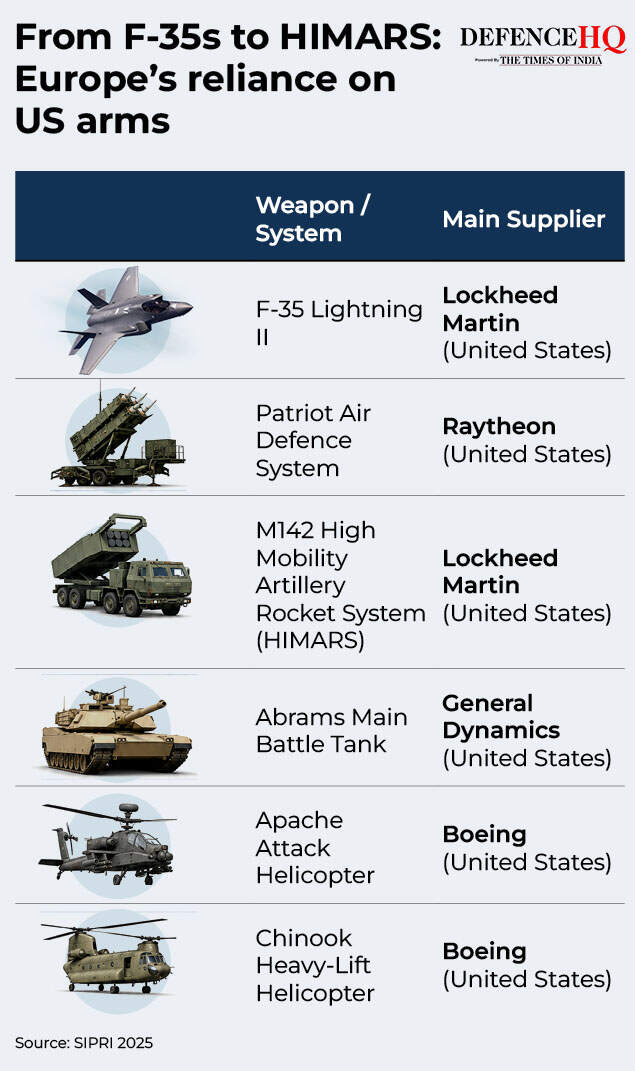
Europe's defence push is not only about spending more it is also about spending differently. For decades, European militaries relied heavily on American-made fighter jets, missile systems and military equipment.Now, Brussels wants a much larger share of that money to stay within Europe, strengthening its own defence industry, creating jobs and reducing dependence on foreign suppliers.The shift is part of the EU's broader goal of achieving strategic autonomy, ensuring Europe can develop, manufacture and maintain critical military capabilities without relying excessively on external partners. To achieve that, the European Commission's roadmap sets an ambitious target of sourcing 55% of defence procurement from European manufacturers by 2030, while increasing joint procurement among member states to 40% by 2027. Europe's defence industry is also witnessing a major shift. Companies such as Rheinmetall in Germany and MBDA in France are expected to play a central role in meeting the continent's growing military requirements. Ukraine has also been integrated into this strategy. Kyiv is eligible to participate in joint procurement programmes under SAFE and its rapidly expanding drone industry is increasingly viewed as a valuable source of battlefield innovation. The changing procurement priorities are already becoming visible. Germany, traditionally one of the largest buyers of American military equipment in Europe, has announced procurement plans that significantly reduce purchases from US suppliers in favour of European-made systems.
What exactly is Europe planning to build?
Europe's defence strategy focuses on closing critical capability gaps by building a more integrated military architecture capable of deterring future threats and responding rapidly to modern warfare.
- Air and missile defence: The EU plans to strengthen continent-wide air and missile defence by linking national systems into a coordinated network while improving protection for critical infrastructure, satellites and other space-based assets.
- Drones and counter-drone warfare: Europe aims to expand surveillance and strike drone capabilities while investing in technologies that can detect, track and neutralise hostile drones.
- Strengthening the eastern frontier: The EU also plans to reinforce Nato's eastern flank with stronger border defences, including integrated surveillance, air defence systems and physical barriers such as anti-tank trenches and ‘dragon's teeth’ fortifications to deter potential aggression.
Can Europe actually become militarily independent?
Europe's defence ambitions are growing rapidly, but achieving complete military independence remains a long-term challenge. While the continent is investing heavily in expanding its defence industrial base and reducing reliance on external partners, several critical capabilities are still overwhelmingly dependent on the United States.One of the biggest gaps lies in advanced combat aircraft. Many European countries continue to rely on the American-made F-35 stealth fighter, with no equivalent European platform expected before the late 2030s. Europe also depends heavily on US intelligence, surveillance and reconnaissance (ISR) capabilities. American satellites, airborne early-warning aircraft and intelligence-sharing networks provide much of the real-time information that supports Nato operations. Another major pillar remains the US nuclear umbrella. Nato’s nuclear deterrence is built primarily around the United States' strategic arsenal, complemented by the United Kingdom and France.
Although France possesses an independent nuclear force, many European allies still view the American nuclear guarantee as central to collective defence under Article 5.Logistics remains another major weakness. European officials acknowledge that moving forces quickly across borders is still difficult due to infrastructure bottlenecks, fragmented transport networks and varying military standards among member states. The continent is also working to strengthen its defence industrial capacity, but production remains uneven. European manufacturers must significantly increase output of ammunition, missiles, air defence systems and armoured vehicles while addressing shortages of skilled workers and securing access to critical raw materials, many of which are currently sourced from outside Europe.For now, Europe is undoubtedly stronger and investing more in defence than at any point since the Cold War.
However, it is not yet strategically autonomous. The continent's security architecture continues to rely heavily on American military capabilities.
The biggest obstacle isn't America—it's China
Even if Europe succeeds in reducing its dependence on American military equipment, another strategic challenge remains: its heavy reliance on China for many of the raw materials needed to build modern weapons.Advanced defence systems require rare earth elements, critical minerals and specialised semiconductors.
These materials are essential for producing high-performance magnets, sensors, precision-guided weapons, batteries and advanced electronics that power modern militaries.China dominates much of this supply chain. It produces around 90% of the world's rare-earth magnets and supplies 98% of the rare-earth magnets imported by Europe. The challenge becomes even more complicated because Europe is trying to build military capabilities partly to deter Russia, while China remains a key supplier of components that underpin both European and Russian defence industries. According to EU estimates, around 80% of the foreign components used in Russian weapons continue to flow through China.European governments are now trying to diversify supply sources, invest in domestic processing and recycling and secure alternative partnerships for critical minerals. However, building entirely new supply chains will take years and require significant investment.
Will higher defence spending actually boost Europe's economy?
By investing billions in defence manufacturing, European leaders hope to create skilled jobs, strengthen domestic industries and stimulate innovation in emerging technologies.Defence companies are already expanding to meet rising demand. Germany's Rheinmetall plans to hire around 8,000 workers over the next two years, while European missile maker MBDA continues to expand production facilities across the UK, France, Germany and Italy.
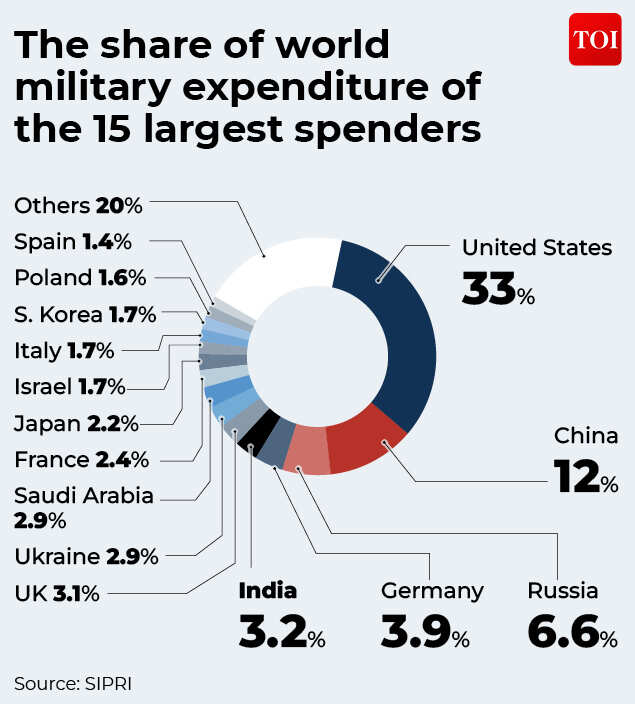
However, economists remain divided over whether higher defence budgets will deliver sustained economic growth. While increased military spending can create jobs and support industrial production, many argue that investments in infrastructure, education or healthcare generally produce stronger long-term economic returns.There is also the issue of opportunity cost. Every additional euro spent on defence is money that governments cannot easily spend on schools, healthcare, pensions or welfare programmes. For countries already facing high debt levels, financing military expansion through additional borrowing could also increase pressure on public finances.
What happens next?
The next few years will determine whether Europe can translate political promises into real military capability. Governments will need to increase defence production, meet new Nato capability targets and reduce dependence on foreign suppliers.Ultimately, Europe's rearmament is about more than spending hundreds of billions of euros. It is about answering a question that has defined European security since World War II: Can Europe defend itself if American support becomes uncertain? The answer will shape the continent's security, economy and global influence for decades to come.








 English (US) ·