

 1 hour ago
3
1 hour ago
3
ARTICLE AD BOX
Last Updated:April 19, 2026, 15:34 IST
While the US-Israeli strikes significantly damaged Iran's missile production facilities, it has done little to restrict Tehran's ability to control the Strait of Hormuz.


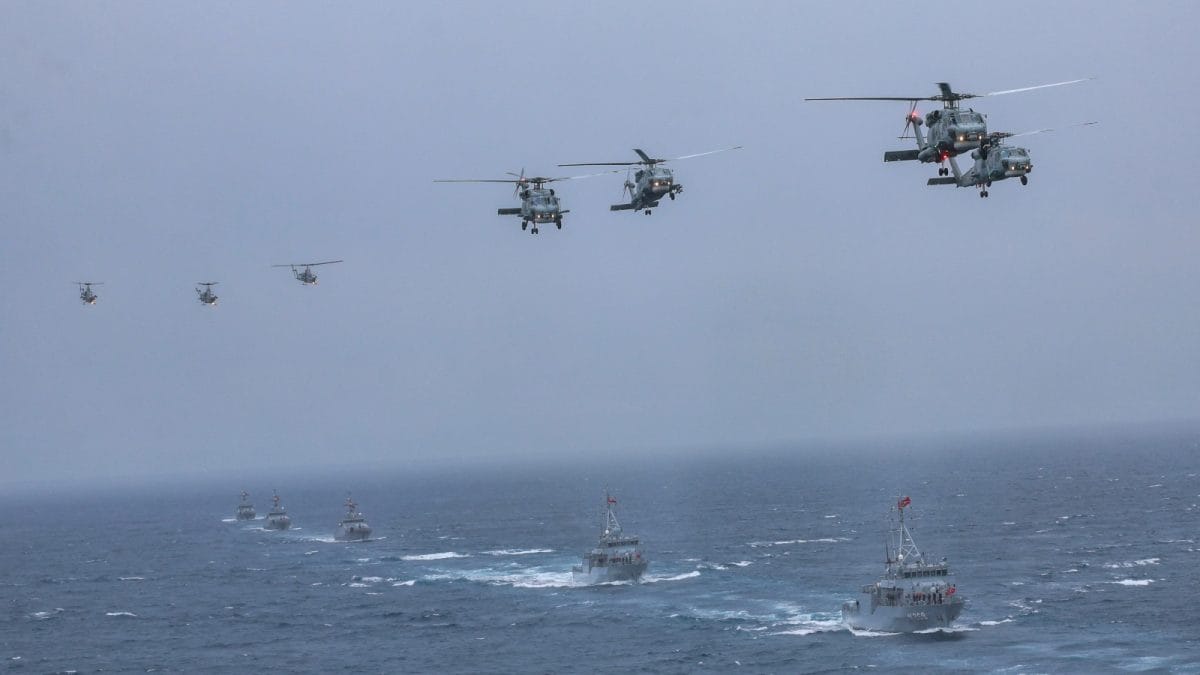
Ships and tankers in the Strait of Hormuz off the coast of Musandam, Oman. (Reuters)
Despite US President Donald Trump’s belligerent rhetoric about the complete decimation of Iran’s military capabilities, US intelligence assessments have suggested that Iran likely still has access to around 70% of its pre-war ballistic missile stockpiles, and around 60% of its missile launchers, according to the New York Times.
This underscores the grave impact of a prolonged conflict in West Asia after Iran closed the Strait of Hormuz again, accusing the United States of breaking its ceasefire promises by continuing a naval blockade around Iranian ports. Iran’s control over shipping through the strait has rocked the global economy by raising the prices of gasoline, fertiliser and fuel.
While the US-Israeli strikes significantly damaged Iran’s leadership structure, larger naval vessels and missile production facilities, it has done little to restrict Iran’s ability to control the strait. Iran still has about 40% of its arsenal of attack drones and upward of 60% of its missile launchers, more than enough to hold shipping hostage in the future, as per the report.
When the two-week ceasefire came into effect between Iran and the US on April 8, Tehran had access to around half of its ballistic missile launchers. Since then, it has managed to dig out another 100 launchers from under the ground, bringing the total of operational missile launchers to around 60% of the pre-war total.
Along with the missile launchers, Iran is also working to dig out any missile stocks that became buried under the rubble of the US-Israeli attack. Once complete, the US intelligence officials believe Tehran will have missile stockpiles amounting to around 70% of its pre-war stockpiles.
Iran’s ‘Nuclear Weapon’
Dmitri Medvedev, a former president of Russia and deputy chairman of the country’s security council, said Iran has tested “its nuclear weapons" in the form of the Strait of Hormuz, as its closure forced Trump to announce a naval blockade of his own.
The US and Iran are scheduled to begin a second round of talks in Islamabad on Monday as tensions flare over control of the crucial shipping lane. The US blockade has largely brought Iran’s seaborne trade, which accounts for roughly 90% of the country’s economic output, to a halt.
As per the report, Iran’s government chose not to block the Strait of Hormuz last June, when Israel launched a military campaign that the US eventually joined to hit Tehran’s nuclear sites, possibly reflecting the cautious approach of then-Supreme Leader Ayatollah Ali Khamenei, who was killed in the initial salvo of US-Israeli strikes on February 28.
Khamenei’s death signalled that the latest US-Israeli operation was far more expansive. Iran’s Parliament Speaker Mohammad Bagher Ghalibaf said Tehran relied on planning and asymmetric warfare to counter the United States during the recent conflict.
“We are not stronger than the United States in military power," he said, adding that the US has greater equipment and wider experience due to its involvement in conflicts around the world. “The enemy had money and resources, but they did not act correctly in terms of design."
Handpicked stories, in your inbox
A newsletter with the best of our journalism
First Published:
April 19, 2026, 15:34 IST
News world Can Iran Maintain Control Of Hormuz? Intel Shows Tehran Still Able To Access 70% Of Missile Stocks
Disclaimer: Comments reflect users’ views, not News18’s. Please keep discussions respectful and constructive. Abusive, defamatory, or illegal comments will be removed. News18 may disable any comment at its discretion. By posting, you agree to our Terms of Use and Privacy Policy.
Read More





 English (US) ·